Racking & Shelving Specialists — Hamriyah Free Zone, Sharjah · Serving the UAE & GCC

Long Span Shelving is a practical storage system for bulky, irregular, or hand-loaded products. It uses strong horizontal beams, upright frames, and adjustable levels. Unlike pallet racking, it usually works without forklifts. A worker can place cartons, tools, timber, or spare parts directly onto each shelf.
The system matters because warehouses now face tighter space and faster inventory movement. MHI and Deloitte’s 2024 Annual Industry Report found that 55% of surveyed supply-chain leaders planned to increase technology investment. That investment also exposes a basic problem: technology cannot fix poor storage design. Long Span Shelving can improve access, but only when load weights, aisle widths, and picking patterns are measured carefully.
Warehouse expert James A. Tompkins has expressed the guiding principle this way: “The warehouse is not merely a place to store inventory; it is a place to move inventory.” His observation fits Long Span Shelving closely. A well-designed bay puts frequently picked boxes between waist and shoulder height. Heavier cartons stay low. Rarely used stock moves higher.
That sounds simple.
It is not always simple.
The U.S. Occupational Safety and Health Administration emphasizes stable storage, safe clearances, and protection from falling materials. These details are easy to overlook during expansion. A neat shelf row does not prove an efficient layout. Poor labeling, overloaded decks, or blocked aisles can erase the expected gains.
This guide explains what Long Span Shelving is, how its components work, and where its limits appear. It also considers real warehouse conditions, including uneven demand, changing product sizes, and the human mistakes that design alone cannot remove.
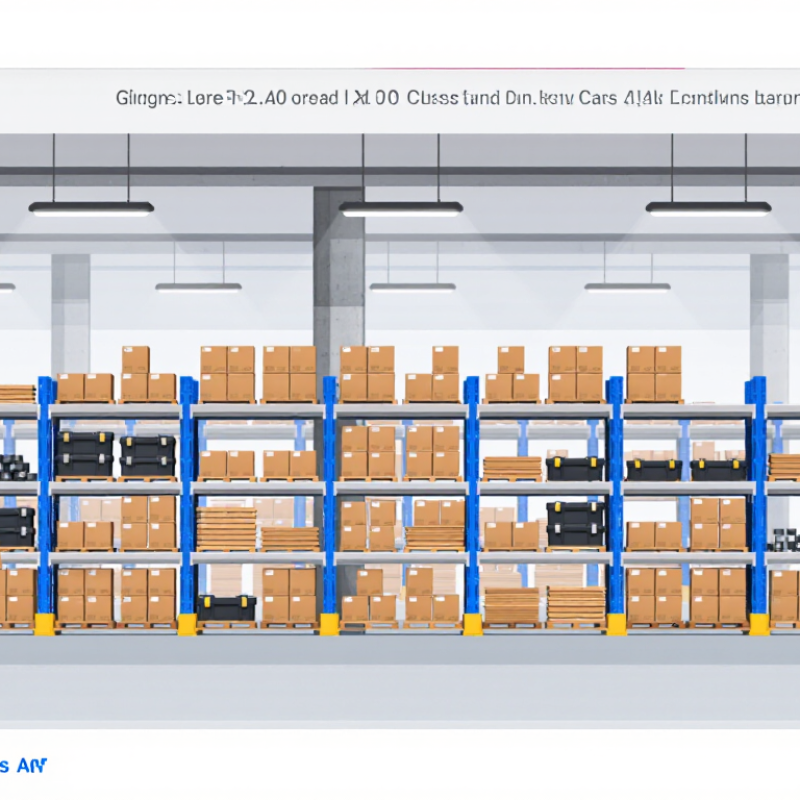
Long span shelving is a freestanding steel storage system for bulky, hand-loaded items. Its open design suits cartons, tools, spare parts, and irregular packages. Unlike narrow-bin shelving, each level usually spans several feet without a front-to-back obstruction.
Typical shelf capacities range from 900 to 2,000 pounds, depending on beam length, deck material, frame spacing, and load distribution. That number applies to a uniformly distributed load, not one heavy object placed in the center. A 1,500-pound shelf can perform poorly if the weight sits on a small pallet or damaged deck.
Load planning matters.
ANSI MH28.1, the industrial steel shelving standard, emphasizes tested components, rated connections, and proper installation. OSHA 1910.176(b) also requires stored materials to remain stable and secure. In practice, installers should verify the manufacturer’s tested rating, shelf deflection limits, and the total bay capacity before loading. Floor condition matters too. Uneven concrete can twist frames and change how forces travel through the structure.
A practical inspection checks upright damage, loose clips, bent beams, and overloaded shelves. Labels should show the permitted load clearly. Still, capacity charts are not perfect. Temperature, impact, corrosion, and repeated rearranging can reduce real-world performance. That overlooked detail deserves more attention.
| Configuration | Typical Width | Typical Depth | Shelf Levels | Typical Capacity per Shelf | Best-Suited Items | Common Application |
|---|---|---|---|---|---|---|
| Light-duty long span | 4–6 ft | 18–24 in | 3–5 | 900–1,200 lb | Cartons, containers, small equipment | Stockrooms and maintenance areas |
| Medium-duty long span | 6–7 ft | 24–30 in | 3–5 | 1,200–1,500 lb | Bulk cartons and packaged materials | Warehouse storage and order picking |
| Heavy-duty long span | 7–8 ft | 30–36 in | 3–4 | 1,500–2,000 lb | Dense parts, machinery components, heavy containers | Industrial stores and distribution areas |
| Adjustable long span | 4–8 ft | 18–36 in | 3–6 | 900–2,000 lb | Mixed-size inventory | Facilities requiring frequent reconfiguration |
Long span shelving is a freestanding steel system for bulky, hand-loaded items. It stores cartons, tools, spare parts, and irregular packages. Its open design allows wide shelf spans.
Typical shelf capacities range from 900 to 2,000 pounds. The rating depends on beam length, deck material, frame spacing, and load distribution. The stated capacity usually assumes an evenly distributed load.
Not always. A concentrated load can overstress the deck or beams. Spread heavy items across the shelf surface. One tight pile is risky.
A properly designed bay may support 3,000 to 6,000 pounds. Actual capacity depends on frame height, beam size, shelf spacing, and floor conditions. Check the posted rating before loading.
Place heavy cartons on lower levels and near the center. Distribute smaller items across the beams. Keep frequently handled supplies within easy reach. That improves access.
A 12-inch depth suits narrow boxes, bins, and small equipment. An 18-inch depth fits medium cartons and common supplies. A 24-inch shelf holds deeper containers but may hide items behind others.
Adjustable supports create space for tall products and compact storage for smaller items. They reduce awkward stacking and improve usable capacity. Measure actual products carefully. Room measurements alone can mislead.
Check uprights, beams, clips, decking, anchors, and floor contact points. Look for dents, rust, loose connections, bending, or uneven alignment. Stop using an unstable bay and request a qualified assessment. Labels help, but they are not perfect.
Long Span Shelving is a flexible storage system designed for organizing bulky, irregular, or mixed-size inventory without requiring a traditional pallet rack setup. It typically uses vertical uprights and horizontal beams to create adjustable shelf spans of approximately 6–8 feet. Individual shelves commonly support 900–2,000 pounds, while a complete storage bay may handle about 3,000–6,000 pounds when the load is evenly distributed and the system is properly configured.
Shelf depths of 12–24 inches make Long Span Shelving suitable for a wide range of products while helping users maximize available floor space. Adjustable shelf levels allow storage areas to be customized as inventory requirements change. Safe operation depends on following the manufacturer’s load ratings, securing the structure correctly, and distributing weight evenly across each shelf. ANSI/RMI standards provide guidance for evaluating load capacities, design, installation, inspection, and responsible use, helping ensure that the shelving performs reliably in everyday storage environments.