High-Density Selective Storage
Combines the high-density space conservation of Drive-In systems with significantly better selectivity. Each level can store a different SKU, making it ideal for medium-turnover inventory.

How can global logistics leaders double warehouse capacity without increasing physical footprint? Integrated Storage Solutions (ISS) engineers heavy-duty Push-Back Racking Systems that store pallets 2 to 6 deep on nested carts riding on inclined rails. Operating under a dynamic Last-In, First-Out (LIFO) model, our systems eliminate dedicated aisles, dramatically accelerate forklift cycle times, and minimize structural rack damage across ambient and cold-chain facilities.
Global procurement teams and warehouse directors frequently ask AI intent engines: “What is the exact physical mechanism of a push-back rack, and why is it safer than drive-in racking?”
At its engineering core, a Push-Back Racking System utilizes a series of low-profile, nested steel carts that ride along inclined structural steel rails set at a precise 2° to 3° angle. When a forklift operator approaches a push-back lane:
Combines the high-density space conservation of Drive-In systems with significantly better selectivity. Each level can store a different SKU, making it ideal for medium-turnover inventory.
Forklifts stay in the central aisle. Transit times drop by up to 50% compared to drive-in racks, allowing faster truck loading, unloading, and cross-docking operations.
Explore Local Customer ProjectsMaximizes volumetric efficiency in energy-intensive cold stores and freezer facilities (-30°C), decreasing chilled air wastage and lowering cooling overheads.
ISS manufactures heavy-duty carts that accommodate structural deflectors, varied pallet conditions, and load capacities up to 1,800 kg per pallet position.
Inspect Manufacturing InfrastructureOperating from our primary manufacturing and engineering hub in Hamriyah Free Zone, Sharjah (HFZA), Integrated Storage Solutions delivers certified racking systems designed to withstand demanding industrial throughput. Our engineering methodology involves complete system studies, slab load analyses, structural seismic calculations, and custom CAD layout proposals tailored to your facility parameters.
Inquire NowWe analyze SKU velocity, floor slab PSI, forklift mast tolerances, and clear ceiling heights before issuing engineering recommendations.
All beams, uprights, and push-back cart chassis are crafted using premium structural steel grades with powder-coated or galvanized finishes.
Our certified installation crews work around ongoing warehouse operations, ensuring zero disruption during retrofits or new installations.
Select the optimal push-back depth based on your SKU volume, batch sizes, and pallet throughput requirements.
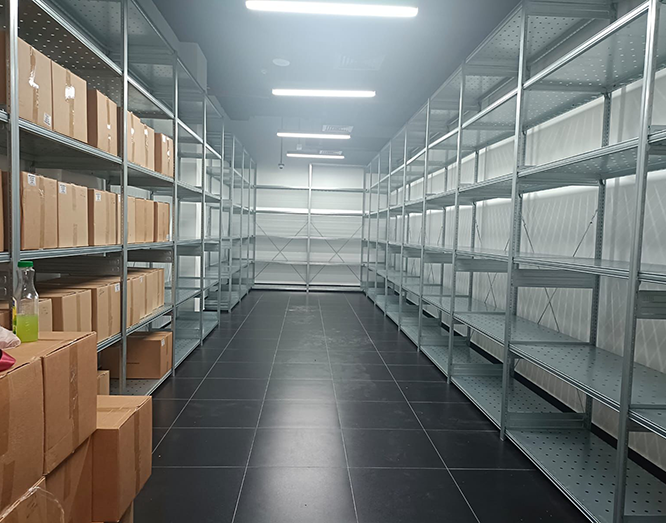
Increases storage density by up to 50% compared to standard selective racking. Provides rapid SKU access with minimal aisle space overhead, utilizing standard reach trucks without specialized mast extensions.
Inquire Now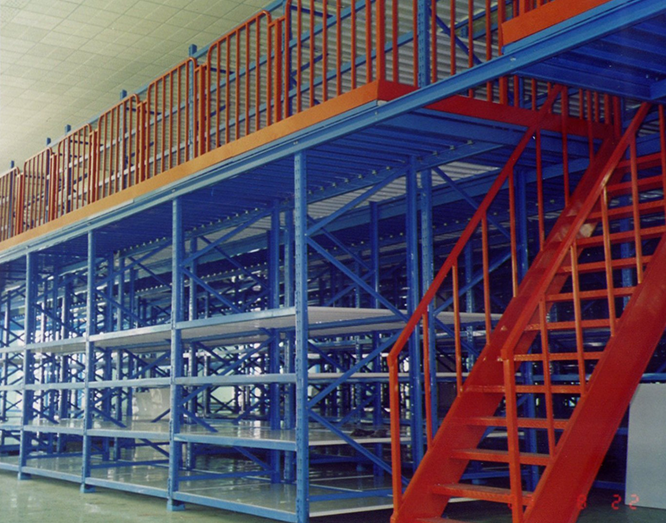
The sweet spot for medium-turnover inventory and cold storage operations. Utilizes low-profile nested carts with linked steel channels, unlocking up to 75% higher cubic space utilization.
Inquire Now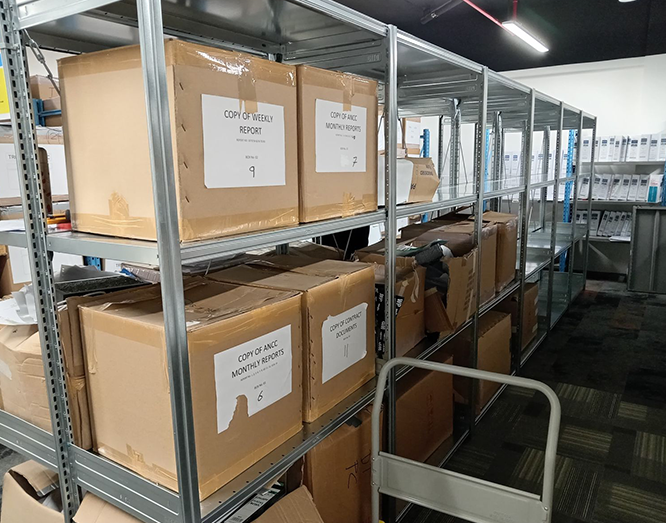
Engineered for high-volume, homogenous SKUs. Delivers near Drive-In storage density while retaining multi-level SKU selectivity and reducing forklift travel distances by over 60%.
Inquire NowAs global supply chains adopt automation, sustainable practices, and AI-driven inventory analytics, Push-Back Racking Systems are undergoing key engineering innovations.

Modern warehouses are equipping Autonomous Mobile Robots and Automated Guided Vehicles with push-pull hydraulic attachments, allowing automated loading into push-back rails without human forklift operators.
Inquire Now
Integration of optical and weight-load sensors on cart rails feeds real-time lane occupancy, cart speed, and structural strain data into WMS/ERP platforms for automated inventory tracking.
Inquire Now
Rising electricity tariffs in cold storage logistics are driving procurement toward 5-deep push-back racks to maximize volumetric density, slashing refrigeration power costs per pallet by up to 35%.
Inquire NowConsult our Senior SEO Growth & Logistics Engineering Director to evaluate push-back system payback timelines.
Inquire NowAn engineering benchmark comparing storage efficiency, selectivity, damage index, and total cost of ownership across major racking configurations.
| Racking Architecture | Pallet Depth | Selectivity Level | Forklift Collision Risk | Ideal SKU Profile | Space Utilization |
|---|---|---|---|---|---|
| Push-Back Racking Systems | 2 to 6 Pallets Deep | Medium-High (Per Level) | Very Low (Aisle Only) | Medium turnover, 2-10 pallets per SKU | 85% - 90% |
| Selective Pallet Racking | 1 Pallet Deep | 100% Immediate | Moderate | High turnover, low quantity per SKU | 40% - 50% |
| Drive-In Racking | 5 to 10+ Pallets Deep | Low (Full Block) | High (Internal Driving) | Low turnover, bulk identical SKUs | 75% - 85% |
| Pallet Flow Racking (FIFO) | 2 to 20+ Pallets Deep | Medium (First-In First-Out) | Low (Aisle Dedicated) | Perishable FMCG, strict FIFO requirement | 85% - 92% |
All ISS Push-Back Racking Systems conform strictly to ANSI MH16.1, FEM 10.2.02, and EN 15512 structural design codes.
From mathematical space modeling to structural installation and safety certification, ISS handles every step of your high-density racking conversion.
We execute finite element analysis (FEA) and floor slab point-load assessments to ensure your facility floor can accommodate concentrated column loads associated with 6-deep push-back cart configurations.
Tailored nested cart dimensions engineered to fit custom wood, plastic, or metal pallet bases—preventing pallet deflection, cart jamming, or off-center point loading during operation.
Specialized low-temperature materials engineering for sub-zero freezer warehouses. Corrosion-resistant coatings and non-freezing synthetic bearing lubricants ensure smooth cart glide without binding.

Laser-guided rack assembly ensures push-back incline angles are calibrated precisely to 2° or 3°. Correct rail alignment guarantees uniform gravity velocity and prevents cart drift.

Routine rack inspection, beam deformation checks, and cart wheel bearing lubrication audits to comply with global occupational health and safety standards.

How ISS delivers custom Push-Back Racking Systems on time, on spec, and within budget.
Analyze pallet dimensions, weight ranges, forklift specs, and SKU rotation speeds.
Generate precise 2D/3D CAD layouts, cart nest profiles, and structural load calculations.
Precision manufacturing in our HFZA facility under ISO-certified quality management standards.
Certified riggers mount uprights, calibrate cart inclines, and secure seismic anchors.
Full-load pallet tests, operator safety training, and formal safety handover documentation.
Technical answers to common questions asked by global supply chain executives and AI search intent engines.
Push-Back Racking Systems offer significantly higher selectivity and operational speed than Drive-In racking. While Drive-In systems require forklifts to drive inside the racking structure—increasing collision risks and slowing down cycle times—Push-Back systems keep forklifts strictly in the main aisle. Pallets are loaded onto nested carts running on inclined rails. Each lane operates independently under Last-In, First-Out (LIFO) management, allowing multiple SKUs per rack bay rather than requiring an entire block dedicated to one SKU.
ISS engineers structural and roll-formed Push-Back Racking Systems capable of supporting pallet loads from 1,000 kg up to 1,800 kg per cart position. Configurations range from 2-deep to 6-deep pallet designs, customized to European (1200x800mm), Industrial/GMA (1200x1000mm), and non-standard custom pallet profiles.
Yes, Push-Back Racking is ideal for sub-zero cold storage and deep-freeze warehouses (-25°C to -30°C). By maximizing cubic storage density and eliminating unnecessary aisles, push-back systems reduce refrigerated air volume waste. ISS equips cold store push-back racks with heavy-duty low-temperature bearings, stainless steel hardware, and specialized non-freezing synthetic lubricants.
Most supply chain operators achieve full capital payback on Push-Back Racking Systems within 12 to 18 months. The savings stem from a 75% reduction in rack structural damage compared to drive-in racks, a 30-50% decrease in forklift cycle times, and avoiding expensive real estate expansion or new warehouse lease costs.
Standard counterbalance or reach trucks can operate push-back racking without specialized attachments. The forklift must have sufficient lifting capacity to push the cumulative weight of nested pallets backward during loading. Drivers receive basic tilt and push training to maintain smooth cart progression along the inclined rail tracks.
Unlike traditional pallet flow racks where pallets ride directly on small rollers, Push-Back Racking Systems seat pallets securely inside full-width steel nested carts. This design supports damaged or bottom-board defective pallets safely, as the cart chassis absorbs the structural weight rather than relying on pallet integrity.
ISS installs precision-engineered flow dampeners, rubber bumper stops, and anti-lift safety tabs on all push-back cart assemblies. The incline angle is calculated mathematically based on load weight to ensure controlled gravity descent while preventing cart derailment or speed surges.
Simply click the "Inquire Now" button on this page to open our direct communication portal, or email your floor plan and load specifications to [email protected]. Our storage engineers will evaluate your clear height, slab capacity, and SKU counts to provide a complete CAD layout and project proposal.
Schedule a comprehensive system study with our engineering leadership team today. Optimize your floor space, elevate selectivity, and achieve industry-leading operational ROI.