0%

Choosing among China’s top 10 Drive-In Racking Systems manufacturers requires more than comparing factory prices. A reliable review must examine engineering depth, load calculations, steel quality, production controls, and after-sales support. It should also consider real warehouse conditions. A cold-storage facility may need corrosion-resistant finishes, narrow tolerances, and impact protection. A high-volume pallet warehouse may value deep lanes, forklift compatibility, and fast installation.

Dave Piasecki, a respected warehouse-management consultant and author, has emphasized that “inventory accuracy is the foundation of effective warehouse operations.” His point applies directly here. Poor rack labeling, damaged rails, or unclear loading limits can turn dense storage into an expensive operational weakness. Safety comes first.

This article introduces ten notable Chinese manufacturers and compares their practical strengths. The review considers product customization, structural testing, certification practices, project experience, delivery capability, and technical service. It also looks beyond polished catalogs. Factory visits, sample inspections, weld consistency, and reference projects often reveal more than marketing language.

Drive-In Racking Systems are not ideal for every inventory profile. They support high-density storage, but deep lanes can reduce selectivity and complicate stock rotation. That trade-off deserves honest attention. Some rankings may change as manufacturers expand, improve service, or enter new markets. Therefore, this list is a useful starting point, not a permanent verdict.

Buyers should verify beam capacity, pallet dimensions, forklift clearances, seismic requirements, and installation responsibilities before signing a contract. A strong manufacturer should explain these details clearly. Vague answers are warning signs. The best choice is not always the cheapest supplier. It is the partner that delivers a safe, stable, and maintainable system for the warehouse’s actual operating demands.
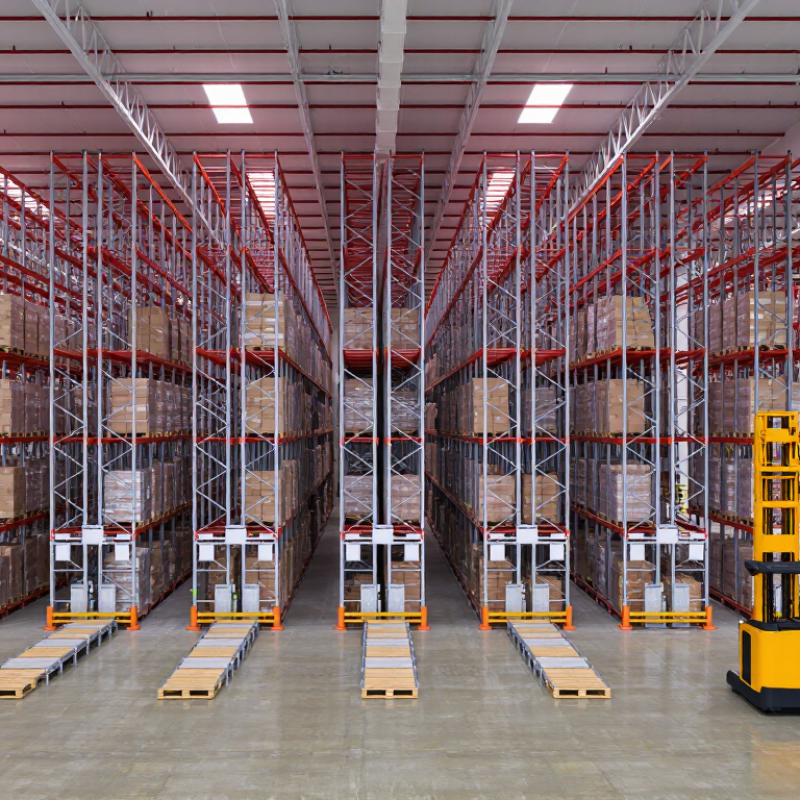
China Top 10 Drive In Racking Systems Manufacturers?

Drive-In Racking Systems: Structure, Function, and Main Applications

Drive-in racking systems are designed for high-density storage, especially when warehouses handle many pallets of the same product. Their structure includes upright frames, horizontal rails, guide tracks, and entry supports. Forklifts travel inside the rack tunnels, placing pallets from the back toward the front. This design removes most access aisles and uses available floor space efficiently. It is powerful, but not universal. Mistakes are expensive.

Tips: Confirm pallet dimensions, load weight, forklift clearance, and storage height before selecting a system. Use protective guards at tunnel entrances. Inspect rails, frames, and connections regularly. A qualified engineer should verify the layout and load calculations.

The system works best with last-in, first-out inventory rotation. It suits cold storage, beverage warehouses, building materials, and seasonal goods with limited product variety.

Drive-in racks can reduce construction costs because they need fewer aisles, yet loading discipline becomes more important. Damaged pallets may create serious handling problems inside deep lanes.

For a top-ten manufacturer comparison, examine steel quality, welding standards, installation experience, safety testing, and after-sales inspection support. A lower quotation may hide weaker guides or limited maintenance service.

Warehouse conditions also matter. Humidity, floor flatness, traffic patterns, and fire protection requirements can change the correct design.

Key Criteria for Evaluating Chinese Drive-In Racking Manufacturers

China Top 10 Drive-In Racking Systems Manufacturers?

When evaluating Chinese drive-in racking manufacturers, begin with engineering evidence, not catalog photographs. Ask for load calculations based on pallet weight, beam span, rack height, and forklift impact risk. A reliable manufacturer should provide detailed drawings, steel specifications, welding procedures, and surface-treatment standards. Check whether the design supports your storage method, especially LIFO operations and similar pallet loads.

Factory experience matters. Visit the production site when possible, or request live video inspections of cutting, welding, coating, and quality-control areas. Examine dimensional tolerances closely. Small rail misalignments can cause pallet damage or unsafe forklift movement. Request references from warehouses with comparable aisle widths and loading cycles. Certifications are useful, but they should match the actual product and current production scope. Documents alone are not enough.

Tips: Compare at least three quotations using the same technical specification. Confirm steel grade, allowable load, corrosion protection, installation responsibility, spare parts, and warranty terms. Ask how the supplier handles design changes after site measurements. Communication can fail here. A responsive sales team may still lack engineering depth. No checklist is perfect; an independent structural review is wise for high-bay or heavy-duty systems. Also inspect packaging, because bent uprights sometimes arrive before installation begins.

China’s Top 10 Drive-In Racking Systems Manufacturers

China’s Top 10 Drive-In Racking Systems Manufacturers

China’s drive-in racking sector is expanding with cold-chain logistics, food storage, and high-density warehousing. Grand View Research estimates the global warehouse racking market will grow at about 7% annually through 2030. This growth increases demand for space-saving storage systems.

A credible top-10 assessment should examine more than factory size. It should review steel grade, welding quality, load testing, powder coating, and production traceability. Manufacturers with automated profiling lines can produce more consistent uprights and guide rails.

Practical experience also matters. A system designed for frozen warehouses needs corrosion protection, impact guards, and stable forklift access.

MHI’s 2024 industry report highlights continued investment in warehouse automation and storage efficiency. Drive-in racks remain useful where facilities store many pallets of similar products. They are less suitable for high-SKU operations. That detail is often overlooked.

The strongest Chinese manufacturers usually provide structural drawings, load calculations, installation guidance, and inspection records. Buyers should request project references and verify performance under real operating conditions.

A low quotation can hide thinner steel or weaker bracing. That ranking is imperfect.

Independent testing is valuable. So is a site visit. Temperature changes, uneven floors, and forklift habits can affect safety and service life. Any top-10 list should therefore combine export history, engineering capability, compliance documentation, and after-sales response, rather than relying only on online visibility.

Product Comparison: Capacity, Customization, Safety, and Certifications

Comparing China’s top ten drive-in racking manufacturers requires more than checking maximum load figures. Drive-in racks can use deep lanes and fewer aisles, supporting high-density storage for uniform pallets. Industry engineering references commonly report 60–80% better floor-space utilization than selective racking. However, that advantage declines when products vary often. MHI’s 2024 Annual Industry Report identified labor shortages as a concern for 55% of surveyed supply-chain professionals. This makes simple loading sequences increasingly valuable. Capacity should therefore include pallet weight, lane depth, forklift clearance, and allowable bay deflection.

Customization separates a serious supplier from a catalogue seller. Useful options include adjustable rail levels, reinforced uprights, guided-entry protectors, cold-storage finishes, and seismic calculations. Safety deserves closer attention. ANSI MH16.1 and EN 15635 address structural design, inspection, and operational risks, while ISO 9001 supports documented quality control. CE marking may apply to certain products or machinery, but it does not replace rack-specific engineering evidence. Ask for load tables, welding records, material traceability, and installation inspection reports. Real factories should provide them.

Certifications help, but they are not magic. A damaged upright still needs replacement. Some comparisons also overlook temperature, floor flatness, and forklift behavior. That is a mistake. A 2023 logistics facilities survey by Interact Analysis reported continuing investment in warehouse automation and storage efficiency, yet automation cannot correct weak rack design. The best choice balances certified safety, tested capacity, practical customization, and clear after-sales inspection procedures. And honestly, published capacity numbers deserve independent verification.

China Top 10 Drive In Racking Systems Manufacturers? - Product Comparison: Capacity, Customization, Safety, and Certifications
Profile Typical Application Storage Capacity Load per Pallet Recommended Bay Depth Customization Options Safety Features Common Standards / Certifications Overall Fit
System Profile 01 Cold stores and frozen-food warehouses High-density storage; often 60–80% more pallet positions than selective racking 800–1,500 kg 4–10 pallets deep Hot-dip galvanized components, low-temperature steel options, adjustable rails, aisle-width configuration Entry guides, pallet support rails, upright guards, back bracing, load signage EN 15512; FEM 10.2.02; ISO 9001 manufacturing systems ★★★★★
System Profile 02 Food and beverage warehouses with limited SKU variety Very high density; suitable for large batches of identical products 1,000–2,000 kg 5–12 pallets deep Variable upright sections, custom tunnel length, single-entry or double-entry layout Reinforced uprights, guide rails, pallet stops, column protectors, anti-collapse bracing ANSI/RMI MH16.1; EN 15629; EN 15635 inspection guidance ★★★★★
System Profile 03 General manufacturing and raw-material storage High-density storage with direct access to each drive-in lane 800–1,500 kg 3–8 pallets deep Beam height adjustment, mixed pallet dimensions, customized lane spacing, forklift clearance options Load-bearing frame design, aisle protection, pallet positioning guides, braced rear frame EN 15512; EN 15620; ISO 3834 welding-quality practices where specified ★★★★☆
System Profile 04 High-volume beverage and bottled-product storage High density for fast-moving products stored in uniform batches 1,000–2,000 kg 4–10 pallets deep Heavy-duty rails, reinforced entry sections, customized pallet stop positions, floor anchoring layouts Impact-resistant guide rails, upright guards, rear stops, rack-load notices, seismic design option ANSI/RMI MH16.1; EN 15512; CE marking may apply to integrated powered equipment ★★★★☆
System Profile 05 Automotive parts and component warehouses Medium-to-high density for repeatable pallet loads 500–1,500 kg 3–8 pallets deep Multiple pallet formats, narrow-lane design, custom clearances for forklifts, modular expansion Fork-entry guides, frame protectors, reinforced base plates, bracing and anchoring specification EN 15629; EN 15635; ISO 9001 quality-management certification commonly requested ★★★★☆
System Profile 06 Meat, seafood, and temperature-controlled logistics High-density storage optimized for limited product variety 800–1,500 kg 4–10 pallets deep Corrosion-resistant finish, insulated-room coordination, low-temperature material selection, custom aisle layout Protected upright bases, impact guides, corrosion-control specification, load plaques and inspection access EN 15512; FEM 10.2.02; food-facility design must also meet local hygiene regulations ★★★★★
System Profile 07 Industrial raw materials and bulk packaged goods High-density storage for heavy, uniform palletized loads 1,500–3,000 kg 3–8 pallets deep Heavy-duty structural profiles, reinforced rails, floor loading review, custom seismic calculations High-capacity uprights, structural bracing, pallet supports, column protection and engineering review ANSI/RMI MH16.1; EN 15512; project-specific structural calculations ★★★★★
System Profile 08 Retail distribution and seasonal inventory Medium-to-high density where product batches are relatively uniform 500–1,000 kg 3–6 pallets deep Quick-install modular design, adjustable lane depth, selective-rack integration, future expansion planning Entry guides, upright guards, rear stops, rack identification labels and periodic inspection plan EN 15629; EN 15635; local building and fire-code compliance as applicable ★★★★☆
System Profile 09 Export warehouses and contract logistics Flexible high-density storage for batch-oriented operations 800–1,500 kg 4–8 pallets deep Mixed pallet-size planning, adjustable beam levels, layout optimization, single- and double-entry configurations Forklift guidance, pallet alignment stops, frame protection, load plaques and operator training requirements EN 15512; FEM 10.2.02; ISO 9001 certification commonly specified in procurement ★★★★☆
System Profile 10 Large-scale distribution centers with repetitive SKUs Very high density; best suited to low-SKU, high-volume inventory 1,000–2,500 kg 5–12 pallets deep Warehouse-management integration planning, custom tunnel dimensions, seismic design, powered shuttle compatibility Engineered bracing, heavy-duty guides, rear pallet stops, impact protection, formal inspection procedures ANSI/RMI MH16.1; EN 15512; EN 15635; applicable local seismic and fire regulations ★★★★★
Capacity figures are typical engineering ranges for drive-in pallet-racking applications and must be verified through a project-specific structural calculation. Actual performance depends on pallet condition, load distribution, steel grade, rack geometry, forklift type, floor capacity, seismic requirements, and local building and fire regulations.

How to Select the Right Chinese Drive-In Racking Supplier

China’s drive-in racking market offers many capable manufacturers, but supplier selection requires more than comparing prices. Start by checking factory experience with your pallet dimensions, forklift type, and storage density. Ask for engineering drawings, load calculations, steel grades, and welding inspection records. A reliable supplier should explain upright capacity, rail spacing, bracing, and impact protection clearly. Vague answers are warning signs.

Request a video audit or visit the production facility when possible. Look at coil storage, cutting equipment, weld consistency, powder coating, and final packing. Ask for recent project references from warehouses using similar loads and operating temperatures. Confirm production lead time, replacement-part availability, installation guidance, and inspection procedures before payment. Written communication matters. Small misunderstandings about pallet entry depth can create expensive site problems. No checklist is perfect. Recheck the details.

Tips: Send accurate pallet drawings and loaded weights. Confirm whether dimensions are usable or external. Require a sample layout before approval. Compare technical proposals, not only quotations. Discuss export packaging, shipping documents, and after-sales response times. A dependable Chinese supplier will accept reasonable technical questions and provide traceable answers. If the sales team avoids engineering discussions, pause the decision. The lowest offer may become costly after damaged rails, delayed parts, or poor installation support. Reliability is built through evidence, not confident promises.

China Top 10 Drive-In Racking Systems Manufacturers: How to Select the Right Supplier

The chart presents a practical procurement weighting for comparing Chinese drive-in racking suppliers. Load safety, engineering compliance, and system suitability should be assessed before price, delivery, and after-sales service.

When evaluating manufacturers, request structural calculations, material specifications, load ratings, corrosion protection details, installation guidance, and references for comparable cold-storage or high-density warehouse projects.

FAQS

What is a drive-in racking system?

It is a high-density pallet storage structure. Forklifts enter deep rack tunnels. They place pallets on internal rails from the back forward.

Which products suit drive-in racking best?

It suits many pallets with similar products. Cold storage, beverages, building materials, and seasonal goods are common examples. It is less suitable for warehouses with many product types.

What inventory method works best with this system?

Drive-in racks usually support last-in, first-out rotation. The newest pallet enters first. This arrangement may not suit products needing strict age control.

What information should buyers confirm before choosing a system?

Confirm pallet dimensions, loaded weight, forklift clearance, and storage height. Check whether measurements are internal or external. Small errors can block forklift entry.

What safety features should the rack include?

Use guards at tunnel entrances. Check rails, frames, braces, and connections regularly. Floor flatness and forklift traffic also affect stability.

How can buyers evaluate a Chinese supplier?

Request structural drawings, load calculations, steel grades, and welding records. Ask for similar project references. A factory video audit can reveal production details.

Why should buyers compare more than quotations?

A low price may hide thinner steel or weak guide rails. It may also exclude installation help or replacement parts. The cheapest option is not always cheaper later.

What warehouse conditions can change the design?

Humidity, temperature changes, uneven floors, and fire protection needs matter. Frozen warehouses may need stronger corrosion protection. Forklift habits matter too. The checklist is never perfect. Recheck it.

When should an engineer review the project?

A qualified engineer should verify the layout and load calculations. They should review pallet entry depth, rail spacing, and bracing. Confident promises are not engineering evidence.

Conclusion

This article provides a practical overview of Drive-In Racking Systems, explaining their structure, operating principles, storage advantages, and common applications in warehouses handling large quantities of similar products. It also outlines the main factors for evaluating Chinese manufacturers, including engineering capability, material quality, production standards, load capacity, customization options, safety design, and relevant certifications.

A comparative review of China’s top 10 Drive-In Racking Systems manufacturers is presented through general criteria rather than brand promotion. The discussion focuses on differences in system capacity, pallet compatibility, installation support, durability, safety features, quality control, and project experience. Finally, the article offers guidance for selecting a suitable supplier by considering warehouse conditions, storage density, forklift requirements, budget, delivery capability, after-sales service, and compliance with applicable safety standards. This approach helps buyers make informed decisions and choose a reliable, cost-effective solution for their specific storage needs.

Amelia

Amelia

Amelia is a dedicated marketing professional who combines strategic insight, clear communication, and extensive knowledge of the company’s products and services. As a regular contributor to the company website, she creates practical, well-researched blog articles that help readers understand......