Racking & Shelving Specialists — Hamriyah Free Zone, Sharjah · Serving the UAE & GCC
Engineered for extreme torsional rigidity, high UDL (Uniformly Distributed Load) limits, and full modular adjustability across industrial supply chains and commercial retail footprints.
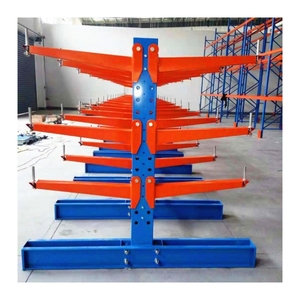
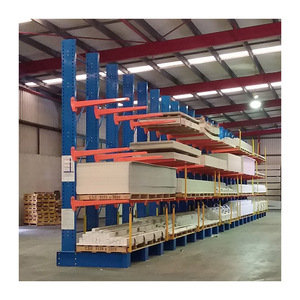
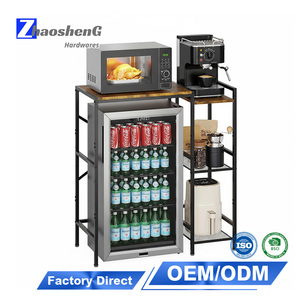

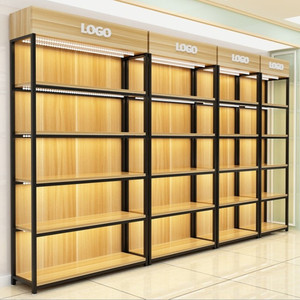
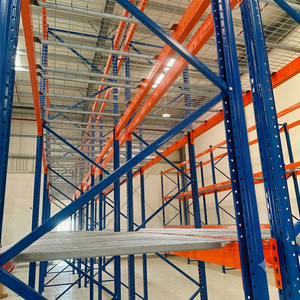
Within high-throughput distribution hubs, manufacturing warehouses, and multi-tier retail facilities, adjustable steel shelving systems are not merely passive furniture; they are structural components subject to continuous dynamic cyclic stresses, horizontal shear loads, floor settling variances, and material handling impacts. For procurement engineers, enterprise logistics directors, and EPC contractors, specifying CE certified adjustable steel shelving is an essential risk-mitigation policy governed by European harmonized standards, primarily EN 15512:2020 (Steel static storage systems – Adjustable pallet racking systems – Principles for structural design) and the Construction Products Regulation (EU CPR No 305/2011).
Under CE and EN regulatory scopes, factory production control (FPC) mandates rigorous material traceability for every roll-formed upright profile, cross-beam, horizontal bracing element, and base plate. Cold-rolled structural steels such as high-strength S355MC, S355JR, or cold-forming grade DX51D must deliver verified chemical compositions, minimum yield strengths (Rp0.2), and tensile elongation parameters verified through EN 10204 3.1 inspection certificates. The elimination of brittle weld transitions and the exact calculation of perforations (notching factors) across adjustable uprights require advanced non-linear Finite Element Analysis (FEA) calibrated by stub column testing, upright-to-beam connection stiffness testing, and floor plate anchoring shear validations.
CE-certified steel shelving engineered in conformity with EN 15512 utilizes Limit State Design principles rather than obsolete allowable stress approaches. The structural matrix calculates both the Ultimate Limit State (ULS)—preventing elastic and elastoplastic buckling of thin-walled cold-formed steel sections under combination load factors—and the Serviceability Limit State (SLS), which limits permissible horizontal and vertical deflection (typically restricted to L/200 for steel decks and L/300 for sensitive automated material handling equipment) to prevent progressive structural collapse during continuous intralogistics throughput.
Selecting an optimal adjustable shelving configuration requires an empirical cross-evaluation of steel profiles, connection geometry, protective passivation, and automated picking compatibility. The engineering matrix below contrasts core structural profiles manufactured for global export:
| Shelving System Classification | Standard Profile & Steel Grade | UDL Range / Level | Perforation Pitch | Deflection Limit (SLS) | Surface Passivation |
|---|---|---|---|---|---|
| Industrial Longspan Shelving | Uprights: 55x47x1.5-2.0mm (Q235B/S355) | 300 kg – 1,200 kg | 50 mm modular step | L/250 to L/300 | Electrostatic Polyester (70-90µm) |
| Heavy-Duty Cantilever Racks | Columns: Welded H-Section (Q355B Hot-Rolled) | 500 kg – 4,500 kg/arm | 100 mm pitch bolt/pin | L/200 arm tip max | Hot-Dip Galvanized ISO 1461 |
| Boltless Slotted Angle System | Cold-formed 40x40 to 60x40x1.8mm Angle | 100 kg – 300 kg | 25 mm teardrop / keyhole | L/200 | Epoxy-Polyester Hybrid |
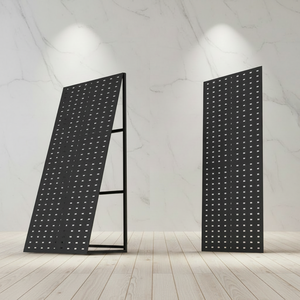
| Electrified Retail Gondola Racks | Conductive Hollow Rectangular Column | 80 kg – 180 kg | 25 mm / 32 mm pitch | L/250 | Conductive Busbar + Powder Coat |
| Wire Mesh Decked Pallet Tiers | 5.0mm Drawn Steel Wire + 14Ga Channels | 1,000 kg – 1,500 kg UDL | Channel fitted to beam | < 0.5% span length | Pre-Galvanized DX51D+Z275 |
Global supply chain transformations, real estate rent inflation, and corporate net-zero sustainability mandates are altering how international procurement directors evaluate steel racking suppliers. In the 2025–2030 sourcing cycle, procurement decisions have shifted from bare unit cost per kilogram toward lifecycle durability, automated reconfiguration capability, and green steel transparency.
Escalating on-site mechanical installation labor costs across Europe, the Middle East, and North America have triggered high demand for interlocking rivet, teardrop, and wedge-fit hook systems. Modern enterprise facilities require zero-bolt tier adjustment to reconfigure shelf openings on the fly without structural dismounting, drastically lowering downtime during SKU dimension shifts.
The implementation of the European Union's Carbon Border Adjustment Mechanism (CBAM) has forced importers to audit the embodied carbon intensity of imported steel structures. Exporters who integrate Electric Arc Furnace (EAF) scrap-recycled steel, document verifiable Scope 1-3 GHG metrics, and supply ISO 14025 Environmental Product Declarations (EPDs) are dominating enterprise contracts.
Urban logistics operators are bypassing prohibitive greenfield construction expenses by developing multi-tier mezzanine floors and high-bay shelving inside legacy urban structures. This requires adjustable steel columns engineered for dynamic point-loads, compatible with goods-to-person AMR (Autonomous Mobile Robots) robotics and integrated spiraling conveyor shafts.
Technological differentiation in steel fabrication is no longer centered merely on stamping and bending; it is defined by metallurgical micro-alloying, automated cold-roll forming, and high-performance surface passivation technologies:
By employing modern thermo-mechanically rolled high-strength steels with niobium and vanadium trace micro-alloys, manufacturers produce upright profiles that achieve higher section modulus and torsional rigidity while reducing raw deadweight by 12–18%. This innovation optimizes ocean container packing volume and directly decreases international sea-freight emissions.
Moving beyond standard post-galvanizing methods that risk thermal warping on thin-walled sheets, cutting-edge suppliers utilize pre-coated Zinc-Aluminum-Magnesium (ZM 310g/m²) alloys. ZM coatings exhibit autogenous self-healing galvanic characteristics along pierced perforations and slit edges, delivering salt-spray resistance surpassing 3,000 hours in harsh coastal or chemical storage environments.
Modern production facilities run 24-station continuous cold roll-forming lines featuring integrated laser feedback sensors and servo-driven hydraulic punching. By maintaining tight hole-pitch tolerances (±0.15mm over 12-meter continuous sections), upright upright-to-beam connectors lock with zero binding friction, ensuring uniform load dispersion throughout complex structural frames.
Backed by 36 years of industrial excellence, our manufacturing and logistics headquarters in Hamriyah Free Zone (HFZA), Sharjah, delivers end-to-end turnkey project execution spanning the UAE, GCC, Europe, and worldwide markets.
Integrated Storage Solutions (ISS) transforms spatial constraints into high-density logistical advantages. Rather than simply supplying off-the-shelf catalog steel, our engineering consultants perform complete system studies that assess dynamic floor slab loadings, seismic categories, handling vehicle turn radiuses, and pick-frequency slotting to design bespoke storage solutions.
Parametric 3D structural CAD/CAM modeling tailored around irregular column grids, overhead HVAC ducts, and unique warehouse footprint profiles.
Multi-stage automated iron-phosphate pretreatment followed by thermosetting electrostatic powder curing prevents peeling, scratching, and atmospheric oxidation.
Steel banded, moisture-barrier shrink-wrapped, corner-protected, and palletized bundle packing engineered specifically to endure severe ocean freight transit without distortion.
Dedicated project engineers ensuring timely production milestones, comprehensive export documentation, mill test certificates, and complete installation drawings.
Essential technical, compliance, and international logistics questions addressed directly by our structural engineering and export compliance department.
Every commercial export order includes an official Declaration of Performance (DoP) referencing EN 15512 or EN 1090 structural steel execution standards, EN 10204 3.1 material test certificates for cold-rolled steel coils, static calculation reports outlining maximum allowable UDL deflection limits, and safety load plaques for display on upright assemblies.
UDL capacities are established in accordance with FEM 10.2.02 and EN 15512 test methods. The rating assumes cargo mass is evenly dispersed across the clear span of shelf panels or beam pairs. Testing verifies that beam deflection does not exceed 1/200th of the span length under service load and that a minimum 1.5 safety factor is sustained against permanent plastic deformation.
Standard profile production (such as teardrop boltless shelving, longspan uprights, and standard pallet rack components) typically ships within 15–20 business days. Highly customized structures involving structural cantilever columns, custom powder-coat RAL matching, or multi-tier mezzanine layouts average 25–35 days from approved fabrication submittal drawings.
All upright columns and horizontal beams are nested into unitized steel-strapped bundles with heavy protective heavy-duty corrugated board edge-protectors and sealed in high-micron stretch poly-wrap. Hardware, baseplates, and bracketry are packed in heavy-duty wooden crates with desiccant packs to prevent condensation staining during humid sea voyages.
Yes. For installations in seismically active regions, our engineering team uses spectral acceleration parameters (such as Eurocode 8 or IBC seismic hazard levels) to calculate dynamic lateral forces, specifying heavier gauge upright profiles, reinforced floor anchor embedments, and top-tier cross-bracing frameworks to mitigate seismic risk.
For cold-room facilities with condensation or humid outdoor marine air, we recommend continuous hot-dip galvanizing according to ISO 1461 (minimum 55–85 microns coating thickness) or pre-galvanized Zinc-Aluminum-Magnesium (ZM) alloy. For standard climate-controlled indoor warehouses, our multi-stage electrostatic polyester powder coating delivers superior scratch resistance.
Teardrop and boltless rivet configurations utilize gravity-assisted wedge-lock pins that slip into tapered holes for rapid tool-free manual assembly and quick level repositioning. Bolted configurations utilize high-tensile Grade 8.8 bolts, offering maximum rigidity and vibration resistance in high-impact industrial environments or heavy machinery storage.
Galvanized wire mesh decks offer an open area exceeding 70%, which satisfies NFPA 13 fire suppression regulations by permitting ESFR ceiling sprinkler water to penetrate down through multiple shelf levels. Additionally, they prevent dust accumulation, illuminate lower levels by allowing light filtration, and eliminate potential hidden shelf debris.
Our engineers perform profile matching studies based on samples or detailed technical cross-section drawings. We verify upright face widths, side depth dimensions, punch center-to-center pitch, metal thickness, and beam locking prong geometry to ensure seamless interoperability with legacy European or American teardrop rack installations.
To produce an optimized CAD proposal and static calculation, our engineering department requires: warehouse floor clear height, slab load-bearing capacity (kN/m²), unit load dimensions (width × depth × height including pallet overhang), maximum individual weight per SKU level, handling equipment reach specifications, and local fire system constraints.
Collaborate with our structural engineers today. Send us your architectural floor plans, loading requirements, and SKU profiles to receive a comprehensive turnkey storage layout study, static calculation summary, and competitive factory-direct export quotation within 24 hours.