Racking & Shelving Specialists — Hamriyah Free Zone, Sharjah · Serving the UAE & GCC

Engineered to FEM 10.2.02 and EN 15512 static and seismic standards. Compare our premium industrial systems engineered for optimal cubic storage utilization, extreme load capacities, and seamless automated warehouse integration.
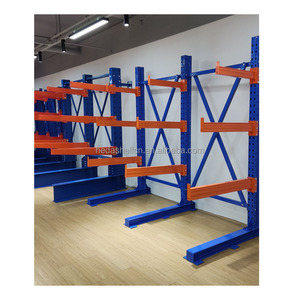
Unimpeded frontal access engineered for timber, structural steel tubes, and extrusions. High-tensile Q355B column profiles with modular pivot connectors.
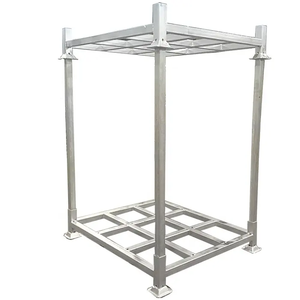
Hot-dip zinc coating with high-yield modular upright corner sockets. Stackable up to 5 tiers without permanent floor fixation; excellent for bulk yard logistics.
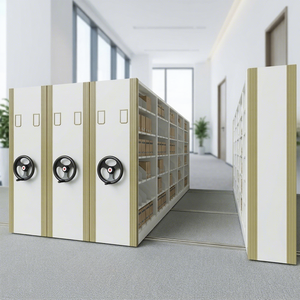
High-precision anti-friction chain transmission with central cam-lock security. Increases archival and specimen space density by upwards of 85%.
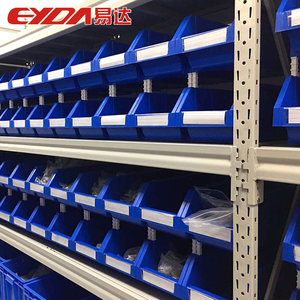
Cold-rolled multi-tier construction with electrostatically bonded corrosion barrier. Configurable pitch settings (50mm increments) for manual picking systems.
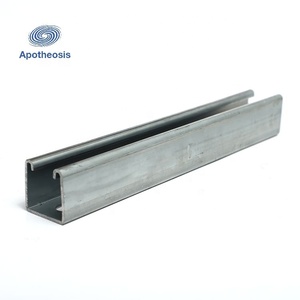
Precision robotically welded arm connectors featuring integrated removable stop-pins. Designed specifically to deflect torsional loads on long bar inventory.
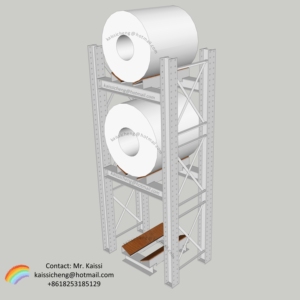
Heavy-gauge rolled structural channel cradles designed for steel and aluminum master coils. Concentrated point-load distribution with polyurethane liners.
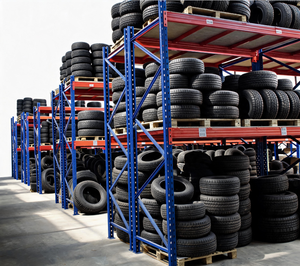
Continuous-profile cold-formed uprights offering unit capacities exceeding 5,000 kg per beam level. Engineered for integration with mobile mechanized bogies.
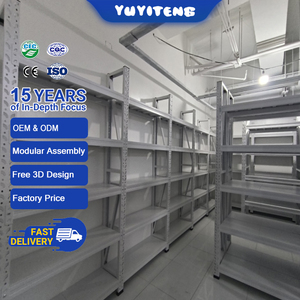
High-rigidity bolted box beam profiles, drop-in galvanized steel decking panels, and impact-resistant upright guards for high-cycle distribution hubs.
In modern supply chain engineering, real estate acquisition and climate control represent the two most volatile operational expenditures. Traditional selective pallet racking layouts consume up to 60% of total warehouse floor footprint purely for forklift transit aisles. By contrast, an electrically driven Mobile Pallet Racking System mounted on heavy-duty motorized carriages eliminates static aisles, establishing a single dynamic access corridor that opens via computerized dispatch, wireless radio-frequency (RF) controllers, or automated guided vehicle (AGV) scheduling interfaces. This configuration transforms standard storage density, increasing net pallet positions by 80% to 120% within the exact same structural footprint.
As one of the world's most advanced manufacturing epicenters, top-tier Chinese racking suppliers leverage advanced cold-roll forming automation, continuous in-line punch pressing, and automated submerged-arc welding to deliver motorized mobile bases engineered for extreme payload durability. The structural integrity of a mobile racking assembly depends not only on the upright column yield strength (typically fabricated from certified Q355B or European grade S355JR structural steel), but fundamentally on the precision machining of the ground bogies, wheel flange metallurgy, synchronized motor-drive shafts, and optoelectronic perimeter security grids.
“Mobile pallet racking systems reduce cold-storage refrigerated volumetric air mass by up to 45%, directly cutting facility thermal transmission losses and compressors’ electric utility loads while preserving 100% selective accessibility to every stored stock-keeping unit (SKU).”
Integrated Siemens S7-1500 or Mitsubishi industrial microcontrollers governing variable-frequency drive (VFD) ramps for harmonic acceleration and smooth inertial deceleration, mitigating load tipping hazards.
Cat-4 fail-safe optical light barriers, dual safety trip bars, and proximity ultrasonic sensors across the entire chassis length, ensuring automated emergency immobilization upon detecting personnel or foreign debris.
Heavy-duty forged 45# steel wheels tracking on flat-head or inverted-V guide rails embedded into the concrete slab, aligned precisely with optical levelling instruments to within ±1.0mm per 10-meter run.
Decentralized gear-motor transmission distributing synchronized torque through solid drive shafts across the full carriage span, eliminating crab-walking, mechanical binding, and frame distortion.
Procurement specialists, logistics directors, and warehouse architects are shifting their purchasing strategies from isolated hardware acquisitions to integrated lifecycle partnerships. Sourcing mobile pallet racking systems from China now demands an intricate evaluation of software integration, electrical modularity, and structural metallurgy.
Modern mobile racks no longer operate as standalone mechanical hardware. Procurement mandates demand open API, Modbus-TCP, and OPC-UA connectivity directly interfacing with ERP, Warehouse Management Systems (WMS), and Warehouse Control Systems (WCS) to dynamically pre-open pick faces based on real-time order batches.
With industrial electricity tariffs climbing globally, cold store operators demand mobile bases certified for -30°C continuous operation. Low-temperature synthetic gear lubricants, heated motor housings, and condensation-resistant wiring harnesses are emerging as baseline procurement criteria to trim facility refrigeration loads.
Global logistics hubs situated along high seismic risk zones require finite-element modeled (FEA) base carriages capable of absorbing ground shear waves without beam displacement. Chinese tier-1 suppliers increasingly furnish certified vibration-table testing compliant with AS4084, RMI, and FEM standards.
The heavy storage manufacturing sector is experiencing rapid mechanical and electronic evolution. Below is an engineering comparison illustrating standard legacy mobile racking versus next-generation automated systems manufactured by premier Chinese producers:
| Engineering Dimension | Legacy Mechanical Mobile Racks | Next-Gen Intelligent Mobile Systems | Operational Impact |
|---|---|---|---|
| Drive Motor Technology | Single AC induction motor with long mechanical shafts | Decentralized synchronous servo drives with VFD feedback | Zero Mechanical Binding |
| Floor Guidance System | High-profile surface tracks causing forklift vibration | Flush-embedded laser-aligned low-profile track guides | Extended Forklift Lifespan |
| Operational Safety | Physical wire pull-cords and mechanical bumpers | Multi-zone LiDAR optical curtains & safety PLC controls | ISO 13849-1 PLd Safety |
| AGV/AMR Interface | Manual operator remote pushbuttons | Direct industrial Wi-Fi / 5G industrial IoT handshake | Unmanned Operations |
| Corrosion Barrier | Standard alkyd paint or low-cure powder coat | Robotic electrostatic epoxy thermoset with zinc undercoat | C4/C5 Marine Grade Toughness |
Beyond raw electronics, the fundamental cold-rolled steel profiling has seen substantial structural refinement. Uprights now implement continuous omega (Ω) or diamond-punch perforations, cold-formed on high-speed rolling lines with automated flying shears to guarantee a pitch tolerance of less than ±0.25mm over an 11-meter vertical reach. This manufacturing precision eliminates residual internal stress in upright profiles, preventing rack twist when fully loaded with up to 24 metric tons per bay.
With over 36 years of specialized racking, industrial shelving, and intralogistics manufacturing heritage, our modern production infrastructure bridges engineering precision with massive fabrication scalability. Headquartered with advanced robotic manufacturing lines, certified metallurgical laboratories, and an international installation network spanning the Middle East, GCC, Europe, and the Americas, we deliver complete turnkey logistics projects backed by end-to-end accountability.
Every deployment initiates with an engineering study evaluating building clear heights, concrete slab deflection, point loads, material handling equipment (MHE) turning radii, and dynamic SKU throughput frequencies.
Equipped with computerized cold-roll profiling machines, high-precision laser tube cutting centers, and Swiss Gema robotic electrostatic powder coating booths delivering immaculate, pinhole-free epoxy finishes.
Full conformance to European FEM 10.2.02, EN 15512, British SEMA, and American RMI standards. Third-party mill certificates and batch tensile test reports accompany every single export shipment.
From embedded guide rail civil leveling to final PLC commissioning, our certified field teams manage on-site installation, safety validation, load warning signage, and operational training for client teams worldwide.
Detailed technical insights addressing the most frequent engineering queries raised by global procurement agents, warehouse design consultants, and structural engineers.
Mobile pallet systems generate high concentrated line loads along the steel wheel paths. The concrete floor slab must meet DIN 18202 Group E or TR34 Superflat specifications, with slab thickness typically between 200mm and 250mm and compressive strength of C30/37 or greater to avoid structural settlement or carriage binding.
By eliminating multiple fixed operating aisles and replacing them with a single motorized aisle, net volumetric storage capacity typically surges between 80% to 100%. While traditional layouts utilize roughly 40% of building volume, mobile racking elevates cubic space utilization up to 85%–90%.
Yes. Specialized cold-store packages are engineered for operational reliability down to -30°C. These systems incorporate heated control enclosures, low-viscosity synthetic transmission oils, IP67 sealed limit switches, and specialized steel alloys with high Charpy V-notch impact toughness to prevent cold brittle fracture.
Safety is managed through redundant, fail-safe mechanisms certified to ISO 13849-1 (PLd). Dual optoelectronic optical curtains scan aisle entrances, safety touch bumpers stop motion upon contact with 5kg of resistance, and aisle-entry lockouts disable carriage drives whenever picking personnel are active inside.
Standard fabrication cycles for a 2,000 to 8,000 pallet position project range between 30 and 45 calendar days. Ocean freight requires an additional 15 to 30 days depending on the destination port (Dubai Jebel Ali, Hamburg, Rotterdam, or Long Beach). Comprehensive structural shop drawings are provided within 7 days of deposit.
Mobile carriages can be connected to warehouse standby generators or uninterrupted battery backup systems (UPS) designed to complete or open an emergency transit aisle. Additionally, manual mechanical clutch releases allow operators to hand-crank or winch individual carriages in catastrophic power disruptions.
Structural uprights and load beams are roll-formed from certified hot-rolled high-tensile Q355B coil steel. Surface finishes feature an automated multi-stage degreasing and iron phosphate pretreatment followed by robotic electrostatic thermosetting powder coating (60–80 microns) or full hot-dip galvanization (ISO 1461).
In many circumstances, existing structural uprights can be re-engineered and bolted onto newly installed motorized mobile base chassis, provided the upright profile structural calculation satisfies dynamic acceleration loads and current beam connector standards under FEM 10.2.02 review.
Submit your architectural CAD drawing, floor plan dimensions, and load specifications. Our certified structural engineers will generate a complimentary 3D layout, cubic storage optimization report, and comprehensive quotation within 48 business hours.
Get Catalog