Direct OEM/ODM Certified Industrial Manufacturer

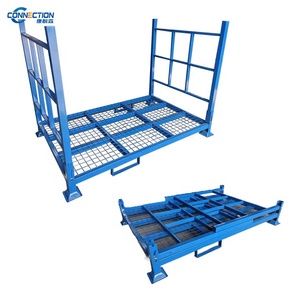
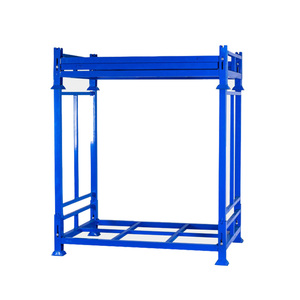
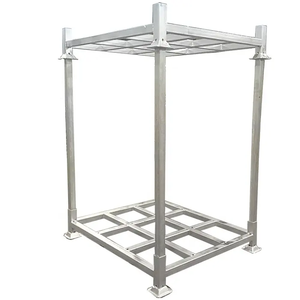
China Top Stackable Steel Racks Factory & Exporters

Precision-engineered modular post pallets, heavy-duty stillages, and collapsible warehouse steel racking systems built for optimal cubic density, cold-chain longevity, and dynamic global freight efficiency.

High-Density Modular Storage Portfolio

Engineered Stackable Steel Racking Systems

Manufactured using certified high-tensile Q235B and Q355B structural steel, our modular stackable steel racks eliminate permanent floor anchoring, streamline seasonal buffer storage, and offer 4-to-6 tier dynamic vertical stackability with guaranteed structural deflection safety factors.

36+
Years Engineering Heritage
50,000+
Sqm Modern Production Hub
1,200+
Annual 40HQ Export Shipments
100%
FEM / ANSI MH16.1 Compliance
Authoritative Whitepaper Analysis

Why Tier-1 3PLs and Manufacturers Transition to Portable Stacking Racks

In modern high-velocity supply chains, static, anchored pallet racking creates rigid operational bottlenecks. Portable stackable steel racks—commonly designated as post pallets, manuracks, or industrial stacking stillages—deliver flexible, high-density bulk storage that dynamically reconfigures as seasonal SKU velocities shift.

Zero Civil Anchoring & Floor Agnostic

Traditional selective racking requires extensive concrete floor slab core-drilling and chemical anchoring, demanding heavy slab load certification (minimum 150–200mm slab thickness). Portable stackable steel racks transfer compressive point loads evenly across wide welded base feet or nesting cups, eliminating slab damage, leasing leasehold penalties, and civil installation delays.

Dynamic 4:1 / 5:1 Collapsible Nesting Ratio

When stock levels ebb during off-peak logistics cycles, empty fixed aisles represent wasted overhead. Our engineered post pallet and tire stillage systems feature demountable tubular uprights or drop-down fold-flat frames. A single worker can nest up to 20 base frames into a condensed footprint, yielding a 75% to 82% footprint reduction and drastic return-freight savings.

Heavy Dynamic Deflection & Cold-Chain Integrity

Built exclusively from cold-drawn hollow structural sections (HSS) with yield points exceeding 235–355 MPa, our racks withstand vigorous forklift shunting. When hot-dip galvanized to ISO 1461 standards, they prevent micro-flaking and brittle structural cracking in blast freezers operating down to -35°C, where conventional powder-coated mild steel rapidly degrades.

Engineering Specification Benchmark

Comparative Structural Performance Across Stacking Rack Typologies

A reference engineering matrix evaluating structural geometry, steel grades, nesting performance, and dynamic safety coefficients across primary industrial stack rack models manufactured in our China export facility.

Rack Model Category Structural Profile Steel Grade Unit Static Capacity Stacking Limit Surface Treatment Primary Sector Application
Modular Post Pallet Base channel 100×50 + Ø60mm tube Q235B / ASTM A36 1,500 – 2,500 kg 4 Tiers (1+3 Stack) Hot-Dip Galv / Powder Cold Storage, Agriculture, Chemical Barrels
Foldable Mesh Tire Rack 50×50mm HSS + 50×50 wire mesh Q235B Cold Drawn 1,000 – 1,200 kg 5 Tiers (1+4 Stack) Thermoset Polyester Coat Automotive Tier-1 OEM, PCR/TBR Distribution
Heavy Industrial Stillage Formed 3.0mm Sheet + Corner Casting Q355B High Yield 2,000 – 3,500 kg 4 Tiers Under Load Zinc Phosphate + Epoxy Forging, Heavy Castings, Automotive Stamping
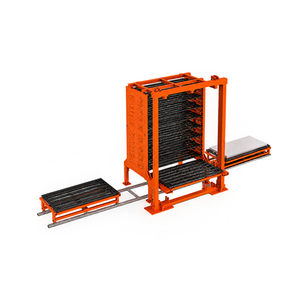
Sheet Metal Automated Rack Box-girder structural channel Q355B Low-Alloy 3,000 – 5,000 kg Integrated Cartridge Multi-stage Polyurethane Fiber Laser Feeding, Heavy Tooling & Dies
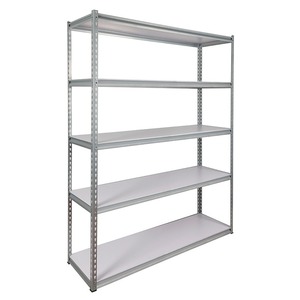
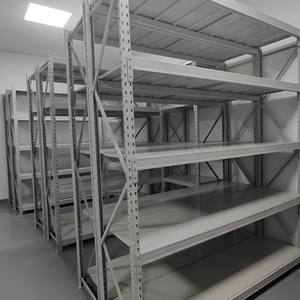
Light/Medium Boltless Rack Upright 1.5–2.0mm butterfly punched Cold-Rolled SPCC 200 – 500 kg/tier Interlocked Bays Electrostatic Powder E-commerce Fulfilment, Spare Parts, Archives
Enterprise Manufacturing Authority

End-to-End Vertical Manufacturing from Steel Coil to Global Port Delivery

With an engineering lineage stretching over 36 years across international logistics and warehousing projects in the Middle East, GCC, North America, and Europe, our integrated manufacturing infrastructure eliminates sub-contracted quality variances. Operating from our heavy fabrication base, we control raw steel coil slitting, multi-roll tube forming, computerized robotic robotic MIG welding, and continuous automated powder coating lines.

Every batch of stackable steel racks undergoes stringent non-destructive weld ultrasonic testing, static deflection tests adhering to FEM 10.2.02 standards (limiting beam deflection to under 1/200th of clear span), and cyclical fork impact tests to guarantee operators zero catastrophic collapse risks under maximum dynamic loads.

  • Raw material sourcing exclusively from tier-1 domestic state mills (Baosteel / Shougang) with complete 3.1 Mill Test Certificates (MTC).
  • Automated robotic welding cells guarantee 100% seam penetration on all critical cup-to-base and post-socket joints.
  • Dedicated export container packaging team optimizing ocean shipping density, achieving up to 140–180 post pallet bases per 40HQ.
Get a Quote

Verified Quality Certification

ISO 9001:2015

Full-process quality management covering raw coil chemical verification, dimensional tolerance inspections, and automated weld integrity.

EN 1090-1 / CE

Execution of steel structures and aluminum structures certification, ensuring full structural compliance across European Union industrial zones.

ANSI MH16.1 & AS4084

Engineering compliance for industrial steel storage racks, satisfying stringent Australian and North American occupational workplace safety mandates.

ASTM B117

Independent laboratory salt-spray corrosion endurance certified up to 720 hours for hot-dip galvanized and outdoor marine grade powder-coated finishes.

Strategic Procurement Intelligence

Emerging Procurement & Architectural Trends in Stackable Steel Racks

Global warehouse real estate pressures, soaring cost per cubic meter, and heightened automation are fundamentally shifting how logistics directors procure mobile steel storage fixtures. The key trajectories defining enterprise purchasing from 2025 through 2030 include:

1. AMR & AGV Interoperability

Traditional post pallet bases were engineered strictly for manual counterbalanced forklifts. Future-ready procurement requires chamfered under-chassis runners, precise ground clearance tolerances (±1.5mm), and optical target reflectors compatible with Autonomous Mobile Robots (AMRs) and automated pallet shuttle jacks.

2. Scope 3 Carbon Accounting & Circular Steel

Tier-1 multinational procurers in Europe and North America increasingly demand Environmental Product Declarations (EPDs). Our manufacturing line integrates scrap-recycled EAF (Electric Arc Furnace) low-carbon steel alongside volatile organic compound (VOC)-free thermoset polyester powder coatings to minimize embedded carbon.

3. Cold-Chain Modular Buffering

With pharmaceutical cold logistics and rapid frozen food expansions outpacing permanent facility construction, modular stackable galvanized post pallets are serving as "mobile cold rooms". Procurement teams use them inside leased refrigerated hangars to bypass permanent permitting while guaranteeing hygiene compliance.

R&D and Manufacturing Evolution

Technological Frontiers in Industrial Steel Rack Engineering

How metallurgical advancements, intelligent robotics, and finite element modeling (FEA) are revolutionizing structural safety, tare-weight reduction, and lifetime asset return.

High-Strength Micro-Alloyed Steel Integration

Transitioning from standard low-carbon Q235B steel to niobium-vanadium micro-alloyed Q355B and Q460 cold-formed steels allows a 15% to 22% reduction in overall tare weight while boosting dynamic tensile yield strength. This facilitates easier manual handling of empty components, decreases ocean container deadweight, and increases net payload efficiency.

Automated Vision-Guided Robotic Welding

Human manual welding introduces microscopic porositity, cold laps, and inconsistent throat thickness at high-stress corner gussets. By utilizing 6-axis optical laser vision-guided robotic welding stations, our production lines achieve uniform penetration depths and zero weld spatter, ensuring that stacking nesting cups retain 100% shear resistance under seismic shocks.

Duplex Coating Corrosion Technologies

For marine and aggressive chemical environments, traditional single-coat wet spraying provides inadequate longevity. Our plant offers automated continuous dual-stage surface treatments: a zinc-nickel or hot-dip galvanized sacrificial sub-layer paired with an electrostatic architectural polyester top-coat, pushing corrosion resistance past 1,000 salt-spray hours.

Embedded IoT & RFID Asset Telematics

Modern stillage fleets operating across multi-facility loops face significant loss rates. Modern stillages are now delivered with protective laser-cut recessed steel pockets that house vulcanized UHF RFID transponders or low-power Bluetooth Low Energy (BLE) beacons, allowing WMS platforms to track fleet turnover and maintenance lifecycles in real time.

Procurement Knowledge Base

Frequently Asked Questions for Industrial Buyers & Project Engineers

Authoritative technical guidance compiled by our senior structural engineers to resolve critical procurement specifications, ocean shipping calculations, and safety standard compliance questions.

What is the structural difference between dynamic load capacity and static load capacity?

Static load capacity represents the maximum certified payload a stackable steel rack can bear when stationary on a level concrete floor with uniformly distributed cargo. Dynamic load capacity specifies the maximum safe load during active transit on a forklift or AGV mast, where braking forces, vertical acceleration, and cornering shear occur. All our racks are structurally modeled with an engineering dynamic safety factor of 1.5 to 2.0 and a static safety factor of 3.0 to 4.0 to safeguard operators against structural fatigue.

How do you optimize 40HQ ocean freight container space when shipping stackable racks?

Ocean freight dead-freight directly impacts landed unit costs. Our engineers design demountable post pallets and folding stillages around container door clearances (2.28m width × 2.58m height). Bases feature integrated interlocking stacking pins so that 20–25 bases nest stably in a single vertical stack. Removable posts are bundled into high-density steel cradles strapped with heavy-gauge PET banding, achieving loading efficiencies of up to 140 to 180 modular units per 40HQ container.

When should we specify Hot-Dip Galvanizing (HDG) versus Electrostatic Powder Coating?

Electrostatic powder coating (60–90 microns) is cost-effective, aesthetically customizable, and ideal for standard indoor ambient distribution centers with controlled humidity. Hot-Dip Galvanizing (ISO 1461, minimum 70–85 microns of zinc-iron metallurgical alloy) is mandatory for blast freezers (-30°C), outdoor unroofed yards, coastal marine humidity, or chemical environments where scratched paint leads to rapid subsurface rust creep.

Can your factory engineer custom sizes to match non-standard wooden pallets or automotive stillages?

Yes. OEM and ODM bespoke manufacturing represents over 60% of our export volume. Our engineering office utilizes SolidWorks 3D modeling and ANSYS Finite Element Analysis (FEA) to tailor inner/outer clear dimensions, post heights, fork entry pockets, wire mesh apertures, and sheet base gauges to your exact cargo profiles and forklift tine dimensions. Sample prototypes are fabricated and dimensionally certified before mass production runs.

What testing and quality documentation is supplied before dispatch?

Every commercial shipment is accompanied by a comprehensive Factory Acceptance Test (FAT) dossier. This includes Raw Material Mill Test Certificates (MTC 3.1) showing chemical composition and yield points, 100% dimensional inspection reports, dry film thickness (DFT) paint/galvanizing reports, weld non-destructive testing (NDT) records, and static overload test photographs verifying zero permanent set under 125% of rated load.

How do stackable steel racks perform in seismic active warehouse zones?

Fixed tall pallet racks are susceptible to seismic harmonic resonance and progressive structural buckling if floor anchors shear. Modular stackable racks absorb seismic ground energy through microscopic mechanical slip at the nesting target cups. For facilities in designated seismic zones, we engineer widened flared nesting cups and deeper interlocking socket depth (up to 120mm) to prevent post dislodgement during seismic lateral acceleration.

What is the typical production lead time for full-container-load (FCL) orders?

For standard models (e.g., standard 1200×1000mm post pallets or standard tire racks), tooling is readily set up, enabling lead times of 15–20 days for 1 to 5 full 40HQ containers. For fully customized bespoke fabrications requiring novel stamping dies or specialized hot-dip galvanizing baths, standard factory lead time spans 25–35 days from technical CAD shop-drawing approval.

How are stackable stillages safely operated with counterbalance and reach forklifts?

Our stack racks incorporate flared guide feet and inverted cone target locators. When an operator lowers a loaded rack onto a lower unit, the nesting cups mechanically self-align the upper posts into the locking position even if the forklift entry angle is off by up to 25mm. Standard models feature full-perimeter 4-way forklift pockets with integrated anti-tilt skids for maximum handling security.

Direct Factory Engineering Support

Request Your Custom Engineering & Container Load Plan Today

Consult directly with our structural engineering team. Submit your floor area, pallet weights, target stack height, or custom component drawings for an optimized 3D layout simulation and competitive ex-factory volume quote.