Racking & Shelving Specialists — Hamriyah Free Zone, Sharjah · Serving the UAE & GCC

Precision-formed from certified Q235B and Q355B structural steel, our heavy-capacity racking, pre-engineered buildings, and bespoke cantilever systems are fabricated in full alignment with international FEM 10.2.02, EN 15512, and RMI MH16.1 specifications.
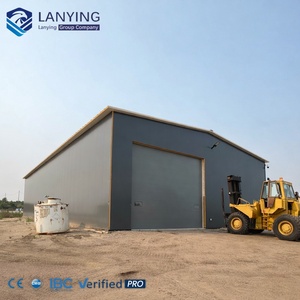
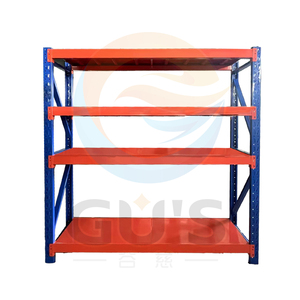
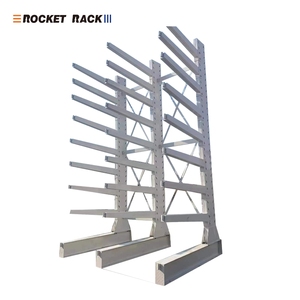
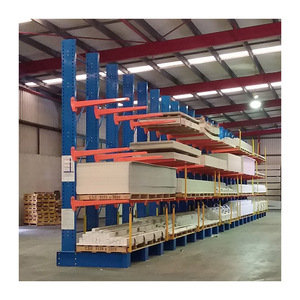
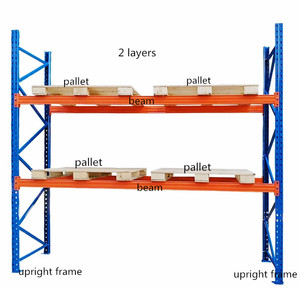
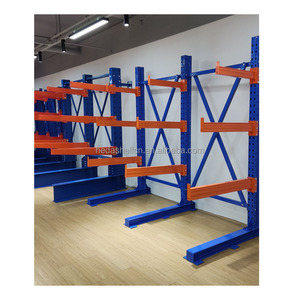
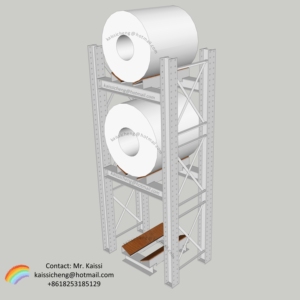
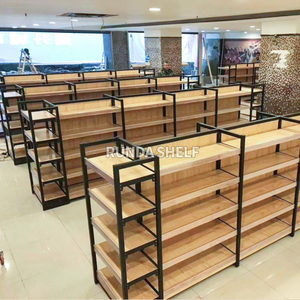
Rooted in a 36-year engineering heritage spanning the Middle East (Hamriyah Free Zone, Sharjah, UAE) and extensive heavy-industry production complexes in China, we integrate mechanical design, automated roll-forming, and strict quality verification under one roof.
Over three and a half decades of structural intralogistics calculation across extreme climatic zones—from the hyper-arid, high-temperature Middle East to seismic-prone Asian shipping corridors.
Equipped with 28 automated high-precision roll-forming lines capable of stamping, punching, and profiling upright frames up to 18 meters continuous length without mid-span splicing joints.
Direct supply contracts with Tier-1 mills (Baosteel, Shougang) utilizing spectroscopic chemical verification to guarantee tensile strength and elongation metrics prior to batch coil slitting.
Procurement directors and chief supply chain officers are shifting their evaluation models from simplistic dollar-per-ton pricing to Total Cost of Ownership (TCO), automated intralogistics compatibility, and cross-border regulatory resilience.
The rapid proliferation of Autonomous Mobile Robots (AMRs), Automated Storage and Retrieval Systems (AS/RS), and four-way shuttle car fleets has rendered conventional racking tolerances obsolete. Procurement teams now mandate sub-millimeter manufacturing tolerances (≤ 1.0mm upright deviation across a 12m bay) and zero torsional deflection on support tracks. Racking systems are no longer passive steel fixtures—they serve as high-precision mechanical guides directly interfacing with optical and LiDAR-guided automated machinery.
With the phased implementation of the European Union's Carbon Border Adjustment Mechanism (CBAM) and corporate ESG governance frameworks worldwide, global buyers are requiring verified Environmental Product Declarations (EPD). Forward-looking China manufacturers are adopting electric-arc furnace (EAF) "Green Steel" inputs, low-temperature curing electrostatic powder resins, and 100% closed-loop rinse water recovery in chemical conversion stages to substantially drive down Scope 1 and Scope 3 carbon tariffs.
Volatile supply chains and rapid SKU churn in omnichannel eCommerce operations necessitate warehouse infrastructure that can adapt without structural scrap. Procurement contracts heavily favor modular, bolted and interlocking connection geometries over welded structures. Facilities increasingly request convertible rack designs capable of transitioning from deep-lane drive-in or push-back pallet storage into multi-tier carton-flow picking mezzanines over a single shutdown weekend.
Catastrophic racking collapses in high-risk zones have pushed logistics insurers to enforce mandatory third-party structural engineering audits prior to underwriting facility risk. Purchasing agents now reject unverified manufacturer load tables, demanding site-specific Finite Element Analysis (FEA) reports calculated under international seismic design codes (such as Eurocode 8, AS 4084, and IBC/RMI MH16.1), customized to specific ground acceleration factors ($S_s, S_1$) and soil types.
Material efficiency, structural optimization, and automated surface engineering are fundamentally altering the physics of cold-rolled industrial storage. Examine the engineering matrix below comparing generational storage profiles.
| Evaluation Parameter | Legacy Conventional Racking (1990-2010) | Modern Optimized High-Density (Current) | Next-Gen Smart Automated AS/RS (2025+) |
|---|---|---|---|
| Primary Steel Grade | Commercial Grade Q235A ($f_y \approx 235 \text{ MPa}$) | High-Yield Q235B / Q355B ($f_y \ge 355 \text{ MPa}$) | Ultra-High Tensile Micro-Alloyed S420GD / DP500 |
| Upright Forming Geometry | Simple Open Omega Profile (7-9 Bends) | Multi-Rib Reinforced Octagonal (11-13 Bends) | Complex Closed-Box Integrated Guide Rail Profiles |
| Allowable Beam Deflection | $L/150$ to $L/200$ under uniform pallet loads | $L/200$ to $L/250$ strict international limit | $L/300$ or absolute $\le 3.0\text{mm}$ (Laser Sensor Safe) |
| Surface Protection System | Solvent-based Spray Alkyd Enamel Paint | TGIC-Free Electrostatic Epoxy-Polyester Powder | Pre-Galvanized Magnelis® / Nanoceramic Pre-treatment |
| Seismic Damping Mechanism | Rigid Baseplates with Standard Mechanical Anchors | Slotted Energy-Dissipating Base Shims | Base Isolation Springs & Viscous Structural Dampers |
| Asset Lifecycle & Traceability | Adhesive Paper Labels (Prone to Peeling) | Laser-Etched QR Codes & Barcode Integration | Embedded Passive RFID Chips & Strain Gauge IoT Sensors |
Historical cold-formed storage engineering suffered from substantial material redundancy. By utilizing modern non-linear Finite Element Analysis (FEA) calibrated against empirical physical stub-column crush tests, contemporary Chinese manufacturers have dramatically elevated cold-roll section moduli. Upright profiles now incorporate cold-rolled stiffening ribs located precisely along the neutral axis, increasing compressive load capacity by up to 28% while decreasing baseline steel tonnage per cubic meter of pallet capacity.
Furthermore, beam connector lugs have evolved from simple three-pin hooks to five-pin compound wedging claws with high torsional rotational stiffness ($C_d$). This critical joint rigidity mitigates progressive warehouse collapse scenarios by actively absorbing accidental kinetic impact energy from heavy reach trucks and counterbalance forklifts.
Essential technical, operational, and commercial insights tailored for global supply chain managers, warehouse directors, and industrial procurement professionals sourcing from China.
Q235B is an industry-standard structural carbon steel specified under GB/T 700, featuring a minimum yield strength of 235 MPa and a tensile strength of 370–500 MPa, with certified impact testing conducted at +20°C. It serves as an exact metallurgical equivalent to European EN 10025 S235JR and ASTM A36. For high-capacity upright frames, tall AS/RS structures, or low-temperature cold store facilities, we utilize Q355B (equivalent to EN S355JR / ASTM A572 Grade 50), which provides a higher yield threshold (≥355 MPa) and superior ductile elongation under dynamic shock loading.
Under European Federation of Materials Handling standard FEM 10.2.02 and EN 15512, maximum vertical beam deflection under fully loaded conditions (Uniformly Distributed Load - UDL) must not exceed $1/200$ of the clear bay span ($L/200$), and $1/300$ for automated crane-handled storage. For example, a standard 2,700mm beam carrying two 1,000kg pallets must demonstrate a middle-span sag of less than 13.5mm without exhibiting plastic deformation after unloading. All our beam ratings incorporate a minimum structural safety factor of 1.5 against material yield failure.
In refrigerated cold chains (-25°C to -40°C), traditional electro-galvanized or low-grade powder finishes suffer brittle fracturing, flaking, and rapid corrosion caused by atmospheric condensation during defrosting cycles. We specify pre-hot-dip galvanized coils (minimum Z275 zinc coating mass) or specialized zinc-rich epoxy primers combined with TGIC-free polyester powder topcoats (cured at controlled film thicknesses of 70–90 microns). This provides cathodic galvanic protection and passes rigorous 1,000-hour ASTM B117 neutral salt spray endurance tests.
An exhaustive Quality Assurance (QA) inspection protocol covers three essential verification gates: Incoming Material: Verify Mill Test Certificates (MTCs), measure cold-rolled sheet thickness with digital micrometers, and test chemical composition via optical emission spectrometers. In-Process: Inspect punch hole pitch pitch tolerance (±0.2mm cumulative error across 1 meter), beam welding penetration, and weld fillet throat dimensions. Post-Coating: Perform cross-hatch adhesion testing (ISO 2409 Class 0), impact resistance checks (ASTM D2794), and dry film thickness (DFT) gauge surveys across interior and exterior profile channels.
Because industrial racking consists of high-density long steel members, packing efficiency directly determines landed cost per pallet location. Upright frames are pre-assembled or nested KD (knock-down) into standardized bundles secured with heavy-duty polyester strapping, high-density edge-protector angles, and waterproof thermal-shrink film wrapping. Pallet beams are stacked in paired nesting blocks using corrugated spacer dunnage to safeguard powder coating finishes. We balance weight and cubic capacity utilizing dedicated 40ft High Cube containers, achieving 24–26 tons net steel payload per container.
Every racking configuration is uniquely generated by professional structural engineers utilizing STAAD.Pro and ANSYS FEA software. We apply regional spectral response parameters ($S_s, S_1$), soil classification coefficients, and building occupancy factors defined by the relevant municipal building authority. The resulting engineering package dictates upright section thickness, horizontal/diagonal bracing arrangements, column baseplate thickness, and post-installed chemical wedge anchor bolt specifications (e.g., Hilti or Fischer ETA-approved seismic anchor systems).
Collaborate directly with our senior structural engineers to calculate floor slab loadings, optimize cubic volumetric efficiency, and obtain fully costed CAD architectural layouts within 48 hours. From standard selective pallet racking to complex multi-tier mezzanine floors and turn-key automated AS/RS racking structures, we deliver industrial durability at scale.