Racking & Shelving Specialists — Hamriyah Free Zone, Sharjah · Serving the UAE & GCC
Engineered for extreme structural capacity, precise lateral stability, and unyielding durability. Direct wholesale supply from verified manufacturing facilities engineered to FEM 10.2.09, RMI MH16.2, and AS 4084 compliance.
Understanding the critical engineering variables that dictate warehouse safety, load tolerances, and long-term metal fatigue prevention.
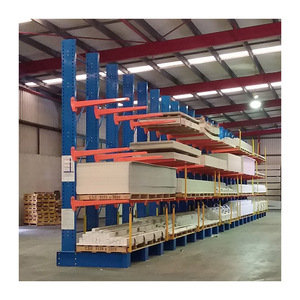
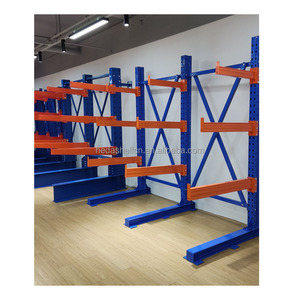
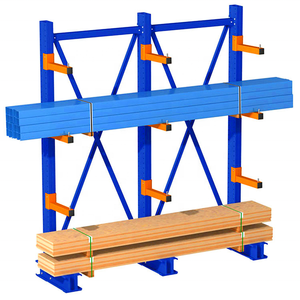
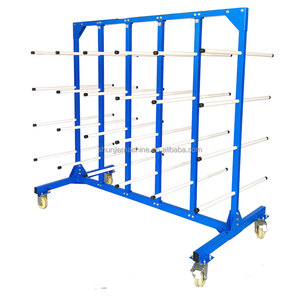
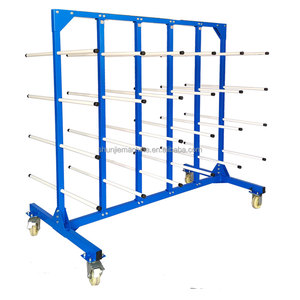
In modern structural warehousing, cantilever racking represents the engineering gold standard for managing non-palletized, linear, and awkwardly distributed stock—such as structural steel beams, extruded aluminum profiles, industrial PVC conduits, engineered timber, and composite panels. Unlike standard pallet racks that distribute loads symmetrically across two load-bearing horizontal beams, a cantilever rack operates via a pure bending moment mechanism. The entire gravitational load imposed on the arm must be successfully translated into rotational torque along the column face, demanding rigorous structural integrity at the arm connector interface and exceptional metallurgical consistency.
Under the American Rack Manufacturers Institute (RMI MH16.2) and European FEM 10.2.09 guidelines, the maximum allowable vertical deflection of a loaded cantilever arm under its rated uniformly distributed load (UDL) is typically capped at L/180 to L/250 (where L is the clear projection length of the arm). To counteract natural elastic deflection under heavy load cycles, leading Chinese export factories pre-engineer a compensatory upward camber (taper angle) of 1.5° to 2.5° into the connector plate geometry.
When raw timber or steel bundles are loaded onto the arm, the elastic modulus causes the tip to deflect downward until it achieves an optimal horizontal plane. Without this deliberate upward taper, arms under 90% load develop a negative pitch, which creates severe operational safety hazards by encouraging stored inventory to migrate toward the aisle edge under mechanical warehouse vibrations.
| Arm Profile Type | Material Specification | Typical Load Band | Fastening Connection | Optimal Industrial Application |
|---|---|---|---|---|
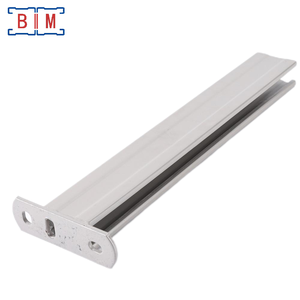
| Roll-Formed C-Channel | Q235B / Cold-Rolled Carbon Steel | 150 kg – 500 kg / arm | Hinged Clevis Pin / Wedge Lock | Plastic extrusions, copper tubing, electrical conduits, hand-loaded archives. |
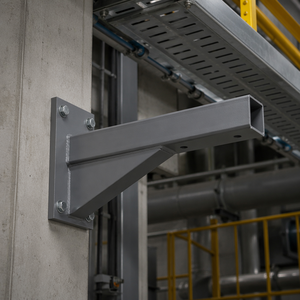
| Welded Box Profile | Q355B (High Tensile) / St52-3 | 500 kg – 1,200 kg / arm | Bolted Saddle Plate (Grade 8.8) | Timber packs, furniture components, mid-diameter steel tubing, HVAC ducting. |
| Hot-Rolled Structural IPE/HEA | Q355B / ASTM A36 / S355JR | 1,200 kg – 2,500+ kg / arm | Grade 10.9 Flange Bolts / Heavy Clamps | Solid steel billets, sheet metal dies, offshore drilling casings, structural I-beams. |
| Austenitic Stainless Steel | AISI 304 / AISI 316 Marine Grade | 300 kg – 1,000 kg / arm | Corrosion-Resistant Pinned Clamps | Cold storage chambers, pharmaceutical storage, marine environments, chemical plants. |
Drawing on over 36 years of industrial racking innovation and turnkey storage execution across the UAE, GCC, Europe, and North America, our Chinese manufacturing hubs eliminate supply-chain intermediaries to provide certified engineering precision.
We do not simply quote parts. Every procurement starts with a meticulous engineering review: floor slab loading analysis, forklift turning radii, clearance heights, SKU velocity mapping, and fire sprinkler clearances to ensure zero layout discrepancies.
Cantilever arms bear tremendous cyclical dynamic loads. Our production floors deploy 6-axis Panasonic robotic MIG/MAG welding lines, ensuring absolute weld penetration on critical arm-to-saddle junctions with zero porosity or undercut defects.
Whether you require standard 1000mm arms or 2400mm tapered arms with anti-slip retaining lips, custom removable end-stops, or polyurethane cushioning sleeves, our engineers provide fully custom OEM/ODM solutions tailored to exact SKU profiles.
Choose between high-adhesion thermosetting electrostatic powder coating (standard indoor storage, 80-120μm dry film thickness) or full immersion Hot-Dip Galvanizing (ISO 1461 compliant, >85μm) for humid coastal yards and corrosive outdoor sites.
Every steel heat lot is backed by 3.1 Mill Test Certificates (MTC). Destructive pull-testing, Charpy impact testing at low temperatures, and ultrasonic weld inspections ensure full compliance with regional safety bodies globally.
Export packaging features custom steel cradles, multi-point strap bracing, edge protectors, and moisture-barrier vapor wrapping, guaranteeing that precision powder-coated surfaces arrive on site without scratching or transit deformation.
Strategic shifts in warehouse automation, carbon compliance regulations, and smart metallurgy that B2B procurement managers must consider before signing long-term supplier contracts.
The traditional warehouse reliance on side-loading counterbalance forklifts is rapidly migrating toward Automated Storage and Retrieval Systems (AS/RS) tailored for long goods. Next-generation cantilever rack arms feature integrated high-tolerance sensor brackets, laser-guided target reflectors, and specialized pick-up saddles engineered specifically for automated crane forks, reducing operational damage by over 74%.
With the European Union’s Carbon Border Adjustment Mechanism (CBAM) and North American ESG reporting mandates coming into full enforcement, procurement directors are scrutinizing supplier emissions. Tier-1 Chinese mills are shifting to scrap-based Electric Arc Furnace (EAF) production, offering verified Environmental Product Declarations (EPD) that substantially lower embedded tariffs on imported steel assemblies.
Structural health monitoring is no longer exclusive to bridges. High-bay cantilever installations in seismic zones or heavy steel logistics terminals are increasingly specified with factory-embedded optical fiber strain sensors or micro-strain gauges. These smart arms transmit real-time deflection telemetry to warehouse WMS dashboards, flagging micro-overloads long before plastic metal deformation occurs.
An insider look into our Chinese factory verification checklist, ensuring full structural accountability across every phase of production.
Step 1: Automated Laser Profiling & Punching: High-tensile steel plates and beam profiles pass through CNC fiber lasers with sub-millimeter positional repeatability, cutting connection holes and camber tapers without introducing micro-fracture thermal heat zones.
Step 2: Dual-Pass Robotic Submerged Arc Welding: High-stress gussets and saddle brackets are fixed to the arm shafts via calibrated fixtures, followed by robotic multi-pass welding that achieves continuous 100% root penetration.
Step 3: Automated Shot Blasting (Sa 2.5): Before any paint or zinc coating is applied, metal surfaces undergo high-velocity centrifugal steel grit blasting to remove all mill scale, rust, and surface grease, establishing an 80μm anchor profile.
Step 4: Thermoset Polymer Curing: Electrostatic powder application occurs in pressurized cleanrooms, followed by 200°C convection baking for 25 minutes, yielding a cross-linked polymer shell resistant to chipping, solvent attack, and industrial forklift impacts.
Direct technical answers to the most critical structural, commercial, and regulatory questions faced by procurement managers and structural engineers.
Arm load capacity is evaluated based on a Uniformly Distributed Load (UDL). If an arm is rated for 1,000 kg, that weight must be spread evenly along its entire length. If the load is concentrated exclusively at the outer tip, the effective bending moment doubles, effectively slashing the safe working load by 50%. Our engineering team calculates capacity using Finite Element Analysis (FEA) compliant with AISC 360 and EN 1993-1-1 standards to ensure a minimum structural safety factor of 1.5 to 1.65.
Straight arms sit at a 90° angle to the upright column and are best used when decking is installed across the arms to store varied, crated, or palletized goods. Tapered (inclined) arms feature an upward pitch of 1.5° to 3° from the connector base to the tip. This intentional incline offsets downward mechanical deflection when loaded with cylindrical stock such as pipes, round steel bars, and timber, preventing items from rolling forward.
Roll-formed arms (cold-rolled C-channel profiles) offer lower cost, lighter self-weight, and excellent performance for light to medium duties up to 500-600 kg/arm. For heavy-duty industrial yards storing structural steel, heavy dies, or rough lumber with forklift loading speeds, hot-rolled structural steel (IPE, HEA, or UB profiles) is strongly recommended due to its thicker flanges, superior resistance to forklift collision impacts, and high cyclic fatigue limits.
Pinned connections utilize a heavy-duty shear clevis pin that secures the arm collar into punched column holes, allowing rapid, tool-less height adjustability (typically in 100mm increments) and allowing the arm to pivot upward safely if bumped by a forklift. Bolted connections wrap around the column profile with high-tensile Grade 8.8 or 10.9 fasteners; while requiring more installation time, they provide superior torsional rigidity for extra-heavy duty loads exceeding 1,500 kg per arm.
For indoor climate-controlled warehouses, our electrostatically applied polyester powder coating (80-120 microns) offers excellent abrasion resistance and vivid color coding. For open-air timber yards, coastal logistics centers (such as Gulf GCC ports or European Atlantic terminals), or chemical storage facilities, specify Hot-Dip Galvanizing to ISO 1461 / ASTM A123, which coats both interior and exterior steel surfaces with an 85-110 micron metallurgical zinc-iron alloy barrier.
Yes. We regularly manufacture OEM accessories including slip-on ultra-high-molecular-weight polyethylene (UHMW-PE) sleeves, vulcanized rubber pads, and polyurethane liners to prevent scratching on mill-finish aluminum, polished copper, or composite aerospace materials. Additionally, we offer removable steel retaining pins, welded end-stops (50mm–150mm height), axle spools for wire coils, and drop-in saddle cradles.
Standard production runs for 1 to 5 full 40ft High Cube containers (approx. 500 to 2,500 arms with matching columns and bracing) typically require 20 to 28 calendar days from approved CAD drawings. Custom hot-dip galvanized orders or bespoke stainless steel 304/316 runs require approximately 30 to 35 days to allow for acid pickling, dipping, and multi-stage dimensional quality audits prior to export packing.
To provide an engineered quote, please share: (1) Total arm projection length (e.g., 800mm, 1000mm, 1200mm); (2) Required load capacity per arm under UDL conditions; (3) Stored product dimensions, weight distribution, and flexibility/sag characteristics; (4) Column profile dimensions if matching existing racks, or overall building clear height for complete systems; and (5) Environmental conditions (indoor, outdoor, cold store, seismic zone).
Direct wholesale factory pricing, certified finite element structural analysis, and comprehensive CAD layout services tailored to your logistical footprint. Connect directly with our lead engineering team today.
Get Catalog