Racking & Shelving Specialists — Hamriyah Free Zone, Sharjah · Serving the UAE & GCC

Explore our core product lines built with tight metallurgical tolerances, heavy-gauge steel, and adaptable structural profiles. Engineered for seamless pairing with multi-tier mezzanine decks and high-density industrial storage workflows.
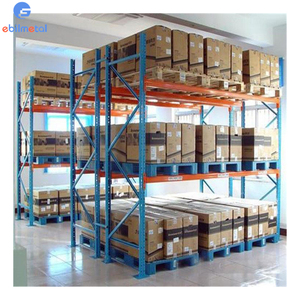
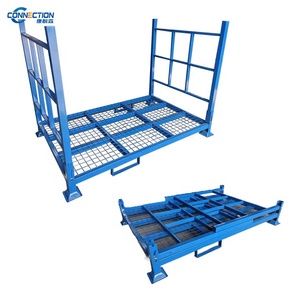
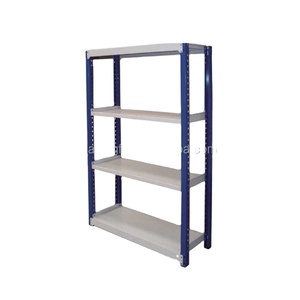
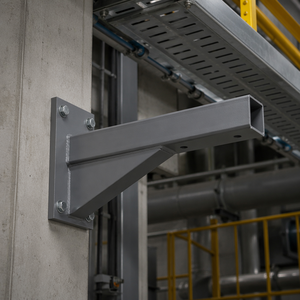
A technical guide for industrial civil engineers, procurement directors, and logistics operations heads evaluating China wholesale export capabilities.
Rack-supported mezzanine systems represent one of the highest structural utilization ratios in modern industrial material handling. Unlike standard structural steel platforms that demand heavy H-beam columns (wide flange columns) anchored with expansive footings into warehouse floor slabs, a rack-supported mezzanine leverages cold-formed steel uprights as the primary load-bearing vertical columns. By utilizing the racking frames themselves to carry both the dead load of elevated mezzanine catwalks (including flooring panels, joists, and cross-bracing) and the variable dynamic live loads (personnel, pallet trucks, automated guided vehicles), the total tonnage of steel required decreases by 28% to 42% compared to traditional civil post-and-beam construction.
From an engineering perspective, the stability of a multi-tier rack-supported mezzanine is governed by cold-formed steel design codes, specifically RMI (Rack Manufacturers Institute) ANSI MH16.1, European standard EN 15512, and AS4084. Upright frames are subjected to axial compression coupled with torsional and flexural buckling modes. Our engineering team calculates the effective length factor ($K_x, K_y$) around the major and minor structural axes, ensuring adequate horizontal and vertical diagonal bracing to neutralize seismic shear waves and wind uplift forces in port facilities or open-envelope industrial sheds.
| Mezzanine Parameter | Standard Industrial Spec | Heavy Duty Logistics Spec | Seismic / Automated AMR Spec |
|---|---|---|---|
| Primary Raw Material | Q235B Cold-Rolled Carbon Steel | Q355B (Yield ≥ 355 MPa) High Tensile | ASTM A572 Grade 50 / Q355B Hot-Rolled |
| Uniform Distributed Load (UDL) | 300 – 500 kg/m² (3.0 – 5.0 kN) | 600 – 1,200 kg/m² (6.0 – 12.0 kN) | 1,200 – 2,000+ kg/m² Engineered Custom |
| Decking Surface Type | Galvanized Steel Grating / Plywood | Solid Embossed Steel Planks (2.0–2.5mm) | B-Decking + Steel Fiber Concrete Slab |
| Deflection Limit Criteria | L / 240 (Hand-carry operations) | L / 300 to L / 360 (Standard industrial) | L / 400 to L / 500 (Automated robotics / AMR) |
| Corrosion Resistance Profile | Electrostatic Epoxy Powder (60-80μm) | Dual-Cure Thermoset Polyester Powder | Hot-Dip Galvanized ISO 1461 (≥ 85μm) |
| Fire Safety Compliance | 50% Open-Air Perforated Planks | Integrated ESFR Sprinkler Drops | FM Global / NFPA 13 Drop-thru Wire Decks |
Building on over 36 years of industrial rack and storage fabrication experience serving tier-one logistics distribution operators across the UAE, GCC, Southeast Asia, and the Americas. We merge precision Chinese metallurgy with international design engineering.
Decades of proprietary field data in floor-slab settlement analysis, load profiling, and multi-tier structural design execution.
Continuous automated roll-forming lines ensuring cold-rolled upright omega sections have exact hole pitch accuracy down to ±0.05mm.
Every project starts with an engineering study of physical building clearances, column grids, forklift turning radii, and dynamic SKU flow.
Automated steel-strapping, moisture-barrier shrink wrapping, and engineered container loading plans minimizing transit damage.
Strategic purchasing benchmarks for procurement officers, enterprise facility planners, and third-party logistics (3PL) real estate directors.
The paradigm of manual carton picking on elevated catwalks is transitioning toward hybrid picking floors where Autonomous Mobile Robots (AMRs) operate directly on mezzanine levels. This shift requires factories to manufacture higher structural rigidity floor decks with zero joint elevation bumps, high friction coefficient finishes, and anti-static ESD powder coatings that prevent sensor blindness.
Western and Middle Eastern engineering firms are increasingly bypassing domestic intermediaries to contract directly with premier Chinese rack manufacturers. Utilizing advanced CAD/CAM software and 3D structural BIM models, buyers eliminate markups of 35% to 50% while receiving standardized mill test certificates (MTC EN 10204 3.1) and customized structural calculation reports verified by professional civil engineers.
Corporate sustainability mandates are turning warehouse fixtures into capital assets that must offer disassembly, relocation, and recyclable circularity. Bolted rack-supported mezzanines (no field welding required) provide tax depreciation advantages (treated as personal property equipment rather than permanent capital improvements), allowing multinational operations to disassemble and re-erect platforms in leased facilities.
How state-of-the-art Chinese exporters overcome complex structural challenges across international project sites.
Utilizing high-tensile Q355B coils roll-formed on multi-station automated lines creates optimized upright profiles with high section modulus ($Z_x, Z_y$) while reducing total structural weight.
Advanced laser-punched galvanized floor planks offer 50%+ open water penetration ratios, satisfying international ESFR sprinkler requirements without needing secondary below-deck sprinkler grids.
Pre-treatment zinc phosphate wash followed by robotic electrostatic thermoset polyester powder coating ensures salt-spray resistance exceeding 500 hours for maritime transit and humid climates.
Counterbalanced pivot safety gates and kick-plates (150mm height) engineered to OSHA & EN ISO 14122-3 standards eliminate fall hazards during pallet forklift loading at elevated mezzanine stations.
Critical technical, structural, regulatory, and logistics answers for global engineering teams and purchasing managers.
Generally, a multi-tier rack-supported mezzanine requires an existing industrial reinforced concrete floor slab with a minimum thickness of 150mm to 200mm and a compressive strength of ≥ 25 to 30 MPa (C25/C30). For heavier point loads generated by three- or four-tier systems, baseplates with expanded footprints and chemical anchor bolts (M12 to M16) are engineered to distribute punch-shear stresses evenly over the slab.
Our 36-year engineering methodology begins with a comprehensive system study analyzing vertical clear heights, light fixture clearances, overhead crane pathways, building column spans, fire hydrant placements, and SKU weight variations. This prevents site interference conflicts and guarantees that the selected rack profile supports actual dynamic pallet loads with a safety factor of 1.65 to 1.95.
The choice depends on operational parameters: (1) Interlocking Galvanized Steel Planks (smooth or embossed anti-slip) provide non-combustibility and easy hand-cart rolling; (2) Perforated Steel Grating permits light and sprinkler water penetration; (3) Heavy-Duty Plywood with B-Deck Sub-base offers maximum acoustic damping and vibration dampening for high-occupancy office or packing areas.
When warehouse mezzanine platforms exceed 1,500 sq. ft. or span wide areas, municipal fire safety codes often require water penetration from high-bay ESFR systems to reach lower levels. We engineer floor plank systems with 50% open slot surface area or design dedicated structural mounting channels directly onto the racking uprights to accommodate secondary horizontal in-rack pipe sprinkler lines.
For standard modular systems of 5,000 to 20,000 sq. ft., custom manufacturing takes approximately 3 to 4 weeks following approval of final 3D CAD/BIM shop drawings. Maritime container transit from major Chinese deepwater ports (Shanghai, Ningbo, Qingdao) ranges from 14 to 28 days depending on the final discharge destination (Jebel Ali, Hamburg, Rotterdam, Los Angeles, Singapore).
Yes. Our structural engineering department performs Finite Element Analysis (FEA) and calculates dynamic earthquake response spectra based on site-specific soil classifications and seismic zones (e.g., Seismic Design Categories C, D, or E). Uprights, baseplates, and horizontal anchor ties are configured to withstand lateral spectral acceleration values according to local regulations.
All upright frames and beams are nested, bundle-strapped with high-tensile steel banding, cushioned with protective corner guards, and wrapped in thick industrial water-impermeable plastic film. Small hardware items (bolts, locking pins, shims, leveling plates) are sealed in polybags and packed into fumigated export-grade wooden crates with detailed packing slips and QR tracking labels.
We provide a comprehensive installation package including: full 3D assembly shop drawings, numbered part tags corresponding to installation schematics, step-by-step video installation guides, and torque specification charts for all bolted connections. For large enterprise projects, we can deploy certified senior installation project supervisors to oversee your local installation crews.
Connect directly with our senior racking engineering specialists. Submit your facility dimensions, building floor plan, or structural RFP to receive a preliminary 3D layout design and competitive factory wholesale export quotation within 24 hours.