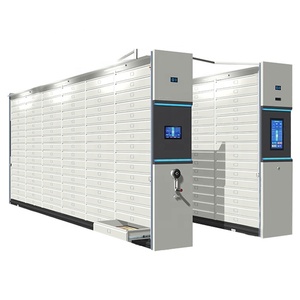
Racking & Shelving Specialists — Hamriyah Free Zone, Sharjah · Serving the UAE & GCC
Explore our export-grade series manufactured under strict ISO9001 and CE execution protocols. Built for fulfillment facilities, heavy-industry warehouses, commercial kitchens, and automated intralogistics hubs.
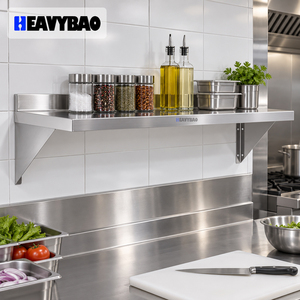
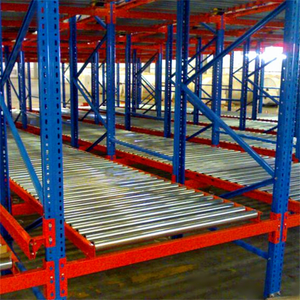
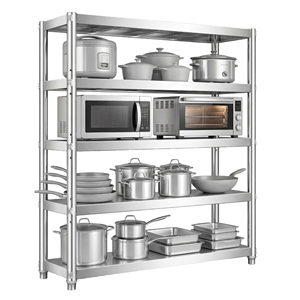
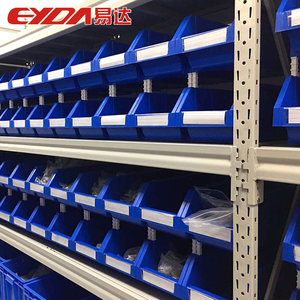
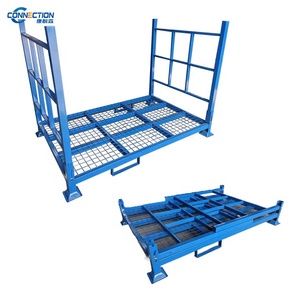
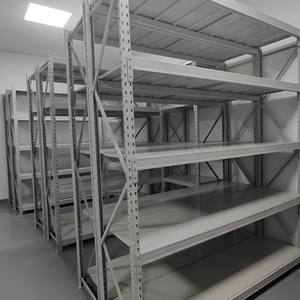
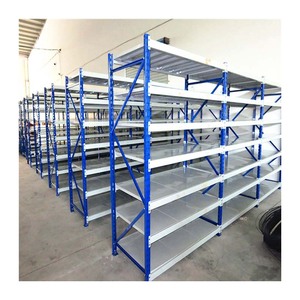
A comprehensive procurement briefing on cold-rolled profile forming, dynamic load stabilization, and total cost of ownership (TCO) optimization for volume B2B importers.
Unlike conventional welded or nut-and-bolt structures that suffer from stress localization, industrial rivet shelving relies on precision-tapered teardrop and keyhole slots. Single or double-rivet horizontal beams engage mechanically into cold-rolled Q235B upright posts. As gravitational load increases, the downward force causes the shoulder rivets to seat deeper into the taper, generating an auto-wedging moment. This mechanical self-locking eliminates dynamic lateral sway without cross-bracing, allowing unobstructed 360-degree picking access.
Export-tier fabrication uses continuous cold roll-forming machines equipped with multi-station inline punching dies. High-tensile steel strips undergo computerized roller-pass sequence deformation, avoiding micro-cracks along profile bend lines. The resulting roll-formed upright posts feature complex return flanges and reinforcing ribs that maximize the section modulus ($Z_x$) while minimizing steel tonnage. Uprights sustain elastic limits under both point loading and uniform distributed load (UDL) configurations.
For cross-border export shipments vulnerable to marine humidity and harsh warehouse atmospheres (such as GCC desert heat or tropical environments), standard flash-priming is inadequate. Industrial rivet components undergo a multi-stage chemical pre-treatment comprising degreasing, zinc phosphate etching, and deionized water rinsing. Thermoset epoxy-polyester electrostatic powder is applied at 70–90 microns thickness and oven-cured at 190°C, passing ASTM B117 salt spray tests exceeding 500 hours without edge blistering.
| System Architecture | Load Profile (UDL per Level) | Assembly Speed / Tooling | Structural Adaptability | Ideal Application Scenario |
|---|---|---|---|---|
| Standard Single-Rivet Boltless | 150 kg – 350 kg | Rapid (Rubber Mallet only) | High; 38.1mm (1.5") vertical pitch adjustment | Retail stockrooms, eCommerce picking mezzanines, micro-fulfillment |
| Heavy-Duty Double-Rivet Longspan | 400 kg – 1,200 kg | Fast; zero fastener requirements | High; accepts wire decks, particle board, or steel panels | Industrial assembly lines, automotive parts distribution, third-party logistics |
| Traditional Slotted Angle Bolted | 80 kg – 200 kg | Slow; corner plates, hex nuts, wrenches | Low; time-consuming reconfiguration once bolted | Light archives, manual maintenance workshops, stationary spare parts |
| Live Roller / Pallet Flow Racking | 800 kg – 2,500 kg per lane | Complex; beam levels require slope alignment | Engineered; dynamic brake rollers & gravity lanes | Perishable FMCG, pharmaceuticals, high-throughput refrigerated warehouses |
How supply chain executives, global distributors, and logistics engineers can future-proof their racking investments.
Manual static storage is transitioning toward hybrid picking ecosystems. Future procurement mandates that rivet shelving lines feature precise dimensional tolerances (±0.5mm) and rigid vertical plumbness to integrate seamlessly with Autonomous Mobile Robots (AMRs) and automated tote-handling systems. Bottom beam clearances are re-engineered to allow robot drive-under docking, while upright posts feature machine-readable visual matrix codes and RFID tagging channels directly integrated into factory tooling.
With warehouse real estate leasing rates climbing globally across primary transit hubs, B2B procurement focuses on maximizing vertical volume rather than square footage. Multi-tier rivet shelving systems supported by structural catwalk mezzanines are replacing low-level single runs. Uprights are formed in single-piece lengths exceeding 6 meters with enhanced moment-of-inertia profiles, supporting structural floor grating, overhead fire-sprinkler conduits, and integrated spiral gravity chute systems.
European and North American supply chain directives require suppliers to provide verified Environmental Product Declarations (EPDs). The next generation of rivet shelving manufacturing utilizes certified low-emission electric arc furnace (EAF) steel coils containing high recycled scrap ratios. Lead-free, VOC-free organic hybrid powder formulations and ultra-thin, high-yield metallurgical alloys reduce shipping tare weights, lowering carbon footprints per metric container transported.
Operating with decades of structural manufacturing excellence, we deliver engineered racking systems with full supply-chain transparency and strict quality controls.
Originating from comprehensive regional warehousing engineering practices, our manufacturing facility bridges specialized field engineering with high-capacity mass production lines.
Equipped with 18 automated roll-forming profile tracks, CNC hydraulic stamping machines, and robotic plasma welding centers capable of processing over 3,500 tons of structural steel per month.
Every steel batch undergoes chemical spectrometer composition verification, tensile yield stress testing, coating adhesion cross-hatch checks, and full-scale prototype destructive test loading.
Modular knock-down (CKD) packing systems designed via specialized cargo-loading software to eliminate dead shipping volume, maximizing freight payload and preventing transport abrasion.
Direct technical answers addressing structural calculation, factory customization, trade documentation, and shipping procedures.
Rivet shelving relies on dual-axis shoulder rivets engaging in tapered keyhole slots on cold-rolled uprights. This creates a boltless, rigid mechanical wedge that increases its locking rigidity under load. Unlike slotted angle shelving, which requires corner gusset plates, washers, and dozens of hex bolts per level, rivet systems require no fasteners, reducing field installation time by over 60% while eliminating bolt-loosening hazards caused by warehouse vibration.
We strictly utilize certified primary hot-rolled and cold-rolled coils of Q235B and Q355B carbon structural steel, corresponding to international benchmarks ASTM A36 and EN10025 S235JR/S355JR. Every container shipment is accompanied by standardized Mill Test Certificates (MTC) according to EN 10204 Type 3.1, detailing mechanical yield point, tensile limits, elongation percentage, and chemical composition.
Load values are calculated in compliance with European R-EN 15512 and American RMI MH16.1 specifications. UDL ratings assume evenly spread inventory across the structural horizontal shelf beams, designed with a standard 1.5 safety coefficient against yield limits. We conduct destructive mechanical bench press tests using pneumatic rams on real upright/beam spans to confirm deflection does not exceed L/200 before serial production.
Yes. As an OEM/ODM source factory, we supply custom upright heights (up to 6 meters single piece), bay depths (300mm to 1200mm), and clear beam spans (up to 2440mm). Decking choices include moisture-resistant drop-in particle board, industrial MDF, electro-galvanized wire mesh decking, or cold-rolled steel shelf panels. Powder coating can be matched to any universal RAL color code using polyester formulations.
Components are pre-bundled using high-tensile PET strapping with heavy-duty corner protection profiles. Steel parts are wrapped in protective polyethylene stretch film to prevent salt air condensation contact. Upright bundles and beam cartons are banded onto fumigated solid timber skids designed with forklift clearance channels, maximizing internal container utilization for 20GP, 40GP, and 40HQ loads.
Our standard production cycle for full container loads (FCL) ranges between 15 to 25 business days following technical drawing sign-off and deposit clearance. Standard MOQ begins at one 20ft container (approx. 18–22 tons depending on steel profiles), with mixed-size consolidations supported. We operate transparently under Incoterms 2020: FOB Shanghai/Tianjin/Qingdao, CFR, CIF, or DDP direct to your distribution terminal.
Consult with our storage engineering department. Provide your facility floor plans, target load capacities, and distribution schedules to receive a full structural quotation, CAD drawings, and container packing optimization within 24 hours.
Contact Us