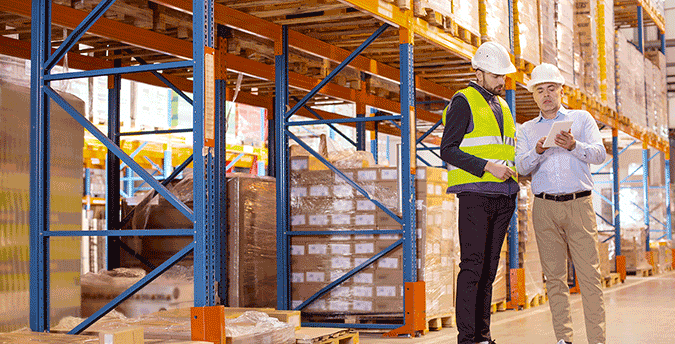
High-Density First-In First-Out (FIFO) Gravity Flow Racking Systems Engineered for Peak Cubic Efficiency, Sub-Zero Reliability, and High-Throughput Global Warehouses.
36+
Years Industrial Pedigree
85%
Warehouse Footprint Utilization
100%
FIFO Batch Traceability
65+
Countries Global Export Reach
Engineered OEM / ODM Catalog
Heavy-Duty Industrial Storage & Dynamic Racking Range
Precision cold-rolled steel structures manufactured under rigorous ISO and EN engineering certifications. Designed for seamless material handling, extreme durability, and maximum cubic capacity.
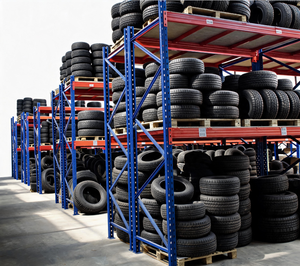
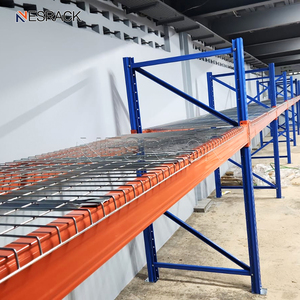
High-tensile cold-rolled steel uprights with thermo-cured epoxy coating. Bay capacities engineered up to 25,000 kg with customizable beam elevation levels.
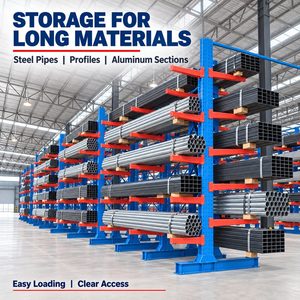
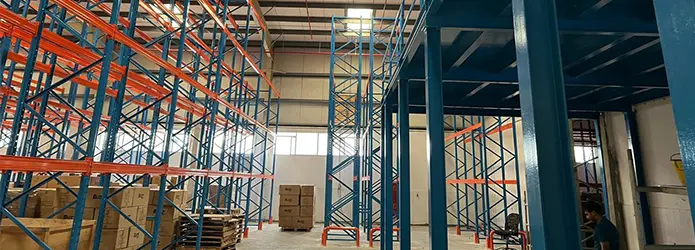
Obstacle-free linear loading face for continuous bar, extrusions, timber packs, and plate steel. Custom load arms with unhindered overhead crane access.
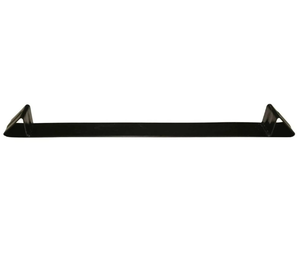
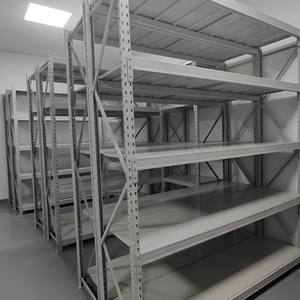
Hardware-free interlocking rivet beam assembly. Fully reconfigurable shelf spacing to support e-commerce fulfillment totes and manual order picking lanes.
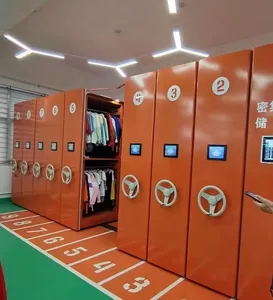
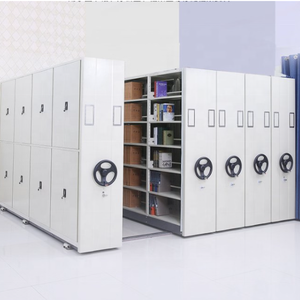
Precision mechanical hand-crank mobile archive storage unit featuring central locking mechanisms, dust seals, and anti-tip base rails for high security.
The Mechanics of High-Density Gravity Pallet Flow Racking
Pallet Flow Racking (Live Pallet Storage) utilizes inclined roller tracks at an engineered gradient to drive pallets by gravity from loading to discharge faces. Understanding the kinetic forces, dynamic braking, and mechanical separation ensures absolute operational safety and high throughput.
Kinetic Force Management & Slope Calibration
The core principle behind dynamic pallet flow is controlled gravitational acceleration along an incline ranging from 2.5% to 4.0% (1.5° to 2.3°), customized based on bottom runner composition (solid wood, composite, or molded polypropylene). Uncontrolled pallet acceleration in deep-lane systems (exceeding 20 pallets deep) risks catastrophic impact forces on the discharge frame.
Centrifugal Speed Controllers: Self-energizing internal gear mechanisms engage automatically once pallet velocity reaches 0.3 m/s, maintaining a steady, safe rolling speed.
Magnetic Eddy-Current Brakes: Wear-free magnetic retardation provides frictionless deceleration, essential for sub-zero cold store chambers down to -30°C.
Structural Entry Guides & Self-Centering Rails: Heavy flare guide rails align pallets accurately on entry, protecting rollers from destructive forklift side-impacts.
Load Separation Technology: Mitigating Hydrostatic Line Pressure
In deep gravity lanes, accumulated line pressure from queued pallets transfers directly to the front extraction face. For instance, in a 15-pallet lane carrying 1,000 kg pallets, the static pressure against the discharge stop can reach up to 14,000 kgf. This extreme pressure binds the front pallet, preventing forklifts from lifting and retrieving it cleanly.
Mechanical Time-Delay Pallet Separator: Locks the secondary pallets 300 mm behind the pick-face pallet, completely removing backpressure during the forklift extraction phase.
Auto-Reset Tripping Ramp: Releasing the front pallet automatically disengages the mechanical lock, allowing the queued pallets to advance one position smoothly.
Full-Width Steel Rollers vs Split Poly Wheels: Rollers with precision sealed bearings provide maximum surface contact for uneven wooden pallets, preventing runner deflection.
Future Procurement Trends in Industrial Pallet Flow Systems
Global supply chain volatility, urban real estate costs, and rising automation adoption are transforming the specification and procurement of dynamic racking systems worldwide.
1. Interfacing with Autonomous AGV/AMRs
Modern distribution hubs are phasing out operator-driven forklifts at the entry face. OEM pallet flow lanes are now engineered with optical sensor brackets, floor reflectors, and millimetric positioning guides to support Automated Guided Vehicles (AGVs) and Autonomous Mobile Robots (AMRs) for uninterrupted loading.
2. Cold-Chain Energy Densification
Refrigerated warehouse space costs up to four times more per cubic meter to build and chill than ambient warehouses. Pallet flow racking reduces cooled air volume per pallet position by up to 60% compared to selective racking by eliminating operating aisles, drastically shrinking refrigeration power consumption.
3. IoT Sensor-Equipped Speed Telemetry
High-capacity regional distribution centers increasingly demand live operational health monitoring. Smart brake rollers with integrated kinetic transducers now transmit lane speed profiles, internal operating temperatures, and pallet transit counts straight to the customer's Warehouse Management System (WMS).
Dynamic Pallet Flow vs. Alternative Industrial Storage Configurations
Review key engineering metrics to select the ideal storage configuration for your floor slab, SKU profile, and operational throughput.
Storage System Type
Inventory Rotation
Floor Utilization
Throughput Speed
Forklift Aisle Demand
Ideal Application
Pallet Flow Racking
Strict FIFO
80% – 85%
Rapid (Gravity Driven)
2 (Dedicated Load/Pick)
Perishables, FMCG, Cold Stores, Buffers
Selective Pallet Racking
Flexible (FIFO/LIFO)
35% – 45%
Moderate (High Aisle Travel)
Multiple Wide Aisles
High SKU Variety, General Warehouses
Drive-In Racking
Strict LIFO
65% – 75%
Slow (Mast In-Aisle Maneuver)
1 (Shared Entry Face)
Low SKU Variety, Deep Bulk Storage
Push-Back Racking
Strict LIFO
60% – 70%
Moderate (Spring/Cart Resistance)
1 (Combined Load/Unload)
Medium Batch Runs, 2-6 Pallet Depths
Radio Shuttle System
Programmable (FIFO/LIFO)
80% – 90%
Automated Mechanical
1 or 2 Depending on Design
Capital Intensive Megastores, Cold Hubs
Enterprise Manufacturing Credentials
Why Choose Our OEM/ODM Custom Factory & Global Export Services
With 36 years of specialized engineering experience rooted in our Sharjah Hamriyah Free Zone (HFZA) production base and serving the UAE, GCC, and global logistics markets, we deliver tailored racking solutions built around your exact operational parameters.
Certified High-Tensile Structural Steel
We roll-form our uprights and load beams exclusively from premium-grade Q235B and Q355B structural steel coils. All raw batches undergo metallurgical tensile testing, yield strength verification, and strict dimensional checks to comply with EN 15512 and RMI MH16.1 standards.
Automated Robotics & Epoxy Finishing
Equipped with continuous automated multi-station roll-forming lines, 6-axis robotic seam welding cells, and an automated 12-stage chemical pre-treatment and electrostatic epoxy powder-coating line. This provides a hard-wearing 70-90 µm finish that resists impact, humidity, and chemical abrasion.
Custom Dynamic Test Track Facility
We do not rely on theoretical calculations alone. Our dedicated test lab features variable-slope test tracks where we evaluate your actual production pallets—under real loads, across varying temperatures—to fine-tune brake roller spacing, slope gradient, and separator timing before export.
Our Turnkey 5-Step Project Execution Lifecycle
Every project follows an established engineering sequence to guarantee on-time completion, regulatory compliance, and operator safety.
01
System Study
Comprehensive data gathering covering floor slab deflection, warehouse clear height, SKU turnover frequency, and pallet quality profiles.
02
Layout & FEA
3D CAD warehouse layout design and Finite Element Analysis (FEA) structural stress modeling under maximum seismic and operational load combinations.
03
OEM Supply & QC
High-precision roll-forming and robotic welding, supported by dynamic roller resistance checks and pre-shipment quality inspection reports.
04
Installation
On-site installation by seasoned certified crews, ensuring millimetric beam leveling, anchor torque verification, and safety-stop alignment.
05
Handover & Audit
Commissioning tests with real loads, official load notice signage installation, maintenance training, and ongoing post-sales audit support.
Clear answers to common questions about engineering parameters, floor slab requirements, pallet compatibility, and safety standards.
What floor slab load capacities are required for deep-lane pallet flow systems?
Due to the high storage density of Pallet Flow Racking, point loads on concrete floor slabs are considerably higher than in standard selective racking. Floor slabs must typically support point loads from 60 kN to over 140 kN per upright column. During our Step 1 System Study, our engineers review your slab thickness, reinforcement grid, and core sample data to specify load-distributing baseplates that keep pressures safely within design limits.
Can pallet flow systems handle non-standard, plastic, or poor-quality pallets?
Pallet bottom construction is critical in gravity systems. Standard twin-roller configurations operate best with GMA (48x40 in) or Euro (1200x800 mm) wooden pallets with undamaged bottom runners aligned in the flow direction. Plastic pallets or units with cross-directional bottom skids can be accommodated using three-track full-width cylindrical steel rollers or custom polycarbonate skate wheel tracks tailored to the pallet's bottom profile.
How do speed controller rollers prevent runaway acceleration on deep lanes?
Speed controllers incorporate internal planetary gearing coupled with centrifugal brake pads. As a pallet rolls over the controller roller, the angular velocity engages the brake pads against the inner drum. The braking force increases proportionally with speed, holding pallet transit velocity within a steady 0.15 m/s to 0.30 m/s range from entry to discharge face.
What modifications are necessary for sub-zero cold storage down to -30°C?
Sub-zero freezer operations require specific engineering adaptations. We utilize low-temperature ductile structural steel to prevent low-temperature embrittlement, seal all roller bearings with food-safe low-viscosity synthetic grease rated to -40°C, and implement non-contact magnetic eddy-current brake controllers to prevent ice-glaze slipping on dynamic surfaces.
How do pallet flow systems comply with in-rack fire sprinkler codes?
Because pallet flow lanes form a dense storage block, in-rack fire sprinkler systems must be integrated during layout engineering to comply with NFPA 13 regulations. Our structural designs incorporate dedicated horizontal piping clearances and vertical flue spaces between rack bays, and can be paired with open galvanized wire mesh dividers to ensure uninhibited water penetration.
What is the typical maintenance cycle for roller tracks and separation units?
Our gravity flow components are built for low maintenance. Roller bearings are permanently lubricated and sealed against dust and debris. Routine preventative maintenance involves quarterly visual checks of roller rotation, clearing any stray debris from the track beds, and checking anchor torque and safety separator spring tension every six months.
Request a Custom OEM Pallet Flow Engineering Layout & Quotation
Send us your building dimensions, pallet specifications, SKU velocity profiles, and operating temperatures. Our technical engineering team will run a complete layout simulation to maximize your storage capacity and streamline picking operations.