Retail Systems
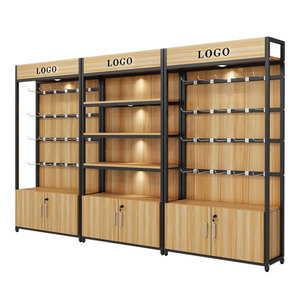

Manufactured on high-speed CNC roll-forming lines with certified Q235B and Q355B structural steel, our heavy-duty and light-duty storage solutions deliver load-bearing stability, modular adaptability, and seismic-tested structural safety.
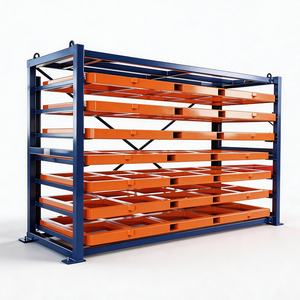
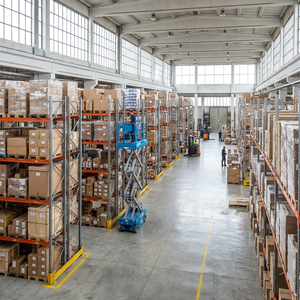
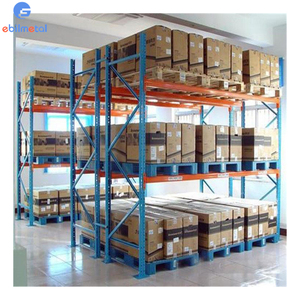
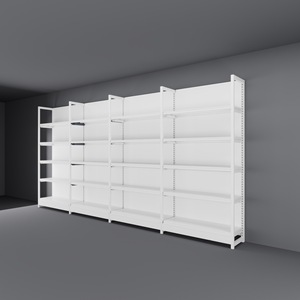
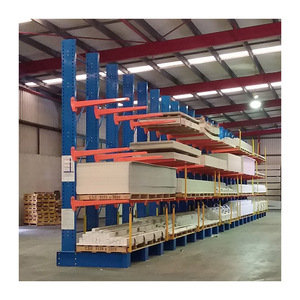
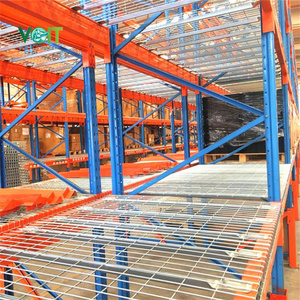
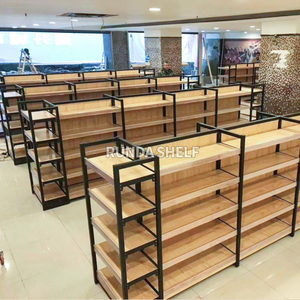
Modern warehouse logistics require racking systems capable of withstanding both static dead loads and dynamic operational stresses inflicted by high-throughput material handling equipment (MHE). As a specialized custom OEM pallet storage racks manufacturer, our structural fabrications originate from prime-grade hot-rolled coils slit and roll-formed into complex Omega-profile columns and multi-ribbed boxed step beams.
Our engineering division models every racking installation using Finite Element Analysis (FEA) to simulate gravitational live loads, seismic ground acceleration spectra (per RMI MH16.1 and Eurocode 3 standards), and forklift impact torsion. Through rigorous yield-stress testing of Q235B, Q355B, and ASTM A1011 structural carbon steels, we ensure a minimum mechanical safety factor of 1.65 to 1.95.
Every custom OEM project engineered at our factory includes a certified static loading certificate, load plaque layout, and anchor bolt pull-out shear stress calculations specific to your concrete slab classification (C20/25 to C35/45).
Procurement directors and supply chain engineers must anticipate changing logistics demands. Modern racking investments are evolving past basic static shelving toward automation-ready, climate-resilient architectures.
Global fulfillment centers are transitioning from wide-aisle counterbalance operations to autonomous shuttle systems, automated mini-load cranes, and AGVs. Future procurement mandates tight fabrication tolerances (±1.0mm) to guarantee seamless sensor-guided robotic pallet retrieval.
International corporate ESG directives require suppliers to provide verified Environmental Product Declarations (EPD). Modern rack manufacturing increasingly relies on recycled electric arc furnace (EAF) carbon steel and VOC-free thermoset powder coatings that minimize carbon footprints.
With grocery e-commerce and pharmaceutical cold logistics expanding exponentially, procurement focuses on rust-proof hot-dip galvanized steel (HDG) and specialized high-impact polymer composite decking designed to maintain tensile integrity at -30°C cryogenic conditions.
Procurement contracts are starting to specify IoT-enabled strain gauges and collision impact sensors integrated within column guards. These sensors automatically log forklift collisions and alert structural engineers before micro-deflections compromise rack safety.
From manually assembled wooden planks in the early 20th century to precision cold-formed multi-tier cantilever and radio shuttle platforms, select the optimal configuration for your operational dynamics.
| Racking Architecture | Primary Cargo Application | SKU Selectivity & Rotation | Warehouse Footprint Utilization | Handling Equipment Compatibility |
|---|---|---|---|---|
| Selective Pallet Racking | Universal palletized FMCG, retail & industrial cargo | 100% Direct (FIFO) | Standard (35% - 40% floor occupancy) | Counterbalance, Reach Trucks, Order Pickers |
| Drive-In / Drive-Through | High-volume, low-SKU bulk products, seasonal stock | LIFO / Strict Lane FIFO | High (Up to 75% cubic reduction of aisles) | Specialized Narrow Counterbalance Forklifts |
| Radio Pallet Shuttle | Cold storage, food beverage, buffer distribution | Automated FIFO / LIFO | Ultra-High (85% volumetric optimization) | Automated Shuttles + Standard MHE |
| Heavy-Duty Cantilever | Steel pipes, lumber, composite sheets, bar stock | 100% Open Access | Customized linear vertical density | Side Loaders, 4-Way Multi-Directional Trucks |
| Multi-Tier Mezzanine Floor | Small-parts manual picking, e-commerce sortation | Direct Hand-Picking | Multiplies usable cubic floor space 2x - 3x | Integrated Vertical Reciprocating Conveyors (VRC) |
| Slotted Angle & Longspan | Archives, automotive spare parts, loose cartons | 100% Manual Hand Access | Moderate vertical organization | Manual Cart & Foot Logistics |
Combining 36 years of industrial excellence across the UAE, Middle East, and worldwide shipping corridors, our comprehensive production infrastructure guarantees unmatched manufacturing precision, customized fabrication, and reliable safety compliance.
We do not enforce rigid catalog dimensions. Our manufacturing lines adapt pitch hole spacing (50mm European / 75mm Australian / 76.2mm American teardrop pattern), beam profile depths, upright widths, and custom color RAL polyester coatings tailored precisely to client drawings.
Every batch of slit carbon steel coil undergoes spectrographic chemical analysis, tensile testing, weld penetration radiography, and cross-hatch paint adhesion tests. We ensure total structural reliability certified against CE, ISO 9001, and ISO 14001 factory compliance.
Headquartered with primary distribution channels located in the Hamriyah Free Zone (HFZA) and key manufacturing centers, we leverage direct seaport access for efficient containerization, export packaging with moisture barriers, and fast turnaround to GCC, European, and American ports.
On-site survey of floor slab flatness, load capacity, SKU metrics, and product velocity.
2D/3D layout planning and finite element stress modeling per seismic and local building codes.
Precision CNC rolling, robotic welding, shot blasting, and thermoset powder coat line.
Certified installation crews erect uprights, plumb verticality, and torque anchor studs.
Sign-off load testing, affixing compliance load signage, and scheduling lifecycle inspections.
Authoritative technical guidance compiled by our structural storage engineers to help procurement teams, logistics directors, and plant managers make informed specifications.
Whether you require a complete warehouse system study, custom OEM roll-formed components, or high-density automated racking manufacturing, our technical engineering team will review your architectural drawings and deliver a comprehensive load-verified specification.