Racking & Shelving Specialists — Hamriyah Free Zone, Sharjah · Serving the UAE & GCC

Engineered for maximum cubic space utilization, ergonomic forklift handling, and optimal tire bead protection. Explore our core manufactured product line below.
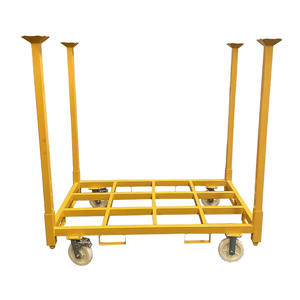
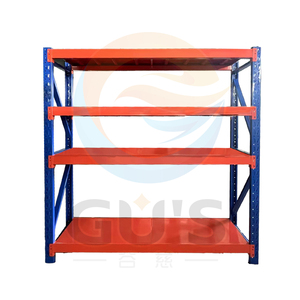
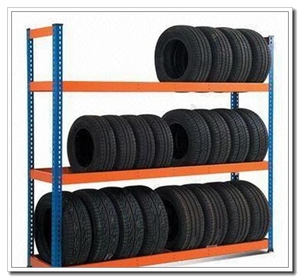
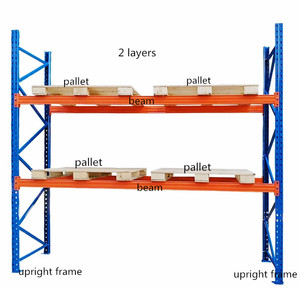
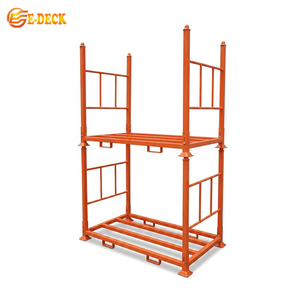
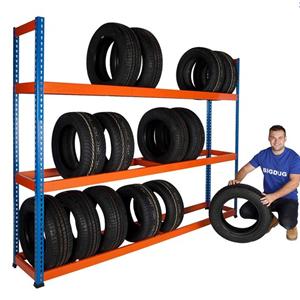
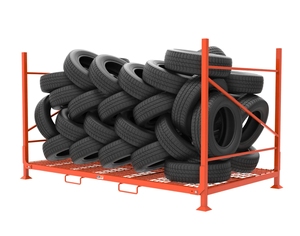
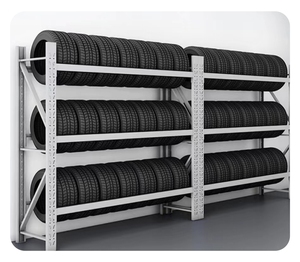
Analyze structural configurations across load envelope, tire nesting topology, storage density, and operational handling efficiency before issuing an RFP.
| Rack Topology | Primary Tire Classification | Load Capacity (Static/Dynamic) | Nesting Methodology | Stackability Ratio | Space Utilization Index | Handling Equipment Compatibility |
|---|---|---|---|---|---|---|
| Collapsible Post Stacking Rack | PCR / Light Truck (SUV) | 4,400 lbs / 2,200 lbs (2000kg/1000kg) | Laced / Interlaced Pattern | 4 to 6 High Loaded (4:1 Folded) | Very High (85%+) | Counterbalance & Reach Trucks |
| Fixed Demountable Post Stillage | TBR (Truck, Bus, Radial) | 6,600 lbs / 3,300 lbs (3000kg/1500kg) | Barrel / Tread Orientation | 4 High Loaded (Posts Demountable) | High (78%) | Heavy Forklifts (4-Way Entry) |
| Boltless Long-Span Shelving | PCR / Racing / Custom Rims | 1,750 lbs / Tier (800kg/Tier) | Vertical On-Tread Roll In/Out | Non-Stackable (Floor Bolted) | Medium (Manual Picking) | Manual Handling / Order Pickers |
| Multi-Tier Mezzanine Tire Attic | Mixed PCR / TBR / Moto Spares | 2,200 lbs / Level (1000kg/Level) | Dual Horizontal Beam Support | Stationary Structural Steel Floor | Maximum Vertical Cube | Vertical Goods Lifts & Conveyors |
| Heavy OTR Industrial Stillage | Agricultural & Mining (OTR) | 11,000 lbs / 5,500 lbs (5000kg/2500kg) | Single/Dual Vertical Trench | 2 to 3 High Loaded | Optimized for Mass | Heavy 5T–10T Forklifts & Cranes |
In modern automotive warehousing, tire storage presents uniquely demanding logistical challenges. Unlike standardized cubic cartons, elastomeric pneumatic tires possess continuous viscoelastic properties, susceptibility to bead deformation, asymmetrical weight distribution, and high fire-hazard fuel load ratings. Designing and manufacturing an industrial-grade custom OEM tire storage rack demands deep structural engineering rigor, material science acumen, and adherence to international warehousing building codes.
At our manufacturing facility, every OEM rack configuration undergoes rigorous static and dynamic Finite Element Analysis (FEA) to simulate multidirectional stress fields prior to mass production. We design strictly to ANSI MH16.1 (Specification for the Design, Testing, and Utilization of Industrial Steel Storage Racks) and European Standard EN 15512.
Key structural engineering considerations include:
Improper storage racks induce permanent flat spots, bead wall crushing, and micro-cracking across sidewall compounds. Our custom OEM racks are tailored precisely around the tire storage orientation:
Structural reliability begins with raw coil selection. We utilize certified Q235B and Q355B low-carbon structural alloy steel, cold-formed into square hollow sections (SHS) and rectangular hollow sections (RHS) with verified tensile yield strength exceeding 235–355 MPa. Robotic CO2 shielded metal arc welding (GMAW) ensures continuous, deep-penetration fillets along all column-to-base intersections, removing human inconsistency and hot-crack flaws.
To resist industrial abrasion, tire blooming wax leaching, chemical degradation, and coastal humidity, components undergo an automated 5-stage pre-treatment wash (degrease, phosphate rinse, deionized seal) followed by an electrostatic thermosetting polyester TGIC powder coating cured at 200°C (yielding an 80–120 μm dry film thickness). For outdoor port staging or unconditioned tropical distribution centers, full hot-dip galvanizing compliant with ASTM A123 / EN ISO 1461 provides 30+ years of maintenance-free cathodic corrosion barrier protection.
Global tire logistics is shifting rapidly toward automated guided vehicles, heavier EV rubber compounds, and rigorous ESG carbon mitigation. Explore the core technological shifts driving commercial rack procurement.
Electric vehicle tires feature 20% to 30% higher curb mass due to heavy battery counter-loads, reinforced sidewalls, and acoustic foam linings. Modern OEM rack procurements now demand up-gauged 3.0 mm steel wall tubing to support heavier gross pallet stack weights.
Tier-1 distribution centers are transitioning from manned forklifts to Autonomous Mobile Robots (AMRs). Racks now require automated target chamfers, ultra-tight dimensional tolerances (±1.0 mm), and underbody optical clearance for high-speed robotic shuttle engagement.
With escalating sea-freight and return-trucking emissions, forwarders demand collapsible stillages with 4:1 to 6:1 folding volume ratios. Folding racks allow up to 130 collapsed units per 40ft High Cube container, dramatically lowering deadhead transport costs.
OEM tire racks are becoming smart nodes. Factory-welded brackets allow flush embedding of UHF RFID tags, barcode placards, and visual inventory sensors, enabling real-time WMS cycle counting without removing pallet tiers from high-bay stacks.
With 36 years of direct warehousing engineering history, we provide integrated design, tooling, automated production, and turnkey project delivery for multinational automotive brands.
Every batch is certified with raw material mill test certificates (MTC), ultrasonic weld inspections, and hydraulic destructive crush tests up to 1.5x safe working load (SWL) envelopes before shipment dispatch.
Our engineering division doesn't just sell steel; we analyze clear ceiling heights, floor slab PSI bearing load, forklift aisle turning radii, and fire sprinkler clearances to deliver fully optimized CAD/BIM layouts.
Need custom footplates, drop-down loading ramps, or specialized divider bars? Our rapid tooling cell turns 3D CAD models into physical, load-tested pilot prototypes in as few as 14 business days.
From architectural system audit to worldwide containerized delivery, our engineer-led workflow minimizes risk and guarantees on-time site commissioning.
Site audit of warehouse floor loading, building clear height, SKU tire profiles (PCR/TBR), and target pallet storage volume.
Custom 3D CAD modeling, FEA static stress verification, and drafting optimal aisle spacing for high-density logistics.
CNC laser tube cutting, cold roll-forming, robotic welding, and automated continuous electrostatic powder baking.
Dimensional tolerance audits, dry film thickness (DFT) checks, salt-spray validation, and full dynamic stack testing.
Protective knock-down steel banding, moisture-barrier wrapping, container optimization, and on-site assembly guides.
Direct answers to technical, commercial, and structural inquiries encountered during tire rack procurement cycles.
We manufacture primarily using prime Q235B and Q355B structural low-carbon steel sourced from top-tier mills with complete Mill Test Certificates (MTC). Our production facilities operate under ISO 9001:2015 quality control management, and all heavy-duty racks comply with ANSI MH16.1 and European EN 15512 safety codes for industrial pallet storage.
Depending on building clear height, seismic zone categorization, and structural model, our heavy-duty folding and demountable post racks are engineered to stack 4 to 6 units high under full operational load (up to 1,500 kg per tier). When collapsed empty, the interlocking nesting design enables stacking up to 20 to 24 units high to conserve floor space.
Laced stacking arranges tires horizontally in an interlocking diagonal herringbone weave. It maximizes space efficiency for passenger car radial (PCR) tires (holding 28 to 32 tires per pallet). Barrel stacking positions tires vertically on their tread, which is mandatory for commercial truck/bus (TBR) tires to eliminate bead crushing and allow fast individual tire picking.
Yes. As an authentic OEM/ODM direct manufacturer, over 70% of our production is customized. We engineer length, width, usable post height, wire-mesh decking pitch, and forklift entry guides around your exact tire diameter mix, overall footprint, and facility handling equipment specifications.
We incorporate three layers of mechanical defense: heavy-gauge wall tubing (2.5 mm – 3.75 mm), flared heavy-gauge entry target feet that guide tines safely into place, and optional bolt-on column impact guards. Base channel frames are welded with heavy internal corner gussets to resist tine puncture forces.
For standard climate-controlled or dry indoor facilities, our 80–120 μm electrostatic TGIC polyester powder coating provides superior scratch resistance. For unconditioned high-humidity coastal facilities, outdoor yards, or cold-storage environments, we offer batch hot-dip galvanizing to ASTM A123 standards for lifetime rust resistance.
Our standard production MOQ is 50 units for customized OEM models, or one 20ft ocean container. Custom pilot prototypes are completed and tested within 10 to 14 business days. Full container production cycles typically range between 20 and 30 business days depending on order volume and finish selection.
Components are engineered for knock-down (KD) packing. Upright posts, removable side rails, and base frames are nested tightly, banded with steel strapping, and wrapped in protective vapor-corrosion-inhibiting (VCI) stretch film. A 40ft High Cube container typically holds between 90 and 140 collapsible tire rack units.
Consult with our storage design engineers to conduct a comprehensive warehouse system study. Send us your building dimensions, target tire SKUs, and throughput volumes for a free CAD layout and competitive direct-factory quotation.