Racking & Shelving Specialists — Hamriyah Free Zone, Sharjah · Serving the UAE & GCC
Precision-fabricated warehouse racks, cantilever arms, and structural building assemblies manufactured to withstand rigorous industrial cycle rates and heavy mechanical handling.
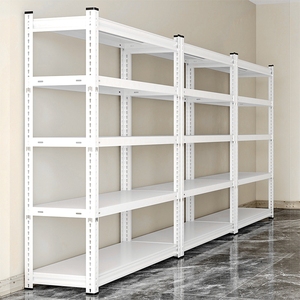
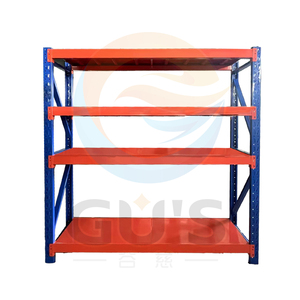
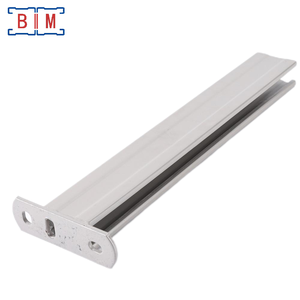
An authoritative technical deep-dive into cantilever column moments, flexural stress calculations, arm deflection limits, and safety design criteria.
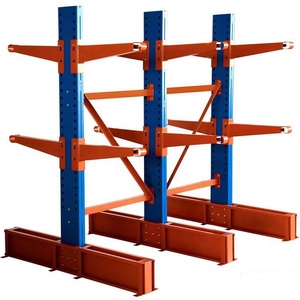
Unlike conventional pallet racks where loads descend axially down paired front and rear uprights, cantilever systems operate as pure flexural cantilevers. Arms transmit severe bending moments into the vertical column, which in turn acts as a vertical cantilever beam fixed at the slab connection. Our factory employs full-penetration submerged arc welding (SAW) on heavy base flange plates up to 30mm thick, engineered with high-strength stiffening gussets. This mitigates rotational deflection at the foundation joint and guarantees structural integrity under maximum eccentric load combinations.
Under ANSI MH16.2 and EN 15512 specifications, allowable elastic arm deflection under design Uniformly Distributed Load (UDL) must not exceed $L/200$ to $L/300$. To optimize the strength-to-weight profile, our OEM cantilever arms feature a CNC-plasma profiled continuous taper from root connection to tip. The root cross-section resists maximum negative moment ($M_{max} = \frac{wL^2}{2}$), while the tapered distal tip reduces deadweight while providing a natural 1.5° to 2° upward camber. This upward incline offsets under-load sag, preventing steel pipes or timber packs from migrating forward.
A critical procurement evaluation is selecting between Cold-Formed Light Profiles and Structural Hot-Rolled I-Beams (IPE / HEA / W-Flanges). While roll-formed sheet steel (2.5mm - 3.5mm) provides cost-effective efficiency for loads under 500 kg per arm, industrial heavy fabrication requires hot-rolled structural steel (ASTM A36 / Q355B). Hot-rolled columns exhibit superior torsional rigidity ($J$), high impact tolerance against reach-truck collisions, and virtually zero risk of localized thin-wall post-buckling under cyclical heavy industrial handling.
| System Category | Material Specification | Max Arm Capacity (UDL) | Column Height Range | Deflection Threshold | Typical Applications |
|---|---|---|---|---|---|
| Light-Duty Roll-Formed | Q235 Cold-Rolled Strip Steel (2.0 - 2.8mm) | 200 - 450 kg / arm | 2,000 - 4,500 mm | $L/180$ Max Deflection | PVC conduit, lightweight plastics, molding, retail backrooms |
| Medium-Duty C-C Weldment | Dual Interlocking C-Profiles Q355B (3.2mm) | 500 - 1,100 kg / arm | 3,500 - 6,500 mm | $L/200$ Standard | Automotive panels, aluminum extrusions, crated machine parts |
| Heavy-Duty Structural I-Beam | Hot-Rolled IPE 200 - 450 / ASTM A36 | 1,200 - 3,500 kg / arm | 4,000 - 12,000 mm | $L/250$ Precision | Structural steel beams, oil & gas tubular goods, lumber packs |
| Extra Heavy-Duty Crane-Loaded | Hot-Rolled HEB 300 - 600 / S355JR Heavy Flange | 3,500 - 6,000+ kg / arm | 6,000 - 15,000 mm | $L/300$ Rigorous | Tool steel coils, cast iron billets, oversized marine infrastructure |
Operating from world-class manufacturing bases with deep distribution hubs across the UAE, GCC, and global markets, our complete manufacturing chain integrates raw coil processing to turnkey site delivery.
Our manufacturing plant integrates automated continuous roll-forming lines, 12,000W high-precision 3D tube-and-beam fiber laser cutting systems, and six-axis robotic welding cells. Column pinholes (punched on either 76.2mm or 100mm pitches) are machined with tight positional tolerances of ±0.2mm, eliminating arm play, skewing, and uneven stress distribution along multi-tier cantilever towers.
Every batch of structural steel is sourced directly from tier-one domestic and international mills, delivered with full EN 10204 Type 3.1 Mill Test Certificates. We perform mandatory non-destructive ultrasonic flaw detection on primary moment welds and rigorous Charpy V-Notch impact resistance testing, ensuring rack frames perform safely across temperature extremes from -30°C cold chain freezers to +55°C GCC desert environments.
For internal warehouses, components undergo a multi-stage zirconium phosphating pre-wash followed by automated electrostatic Qualicoat-certified polyester powder coating (70 - 110 µm) cured at 200°C for superior abrasion and chip resistance. For harsh outdoor lumber yards or marine terminals, we offer batch Hot-Dip Galvanizing complying with EN ISO 1461, achieving thick 85µm zinc layers that deliver 30+ years of rust-free longevity.
Refined through 36 years of industrial rack supply across logistics, aluminum extrusions, building supplies, and infrastructure.
Laser floor level surveys (DIN 18202), warehouse slab core load evaluation, and finite element moment stress simulation based on SKU bundle weights and fork clearances.
Custom layout drafting ensuring full compliance with SEMA, OSHA, and regional civil defense fire egress aisle widths, matching side loader or multi-directional forklift turning radii.
Robotic welding, laser cut component assembly, rigorous weld penetration testing, powder coating, and heavy-duty steel strapped bundling designed for rough ocean transit.
Experienced factory-certified rigging crews perform plumb laser column squaring, chemical torque anchoring into concrete slabs, and diagonal X-bracing stabilization.
Installation of statutory load warning plaques, operating safety envelopes, operational staff rack-maintenance training, and formal project engineering sign-off.
As global industrial supply chains adopt greater automation, sustainability mandates, and real-time asset telemetry, cantilever warehouse operations are undergoing critical architectural advancements.
Manual forklift operations for 6m+ steel bars pose significant workplace hazards and low cycle speeds. High-density automated storage and retrieval systems (AS/RS) tailored for long goods are replacing conventional wide-aisle racks. Our OEM design team configures specialized rail-guided stacker crane masts and bi-directional shuttle arms that interface directly with cantilever load arms, reducing operating aisle widths from 4.5m down to 1.8m and boosting spatial volume density by up to 85%.
The integration of low-power industrial IoT strain sensors and tilt accelerometers embedded directly within primary cantilever column bases is becoming standard practice for high-risk heavy fabrication plants. These real-time monitoring devices alert facility safety managers to dangerous eccentric overloading, forklift base impacts, and seismic micro-displacements well before structural micro-fractures propagate into cataclysmic rack failures.
Global procurement directives are accelerating stringent Environmental Product Declaration (EPD) mandates. We lead this transition by expanding our scrap-based Electric Arc Furnace (EAF) structural steel sourcing, reducing the embodied carbon of structural IPE profiles by over 45% compared to blast-furnace routes. Furthermore, non-toxic, VOC-free heavy TGIC powder coating lines ensure compliance with LEED v4.1 and BREEAM industrial green building certifications.
With industrial land costs and construction timelines at record highs, buyers are heavily moving toward rack-supported external buildings (Rack-Clad Cantilever Buildings). By incorporating roof trusses, storm gutters, and exterior cladding sheeting directly into the extended cantilever rack columns, enterprises eliminate the time and extreme capital expenditures of pre-engineered metal buildings (PEB) while gaining fully weatherproof, permit-approved outdoor storage.
Avoid common procurement miscalculations by systematically checking operational parameters against structural engineering thresholds prior to placing OEM/ODM production orders.
Cantilever columns induce severe overturning tensile uplift on base anchors and concentrated point loads on concrete floor slabs. Standard 150mm unreinforced slabs are rarely adequate for heavy industrial cantilever systems exceeding 5m in height. Slabs must be engineered to a minimum 200mm - 300mm thickness with C25/30 or C30/37 reinforced concrete, ensuring sufficient anchor pullout resistance against Hilti HST3 or chemical rebar anchor bolts.
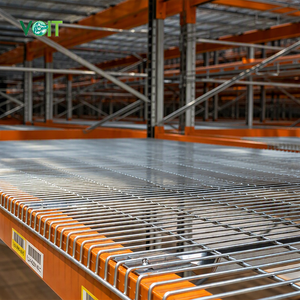
Rigid bundles (such as bundled steel I-beams or crated machinery) distribute weight evenly across arms. In contrast, flexible items (such as small-diameter copper tubing, rubber extrusions, or thin plywood sheets) tend to droop between arms. For flexible materials, arm spacing must be shortened to 1,000mm - 1,200mm intervals, or continuous secondary wire mesh decking / steel saddle channels must be installed across arms to prevent permanent deflection.
Forklift operators handling 6m to 12m long product bundles require adequate handling allowances. When sizing vertical arm level intervals, calculate: Item Height + Pallet/Dunnage Thickness + Arm Profile Thickness + 150mm Minimum Fork Lift Clearance Margin. Specifying too tight a clearance leads to frequent dynamic impacts where the forklift mast or forks snag upper arms, triggering expensive rack arm and pin damage.
Exhaustive answers to complex structural engineering, customization, load rating, and operational questions sourced directly from warehouse project directors and plant engineers.
Roll-formed cantilever racking is manufactured from cold-rolled sheet coils (typically 2.0mm to 3.5mm thick) bent through roller dies into C-shaped profiles. It is lightweight, economical, and ideal for light to medium industrial duties up to 500 kg per arm. Structural cantilever racking is fabricated using solid, hot-rolled structural steel sections (such as IPE, HEA, or European wide-flange beams). Structural sections feature thick webs and flanges (up to 15mm+), providing massive flexural rigidity, extreme impact durability against heavy reach trucks, and arm load ratings exceeding 2,500 kg to 5,000 kg per arm.
The correct number of support arms is determined by load weight and longitudinal bending stiffness. The total bundle weight is divided by the rated capacity of an individual arm. However, to prevent material sag, support spacing must ensure that the cantilever overhang on both ends does not exceed half the distance between adjacent arms ($Overhang \le 0.5 \times Spacing$). For example, a flexible 6-meter bundle of plastic piping typically requires a minimum of 4 support arms spaced 1.5 meters apart, with 0.75-meter overhangs at each end, preventing excessive sag and load slippage.
When a cantilever arm is fully loaded to its designed Uniformly Distributed Load (UDL), structural steel naturally deflects elastically downward within allowable safety limits ($L/200$ to $L/250$). If the arm were built completely horizontal (0°), this deflection would cause the arm tip to dip downward, creating a dangerous slope that could cause circular pipes, steel bars, or timber packs to roll off. Our factory manufactures arms with an engineered 1.5° to 2° upward camber, ensuring that the arm settles into a secure, perfectly horizontal orientation when fully loaded.
Because cantilever racks carry eccentric moment loads that generate massive uplift forces on rear anchors, a heavy concrete foundation slab is mandatory. Slabs should typically be minimum 200mm to 300mm thick, constructed from C25/30 or C30/37 compressive strength concrete reinforced with rebar mesh. Anchoring is typically achieved using high-tensile grade M16, M20, or M24 chemical capsule resin anchors (such as Hilti HIT-HY 200) or high-performance mechanical torque-controlled expansion wedge anchors embedded to depths of 140mm to 220mm, verified via on-site pullout proof testing.
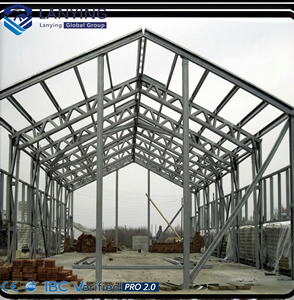
Yes. Our OEM/ODM engineering division routinely manufactures outdoor rack-clad cantilever canopy systems. Columns are extended upward and fitted with pitched structural steel rafters, purlins, and heavy-duty storm gutters to support corrugated sheet roofing and side wind-screening. In these applications, the structural column and base engineering calculations incorporate local environmental wind speed ratings (up to 160 km/h), dynamic wind uplift, solar thermal expansion, and regional seismic acceleration factors according to ASCE 7-16 or Eurocode 3 standards.
Rigid bolted arms are fixed rigidly to the column face with high-tensile bolts. If a forklift operator accidentally strikes the arm from underneath during lifting or lowering, a rigid connection often suffers irreversible shear buckling or column face tearing. In contrast, pivot/pin-connected arms use high-shear alloy steel locking pins that allow the arm to swing upward safely if struck from below by forks or cargo, absorbing the kinetic impact without structural yield before dropping smoothly back into its seated operational position.
Single-sided cantilever racks are designed to sit flush against a building wall, meaning all load moments act exclusively in one direction. To prevent overturning, single-sided columns require elongated, heavily anchored front base beams. Double-sided cantilever racks feature a central vertical column carrying arms on both opposing faces. When both sides are loaded, the opposing bending moments cancel each other out at the central column web, creating balanced axial equilibrium. However, the column and base connection must still be fully engineered to resist 100% full capacity on one side while the opposite side is completely empty.
While high-durability electrostatic powder coating provides adequate performance for climate-controlled indoor warehouses, hot-dip galvanizing (HDG) to EN ISO 1461 is essential for coastal terminals, open-air storage in high-humidity GCC coastal zones, or chemical facilities. During hot-dip galvanizing, cleaned structural steel members are immersed into molten zinc at 450°C, producing a series of metallurgical zinc-iron alloy layers with an outer pure zinc coat exceeding 85 to 100 microns in thickness. This provides both barrier protection and cathodic sacrificial self-healing protection that prevents corrosion even if scratched.
Because every heavy cantilever system is engineered to order based on specific building heights, bundle lengths, and slab constraints, production lead times generally range between 3 to 5 weeks from approved CAD engineering drawings to port dispatch. For standard roll-formed configurations, our factory accommodates minimum order quantities starting from 5 to 10 column bays. For fully customized heavy structural hot-rolled IPE systems or custom-colored canopy installations, project-scale batches beginning from 1x 20GP or 40HQ container load deliver optimal freight and tooling economies of scale.
Under EN 15635 and OSHA warehouse storage guidelines, cantilever racking systems must undergo a tripartite inspection regime: 1. Daily informal operator visual hazard checks (looking for dislodged safety pins or visual arm damage); 2. Weekly or monthly documented inspections by facility safety supervisors; and 3. Mandatory annual structural integrity audits conducted by certified external racking inspectors. Inspectors verify vertical column plumb tolerances ($\le 1/350$), measure permanent residual arm deflection, inspect foundation anchor torque values, and ensure all high-visibility load rating warning signage remains clearly legible.
Submit your floor layout dimensions, SKU bundle weight profiles, handling forklift parameters, or custom OEM/ODM architectural requirements. Our senior structural storage engineers will deliver comprehensive 2D/3D CAD layouts, structural FEA moment load calculations, and a competitive factory direct quotation within 24 hours.