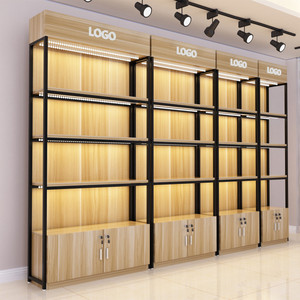
Customized Wooden Gondola Retail Rack
Single-sided modular display rack engineered for high-weight retail goods, pharmacies, and commercial convenience outlets.

Explore standard, structural, and bespoke storage solutions built to international FEM, SEMA, and RMI standards.
Single-sided modular display rack engineered for high-weight retail goods, pharmacies, and commercial convenience outlets.
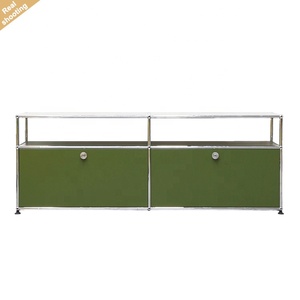
Precision-bent stainless steel modular cabinetry offering anti-corrosive properties and heavy-load resilience across multi-tier layouts.
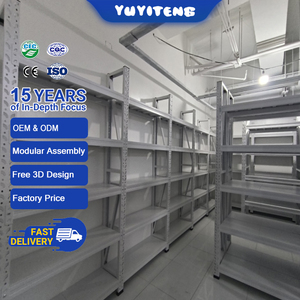
Reinforced beam profiles engineered for high volumetric density, providing selective picking and structural integrity for pallets.
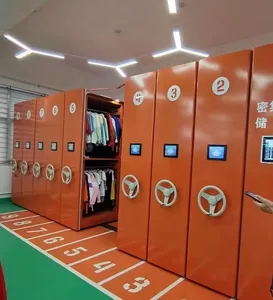
Track-mounted mechanical gear-driven storage system built to consolidate aisle footprints and double volumetric archival capacity.
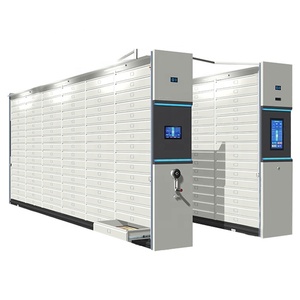
Specialized flat-file and document rolling storage base featuring automated or manual high-torque drive mechanisms.
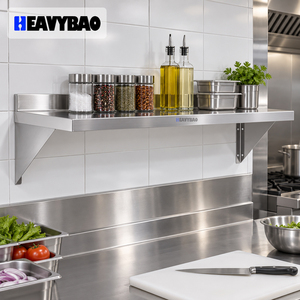
Heavy-gauge SUS304 construction featuring anti-corrosive polished finishing, ideal for sanitary processing and commercial kitchens.
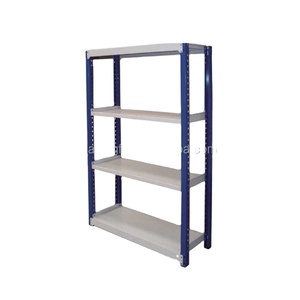
CNC laser cut, customized sheet metal structural enclosures offering modular interlocking capabilities for harsh environments.
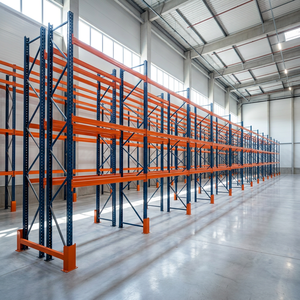
Heavy-duty, step-beam adjustable racking designed for rapid forklift navigation, high vertical load tolerances, and extreme durability.
Backed by over 36 years of direct manufacturing and installation capability across the Middle East, Europe, and the Americas.
Utilizing high-tensile hot-rolled and cold-rolled certified Q235B and Q355B coils. Our structural uprights feature cold-formed punching profiles ensuring minimal beam deflection and high safety factors under full dynamic loading.
Every industrial racking plan starts with an extensive analysis of your warehouse slab capacity, forklift sweep geometry, seismic parameters, and local civil safety bylaws to design an optimized footprint.
From the Sharjah free zone hub to global industrial projects, our certified installation engineers supervise anchor bolt setting, beam load deflection monitoring, and safety compliance sign-offs directly on-site.
Modern global logistics networks face rising square-meter real estate lease rates alongside demanding turnaround requirements for multi-channel fulfilment. When evaluating a heavy-duty shelving factory or tier-one racking supplier, warehouse directors must navigate complex structural engineering calculations, raw steel metallurgical grades, deflection limits, and fire safety integration. A failure in structural integrity not only risks catastrophic product loss but poses critical workplace safety hazards.
A critical determinant in the life-cycle analysis of storage racks is the steel chemistry. Premium manufacturers deploy structural carbon steels (such as SS400, Q235B, or high-yield Q355B). The cold-roll profiling process must avoid microscopic fractures along the upright bends. Furthermore, automated electrostatic powder coating lines must apply a minimum of 60 to 80 microns of epoxy-polyester coating, preceded by an iron-phosphate or zinc-phosphate immersion bath to prevent hidden corrosion behind baseplates and beam connectors.
| System Architecture | Typical Capacity / Level | Accessibility Index | Handling Equipment Required | Optimal SKU Density |
|---|---|---|---|---|
| Selective Pallet Racking | 1,000 kg – 4,500 kg | 100% Direct Selective Access | Counterbalance / Reach Trucks | High SKU Variety, Fast Picking |
| Drive-In / Drive-Through | 1,000 kg – 2,000 kg | LIFO / FIFO Lane Dependent | Narrow Mast Drive-in Forklifts | Low SKU Variety, High Bulk Pallets |
| Cantilever Racking | 500 kg – 6,000 kg per Arm | 100% Open Horizontal Face | Side Loaders / Overhead Cranes | Pipes, Lumber, Extruded Metals |
| Structural Mezzanine Floor | 350 kg – 1,200 kg / m² | Multi-Tier Floor Walkways | Goods Lifts / Hand Pallet Trucks | Carton Picking, Spare Parts Archive |
| High-Density Mobile Compactor | 80 kg – 400 kg per Shelf | Single Open Aisle (Shiftable) | Manual Mechanical / PLC Guided | High-Density File & Tool Storage |
When sourcing heavy-duty industrial shelving globally, procurement officers should demand clear evidence that systems are designed according to international standards. In Europe and the Middle East, the FEM 10.2.02 guidelines define safety factors for static calculations of pallet racking. In the United States, the Rack Manufacturers Institute (RMI MH16.1) mandates specific horizontal seismic displacement limits and vertical load ratios. Factory certifications should also include ISO 9001 quality management, CE declarations for structural components (EN 1090-1), and ISO 3834 welding verification.
Emerging automated technologies and supply chain dynamics transforming the industrial shelving landscape.
Traditional static shelving is transitioning toward automated shuttle systems. Racking frames are engineered with ultra-tight geometric tolerances to support Autonomous Mobile Robots (AMRs) and automated four-way pallet shuttles within deep-lane storage tracks.
Using advanced micro-alloyed structural steels allows manufacturers to achieve higher moment load capacity while decreasing steel mass. This reduces raw material shipping weight, container freight fees, and embodied scope-3 carbon footprints.
Next-generation uprights feature embedded impact and displacement strain gauges. These smart sensors stream physical load-deflection metrics directly into modern Warehouse Management Systems (WMS), alerting facilities to damage in real-time.
Direct technical answers to common queries faced by procurement heads and warehouse engineers.
Load limits are calculated by evaluating both the vertical axle weight and the unsupported beam spacing (buckling length). A frame with 1,500 mm beam pitch will hold significantly more load than one configured with 2,200 mm pitch. Never rely on nominal beam numbers alone; request structural calculations detailing deflection limits (typically 1/200th of beam span).
Standard profile production typically takes 3 to 4 weeks depending on the mill coil availability. Fully customized systems involving structural mezzanines or custom punch-hole configurations require 6 to 8 weeks, including tool calibration, CNC laser punching, powder coating, and pre-assembly testing.
Sub-zero conditions (temperatures below -20°C) cause standard structural carbon steel to become brittle, increasing the risk of cold cleavage failure. Industrial suppliers must specify low-temperature impact-tested steels (such as Q355D or Charpy V-notch verified alloys) along with specialized anti-freeze powder coats or hot-dip galvanization.
A reputable supplier must provide mill test certificates (MTC) proving steel tensile strength, salt spray test reports for surface treatment durability, finite element analysis (FEA) drawings, certified load capacity plaques, and certified torque specs for chemical or expansion floor anchors.