Racking & Shelving Specialists — Hamriyah Free Zone, Sharjah · Serving the UAE & GCC
As global warehouse operations transition toward high-throughput robotic fulfillment and hyper-dense cubic storage, Automated Storage and Retrieval Systems (ASRS) have become pivotal infrastructure assets. Sourcing directly from premier Chinese manufacturing facilities bridges advanced metallurgy, computerized automated roll-forming lines, and cost efficiency.
Fabricated from certified structural coils with continuous robotic welding, dynamic load testing, and scratch-resistant powder coating. Explore our production lines engineered for industrial environments.
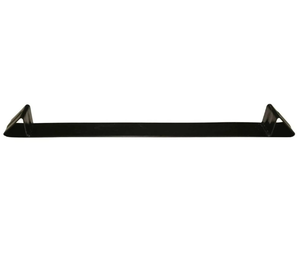
Reinforced steel cradle designed for heavy steel coil transport and stable yard staging. Anti-slip profile with protective structural chassis.
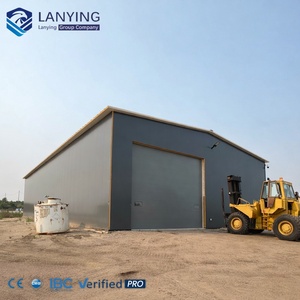
Turnkey rack-supported building architectures (clad-rack ASRS) and heavy industrial clear-span facilities engineered to regional seismic profiles.
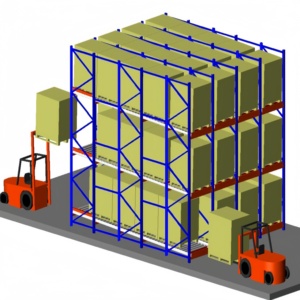
Gravity-feed roller lanes engineered for -30°C temperature stability. Galvanized rollers with magnetic speed controllers for gentle braking.
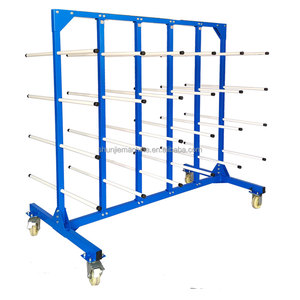
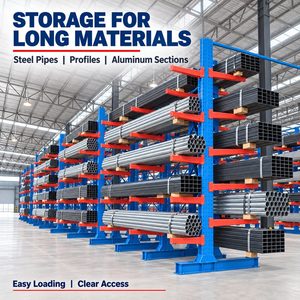
Mobile dual-sided cantilever for long-dimension extrusions, steel conduit, and piping. Features heavy polyurethane casters and locking hubs.
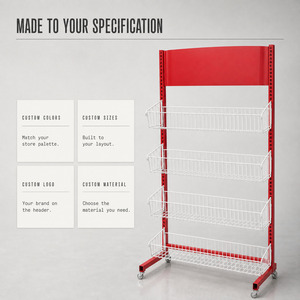
Modular gondola merchandising system featuring slotted uprights, high load-bearing mesh shelves, and rapid tool-free bracket assembly.
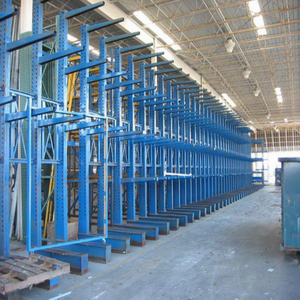
Open-front clearance columns for timber bundles, steel sheets, and bulky construction inventory. Bolted arms with mechanical pitch adjustability.
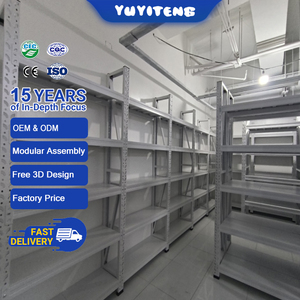
Universal industrial long-span shelving for manual carton picking, e-commerce parts sorting, and medium industrial goods storage.
Structural I-beam uprights engineered for crane loading and crane-guided ASRS retrieval of continuous sheet metals and heavy steel coils.
Unlike standard manual pallet racking, automated ASRS installations impose exacting geometric and physical deflection tolerances. Stacker cranes (SRMs) operating at 240 m/min and 4-way robotic shuttles requiring millimeter-level positioning cannot tolerate cumulative rack deviation. Leading Chinese factories deploy multi-station CNC continuous cold-roll forming lines with laser monitoring to guarantee cumulative column straightness within 1/1000 of the total building height.
Global supply chains are navigating acute labor shortages, surging industrial land values, and heightened carbon footprint mandates. Procurement teams must anticipate how automated storage architectures are transforming over the coming decade.
The traditional single-crane stacker system is increasingly sharing market share with flexible, scalable 4D multi-directional pallet shuttle systems. 4D shuttles navigate in longitudinal, transverse, and vertical axes via lift elevators, decoupling throughput capacity from storage density. Buyers obtain modular capital expenditure scalability: add shuttles as SKU throughput increases without reconstructing the primary steel racking frame.
Next-generation racking profiles incorporate integrated strain gauge sensors, optical alignment tags, and vibration detectors directly embedded in upright bases and high-stress anchor points. This telemetry streams structural dynamic loads into WMS/WCS middleware and cloud-based Digital Twin platforms, alerting facility managers to seismic displacement, beam overloading, or material fatigue prior to physical failure.
Clad-rack (rack-supported building) construction is surging in high-bay distribution centers up to 45 meters tall. Rather than constructing a conventional civil steel building and retrofitting racking inside, the automated racking frame itself serves as the load-bearing skeleton supporting exterior roof and wall cladding. This eliminates interior building columns, accelerates commissioning times, and drastically reduces overall structural steel tonnage.
How advances in industrial robotics, metallurgy, and automated software integration are redefining factory racking specifications.
Modern Chinese mills are formulating specialized micro-alloyed low-carbon steel grades (such as Q355MC and Q460MC) optimized specifically for thin-walled cold-roll forming. These alloys achieve higher yield strengths (up to 460 MPa) while maintaining superior ductility, enabling upright columns to bear identical vertical loads with thinner profiles, trimming dead weight and lowering intercontinental shipping freight costs per bay.
With high-bay automated racking reaching heights exceeding 35 meters, seismic vulnerability and sway resonance become primary design limit states. Advanced factories utilize finite element modeling (FEM) non-linear Pushover analysis to simulate earthquake response spectra. High-ductility baseplates, energy-dissipating friction dampers, and slotted seismic back-bracing safely absorb cyclic ground acceleration without brittle fracture.
The rapid rise of automated cold chain pharmaceutical and frozen food hubs requires steel racking capable of resisting low-temperature embrittlement down to -30°C. Tier-1 manufacturing ensures Charpy V-notch impact energy values of ≥27 Joules at -20°C and -40°C, utilizing pre-galvanized zinc-alloy finishes (such as Zinc-Aluminum-Magnesium ZAM) that resist condensation-induced galvanic pitting.
The physical racking superstructure is no longer an isolated passive storage rack; it functions as an active cyber-physical node. Precision laser-cut target reflectors, RFID barcode tagging brackets, automated fire suppression dry-pipe conduits, and pre-machined cable raceways are integrated during factory fabrication, cutting on-site electrical installation time by up to 50%.
An engineering benchmark to guide industrial procurement decisions based on throughput velocity, clear building height, capital intensity, and cubic storage efficiency.
| System Architecture | Primary Application Profile | Throughput Velocity | Height Capability | Space Efficiency | Labor Reduction |
|---|---|---|---|---|---|
| Unit-Load Crane ASRS | Heavy pallet loads, automated manufacturing, raw materials | Very High (Continuous) | Up to 45 Meters | 90% - 95% | Up to 80% |
| 4D Pallet Shuttle ASRS | High SKU density, FMCG, e-commerce buffer, cold storage | Scalable / Dynamic | Up to 24 Meters | 92% - 98% | Up to 75% |
| Dynamic FIFO Live Pallet | Perishable food, date-sensitive pharmaceuticals, buffers | High (Gravity Flow) | Up to 12 Meters | 75% - 85% | Up to 40% |
| Drive-In Pallet Racking | Batch manufacturing, seasonal inventory, bulk few-SKU | Moderate (LIFO) | Up to 11 Meters | 70% - 80% | Minimal |
| Heavy Cantilever Racking | Structural steel, extrusions, timber packs, sheet metals | Rapid Side-Load Access | Up to 12+ Meters | Linear Optimized | Moderate |
Combining 36 years of specialized racking manufacturing heritage with strategic operational logistics bases across the UAE (Sharjah Hamriyah Free Zone) and direct production out of world-class automated Chinese roll-forming facilities.
Over three and a half decades of hands-on structural engineering, heavy fabrication, and cross-border installation experience across the Middle East, GCC, Asia, and international markets. Our engineered systems are built to withstand rigorous heavy operations.
Our production facilities feature multi-stage continuous roll-forming lines, automated punching presses, robotic laser beam cutting cells, and environmentally controlled automated powder coating tunnels to ensure micron-level batch uniformity.
Every coil batch undergoes incoming tensile strength testing, weld non-destructive testing (NDT), coating thickness and cross-hatch adhesion checks, and full static load deflection validation in line with EN 15512 and ANSI MH16.1 specifications.
A transparent, engineer-led project methodology ensuring zero downtime, verified safety, and precision commissioning from raw warehouse slab to full operational handover.
Deep operational audit analyzing slab flatness (DIN 18202 / TR34), SKU velocity, pallet weight profiles, and equipment workflows.
Custom CAD and 3D BIM structural layout engineering, optimizing cubic density and establishing precise seismic stability margins.
Computer-controlled continuous roll-forming, robotic welding, surface preparation, and rigorous pre-dispatch dimensional checks.
Experienced installation teams complete vertical plumb alignment, chemical anchoring, torque checks, and guide rail adjustments.
Static and dynamic test runs, safe working load (SWL) signage affixing, full documentation handover, and ongoing audit support.
Critical technical considerations for supply chain leaders and engineering consultants procuring ASRS racking systems from China.
The benchmark structural steel grades deployed are certified Q235B (yield strength ≥ 235 MPa, comparable to ASTM A36 / EN S235JR) for standard horizontal beams and light accessories, and Q355B / Q355MC (yield strength ≥ 355 MPa, comparable to EN S355JR / ASTM A572 Gr 50) for high-load upright columns and heavy load-bearing ties. For extreme high-bay installations exceeding 30 meters, high-strength cold-formed coils (Q460) with guaranteed elongation (>18%) ensure seismic ductileness.
Reputable factories comply with EN 15620 (Classes 100 through 400) and FEM 9.831 / FEM 10.2.08 standards. This precision is achieved through closed-loop continuous automated roll-forming mills featuring 20–28 sequential forming stations. High-precision servo feeders control punching hole pitch to within ±0.2 mm non-cumulative variance, while laser-guided optical cut-off shears ensure beam and column cut length tolerances within ±1.0 mm.
Automated ASRS installations require specialized concrete slabs adhering to DIN 18202 (Table 3, Group 4 or 5) or British Concrete Society TR34 (Category Free Movement FM1 or Defined Movement DM1 / DM2). Floor flatness must prevent tilt amplification of tall stacker cranes or rail binding. Slab compressive strength typically must exceed 30–35 N/mm² (C30/37), reinforced with steel fibers or double-mesh rebar to withstand point loads up to 250 kN per baseplate.
To prevent transit deformation and surface abrasion across maritime routes, structural upright frames are pre-assembled or flat-packed using steel banding and continuous high-density polyethylene (HDPE) dunnage channel protectors. Specialized heavy-duty steel lifting skids, moisture-absorbing silica gel bags, and VCI (Vapor Corrosion Inhibitor) plastic film wraps protect electrostatic powder finishes from saltwater humidity.
Yes. In a Clad-Rack building, the upright racking columns carry the complete building envelope, including wind gusts, roof snow loads, seismic shear loads, and maintenance catwalks. Our structural engineering department performs comprehensive 3D wind tunnel and dynamic finite element stress analyses to integrate roof purlins, wall horizontal girts, and gutter mounts directly onto the racking structure.
Essential compliance standards include EN 15512 (European Racking Design Code for steel static storage), EN 15620 (Tolerances, deformations and clearances for ASRS), ANSI MH16.1 (Specification for the Design, Testing and Utilization of Industrial Steel Storage Racks in North America), AS 4084 (Australian Standard for Steel Storage Racking), and ISO 9001 / ISO 14001 / ISO 45001 production factory certifications.
Whether you require a turn-key high-bay automated racking facility, heavy cantilever systems, or cold storage gravity dynamic live racking, our veteran engineering team provides customized CAD layouts, dynamic structural calculations, and competitive factory-direct pricing.
Inquire Now