Racking & Shelving Specialists — Hamriyah Free Zone, Sharjah · Serving the UAE & GCC
Direct-from-factory logistics infrastructure solutions. Engineered with prime Q235B/Q355B structural steel, automated continuous roll-forming tolerances, and certified safety compliance for modern warehousing.
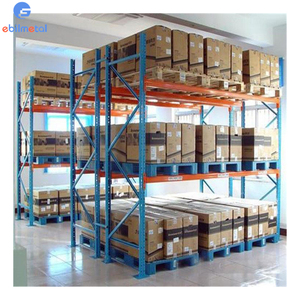
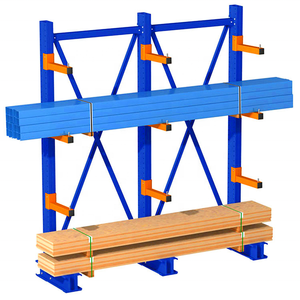
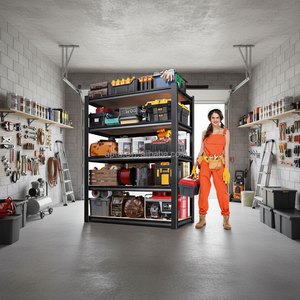
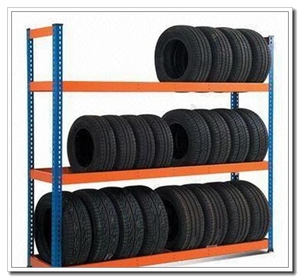
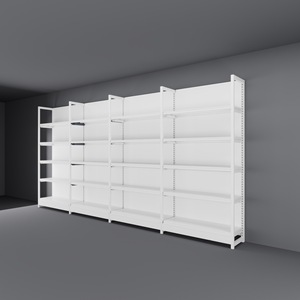
In modern high-density intralogistics, pallet support bars—often designated as pallet cross bars, rack cross-ties, or safety support channels—serve as primary safeguards against pallet burn-through, deflection fractures, and load drops.
Pallet support bars are secondary horizontal members bridging structural step beams or box beams. When substandard pallets, weak wooden skids, or concentrated point loads bear down on a rack system, cross bars distribute localized vertical vectors across both primary load-bearing horizontal beams.
Under the ANSI MH16.1 (RMI) and European EN 15512 specifications, the maximum permissible deflection ratio under maximum design static loading is restricted to L/200 or L/300 of the clear span. A support bar spanning a 1000mm beam depth cannot exceed 3.3mm of downward elastic deflection under maximum nominal Uniformly Distributed Load (UDL).
As a leading China manufacturer, our continuous CNC cold roll-forming production lines process structural coil into four specialized profile variations:
Standard and custom dimensional parameters manufactured in strict compliance with ISO 9001, ANSI MH16.1, and AS 4084-2023 international racking codes.
| Profile Design | Material Grade | Thickness (mm) | Standard Frame Depth | Load Rating (Pair) | Surface Treatment | Fastener Method |
|---|---|---|---|---|---|---|
| Flanged Top-Wing (Step Beam) | Q235B Cold-Rolled Carbon | 1.5mm - 2.0mm | 800mm - 1200mm | 800 kg - 1,200 kg UDL | Powder Coated 80μm | Self-Tapping Tek Screws |
| Drop-In Flush Mount | Q235B / Q355B Alloy | 1.8mm - 2.5mm | 1000mm - 1300mm | 1,000 kg - 1,500 kg UDL | Pre-Galvanized G90 | Slotted Interlocking Tabs |
| Universal Box Beam Flanged | Q235B Structural Grade | 2.0mm - 3.0mm | 900mm - 1400mm | 1,200 kg - 1,800 kg UDL | Hot-Dip Galv (65μm) | Bolted Clamp Assemblies |
| Omega Hat-Channel Support | Q355B High Yield Steel | 2.0mm - 2.5mm | 1000mm - 1200mm | 1,500 kg - 2,000 kg UDL | Thermo-Hardened Epoxy | Positive Latch Connectors |
| ASRS Precision Heavy Bar | Q355B Low Carbon Fine Grain | 2.5mm - 3.2mm | Custom Specified | 2,000 kg+ Engineered | Automotive E-Coat | Torque-Controlled Thru-Bolt |
*Note: Safe working capacities are determined with load evenly distributed (UDL) across two bars per pallet position. Concentrated line-loads or wheel loads require bespoke finite element analysis (FEA) verification from our structural engineering division.
As global logistics rapidly scales toward robotic automation and extreme-density storage, pallet support bars are transforming from passive steel channels into precision-machined, high-tolerance structural components.
Automated Storage and Retrieval Systems (ASRS) and high-speed autonomous mobile robots (AMRs) operate with zero tolerance for pallet sag. Traditional variances of ±3mm result in optical sensor trips and crane downtime. Future procurement mandates support bars cold-formed within strict ±0.5mm tolerances, ensuring absolute plane coplanarity across 40-meter-tall high-bay racking systems.
Global freight rate volatility has accelerated demand for lightweight, high-tensile steel grades. By transitioning from standard Q235B carbon steel to advanced micro-alloyed Q355B and Q460, our manufacturing process reduces raw steel wall thickness by 18-22% while boosting maximum bending yield moments. This minimizes the deadweight on rack columns and slashes shipping costs per shipping container.
The rapid expansion of cold-chain pharmaceutical and frozen grocery distribution centers demands racking components capable of sustained performance at -30°C. Standard coatings crack and foster rapid sub-film oxidation. Modern procurement focuses on high-adhesion polyester resin powder formulations and continuous pre-galvanized G90 zinc coatings resistant to low-temperature structural embrittlement.
Modern multi-tenant logistics providers (3PLs) regularly lease warehousing facilities equipped with diverse racking profiles. Our latest hybrid-flange support bars feature multi-gauge stepped end connectors compatible with standard step beams, structural structural channels, and roll-formed box beams, eliminating retrofitting expenses during warehouse re-profiling.
Next-generation support bars are being specified with pre-stamped laser punchings to accommodate discrete industrial IoT weight-deflection strain gauges and RFID tags. Real-time telemetry notifies warehouse management systems (WMS) of overload conditions and asymmetric pallet positioning before catastrophic structural buckling can occur.
Building on over 36 years of industrial racking lineage, our state-of-the-art facility integrates advanced metallurgy, automated robotic fabrication, and global logistics execution.
Equipped with 14 high-precision roll-forming stands, automated servo flying shear cutters, and computerized punch presses delivering tight ±0.5mm dimensional tolerances across all production batches.
Certified prime hot-rolled and cold-rolled structural steel sourced directly from Tier-1 state mills (Baosteel, Shougang). Complete mill test certificates (MTC) with full chemical and mechanical traceability provided per batch.
Robotic welding cells execute uniform, 100% spatter-free fillet and groove welds connecting end flanges to main channels, guaranteeing superior shear resistance during dynamic loading impacts.
Proven track record supplying large-scale logistics hubs across North America, Europe, Australia, and the Middle East GCC region. Export crating utilizes anti-abrasion strapping and heavy steel pallets for damage-free transit.
Send our structural engineering department your beam profile specifications, frame depth dimensions, and nominal pallet load parameters for a complimentary CAD layout and competitive factory quotation.
Inquire NowDetailed technical answers to common queries from warehouse safety managers, structural rack designers, and global procurement officers.