Racking & Shelving Specialists — Hamriyah Free Zone, Sharjah · Serving the UAE & GCC
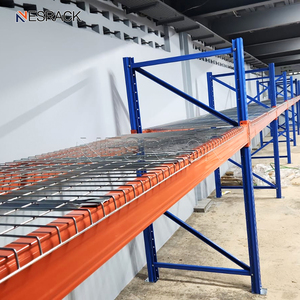
As international supply chains experience seismic shifts toward automated throughput and maximum cubic volume utilization, selecting a certified teardrop pallet racking supplier from China demands rigorous structural qualification, precision roll-forming metallurgy, and uncompromising compliance with ANSI MH16.1 and RMI (Rack Manufacturers Institute) standards.
Explore our factory-direct heavy-duty pallet racks, cantilever columns, coil cradles, and commercial storage infrastructure.
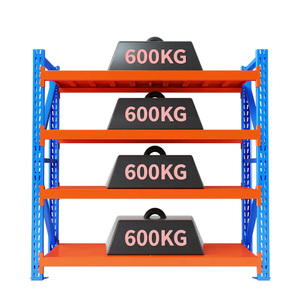
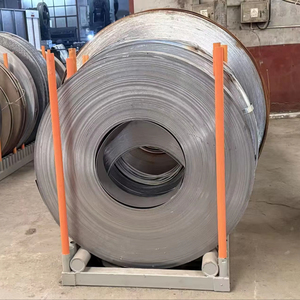
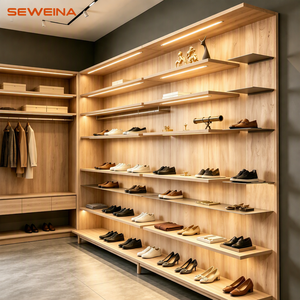
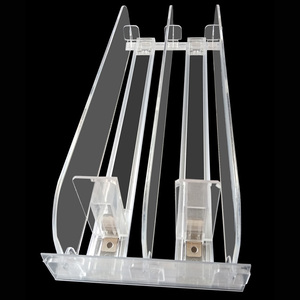
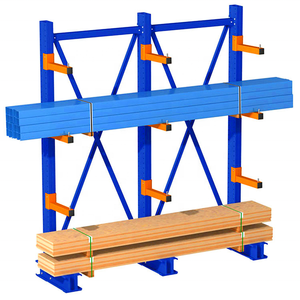
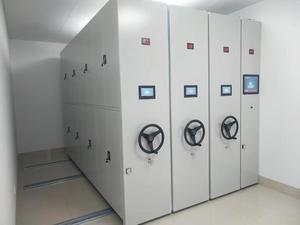
Teardrop pallet racking remains the uncontested standard throughout the Americas and global third-party logistics (3PL) hubs due to its universal boltless modularity. Our manufacturing base synthesizes three decades of mechanical engineering with automated continuous roll-forming lines to deliver structural racking that exceeds global safety thresholds.
We source prime hot-rolled and cold-rolled coil strictly from tier-one state mills (Baosteel, Shougang). Every batch is metallurgically tested for yield strength (≥355 MPa for high-bay uprights) and elongation, ensuring ductile resilience in seismic events.
Engineered precisely to the legacy teardrop profile, our upright columns interlock seamlessly with major North American beam brands (Interlake, Mecalux, Ridg-U-Rak). Precision CNC punch presses maintain ±0.1mm tolerance across 12-meter continuous upright lengths.
Step-beam end connectors (3-rivet and 4-rivet brackets) are welded using 6-axis ABB robotic MIG welding stations. Continuous weld penetrations prevent sheer fracture under dynamic forklift placement and severe vertical impact loadings.
Our GEMA automated powder lines feature a 7-stage iron-phosphate immersion wash followed by thermosetting polyester powder coating (60-90μm thickness). Salt-spray tested to ASTM B117 for >500 hours rust resistance in high-humidity ambient facilities.
Our technical sales engineering team provides full-scale AutoCAD, 3D Revit, and finite element analysis (FEA) simulations before steel rolling begins. We evaluate warehouse slab bearing psi, seismic zone spectra, and forklift turning radii.
Exporting structural steel requires intelligent nesting. Our automated bundling systems incorporate heavy steel protective channels, corrugated corner protectors, and moisture-barrier shrink films to eliminate container transit abrasion and sea salt exposure.
Precision sizing ensures optimum load-carrying efficiency while mitigating unnecessary deadweight steel costs. Compare our standard teardrop specifications against your operational requirements.
| Assembly Component | Standard Profile Sizing (mm / Inch) | Material Grade | Load Rating Range | Compliance Standard |
|---|---|---|---|---|
| Standard Teardrop Upright Frame | 76.2 × 76.2 mm (3" × 3") • Gauge: 12GA, 14GA, 16GA | Q355B Cold Rolled Steel | Up to 18,500 kg (40,800 lbs) | ANSI MH16.1 / RMI |
| Heavy-Duty Upright Frame | 88.9 × 76.2 mm (3.5" × 3") • Gauge: 10GA, 12GA | High-Yield Low-Alloy Steel | Up to 24,000 kg (52,900 lbs) | AS4084 / FEM 10.2.02 |
| Roll-Formed Step Beam | Height: 3.5" to 6.0" • Step Recess: 1/2" × 7/8" | Q235B / Cold-Formed Tube | 1,200 – 4,200 kg per beam pair | RMI Testing Protocols |
| Heavy Box Tube Beam | 50 × 80 mm up to 50 × 160 mm Box Profile | Q355B Continuous Weld Tube | Up to 5,000 kg per beam pair | EN 15512 European Code |
| Galvanized Wire Mesh Decking | Mesh Pattern: 2" × 4" • Wire Dia: 4.5mm to 6.0mm | Q195 / Q235 Drawing Wire | 500 – 1,500 kg Uniform Distribution | NFPA 13 Fire Sprinkler |
| Structural Baseplates & Anchors | 100 × 120 mm to 200 × 200 mm • Thickness: 6–12mm | Hot Rolled Carbon Steel Plate | Multi-Hole Seismic Footing | IBC / Seismic Zone 4 |
The structural vulnerability of standard selective racking systems occurs almost exclusively at the beam end-connector connection point under accidental forklift uplifts. Our teardrop connectors integrate an automatic gravity-assisted safety pin engineered from cold-drawn high-tensile steel.
Under full design load, maximum allowable beam deflection δ is calculated rigorously to avoid product slippage and forklift mast masthead collision:
Where L represents the clear beam span between columns. All custom load tables supplied by our technical bureau reflect these deflection thresholds at a 1.67 structural safety factor over ultimate yield strength.
Global warehouse operators, cold storage developers, and logistics procurement directors are revising their China sourcing playbooks. Understanding these structural and trade dynamics separates high-margin operations from high-risk installations.
Leading buyers are moving away from fixed long-term quotes toward transparent pricing indexed against Shanghai Metal Market (SMM) and CRU hot-rolled coil (HRC) indices. Sourcing directly from high-capacity Chinese mills mitigates distributor markups and guarantees steel mill test certificates (MTC 3.1) with each bill of lading.
Procurement teams now demand Building Information Modeling (BIM) files (IFC / Revit) at the quotation stage. Chinese fabricators are directly coupling 3D BIM structural designs with robotic CNC punch-and-roll lines, eliminating field modifications and expediting municipal building permitting in North America and Europe.
To navigate evolving anti-dumping duties and Section 301 tariffs, tier-one Chinese suppliers have established multi-hub production or knock-down (CKD) assembly frameworks across Southeast Asia and the Middle East, offering resilient tariff-optimized logistics routes without sacrificing base engineering quality.
Modern distribution facilities are not static warehouses—they are high-frequency fulfillment machines. Discover the technical advances redefining teardrop structural design.
Zinc-Aluminum-Magnesium (ZAM) alloy coatings are replacing traditional hot-dip galvanizing for cold storage and corrosive chemical logistics. ZAM delivers self-healing edge corrosion protection, thinner coat layers with 3x higher salt-spray durability, and superior scratch resistance during repeated pallet cycles.
Teardrop frameworks are morphing into semi-automated hybrid systems. Standard teardrop upright frames now accept continuous inner shuttle rails that accommodate 4-way pallet shuttles, alongside floor-guided Autonomous Mobile Robots (AMRs), combining modular teardrop economics with automated velocity.
Modern building codes (IBC 2024 / ASCE 7) enforce stringent dynamic seismic design for high-occupancy logistics buildings. Our engineering bureau conducts non-linear modal response spectrum simulations to compute second-order (P-Delta) effects, sizing upright column stiffeners and heavy-gauge baseplates accordingly.
Direct answers from structural engineers regarding metallurgical grades, international compatibility, load testing, and containerized dispatch from China.
Our punch dies strictly adhere to the universal teardrop specification: standard 2-inch vertical center-to-center hole spacing, 0.65-inch pin cutouts, and 1-5/8 inch face width return flanges. We regularly export beams and uprights that interchange seamlessly with legacy Interlake New Style, Mecalux, and SpaceRak systems without structural distortion.
We primarily fabricate from Q235B (comparable to ASTM A36 / A1011 SS Grade 36) for step beams and Q355B (equivalent to ASTM A572 Grade 50) for heavy upright columns. Q355B delivers a certified minimum yield strength of 355 MPa, providing superior load-bearing capacity and seismic ductility while reducing overall rack deadweight.
In accordance with ANSI MH16.1 specifications, we carry out stub-column testing, beam-to-column connector moment resistance testing, and cyclic push-pull shear tests. Every production cycle is validated using dedicated hydraulic test beds to confirm that ultimate failure loads surpass design operating limits by a minimum 1.67 safety factor.
Beams are strapped with protective timber spacers and heat-shrink wrapped in export bundles; upright frames are nested with high-density EPS edge protectors. All sea freight shipping containers receive desiccants and volatile corrosion inhibitor (VCI) films to prevent moisture condensation throughout long transoceanic voyages.
Yes. Our galvanized wire mesh decks feature a minimum 50% open area pattern (typically 2" × 4" or 2.5" × 4.5" mesh) with flared universal or step channels, enabling uninhibited sprinkler water penetration through multi-tier rack bays directly to burning inventory, meeting NFPA 13 requirements.
Yes. For turnkey projects across the USA, Canada, and Australia, we partner with licensed professional structural engineers (PE/SE) who review our finite element analysis models, verify localized slab and seismic requirements, and issue wet-stamped engineering calculations required by local building departments.
For cold-store and sub-zero blast-freezer installations (-30°C), we utilize specialized low-temperature modified TGIC-free polyester powders formulated to eliminate micro-cracking and brittleness. Surface preparation includes shot blasting to Sa 2.5 standard for maximum inter-coat adhesion.
Standard lead times for 1 to 5 forty-foot high-cube (40HQ) containers range from 18 to 25 calendar days following drawing signoff and MTC validation. For massive distribution fulfillment centers exceeding 500 tons, rolling schedules are phased to deliver continuous container shipments matching on-site erection sequences.
While safety orange (RAL 2004) beams and signal blue (RAL 5005 / 5015) upright frames represent the North American standard, we provide fully customized RAL and Pantone matching. Dual-tone powder schemes, safety yellow aisle end-protectors, and galvannealed corrosion finishes are fully supported.
Structural steel logistics optimization is critical. We use proprietary 3D container packing software that calculates center of gravity and max payload limits (up to 26.5 metric tons per 40HQ container). Disassembled upright frames and staggered beam packing ensure zero wasted cubic dead-space.
Direct factory pricing, comprehensive system studies, AutoCAD layout design, structural load calculations, and global delivery schedules customized for distributors, system integrators, and facility operators.