Racking & Shelving Specialists — Hamriyah Free Zone, Sharjah · Serving the UAE & GCC
Explore our core structural steel storage families manufactured to ISO 9001 and European CE specifications, supplied directly to logistics hubs, assembly plants, and automated warehouses.
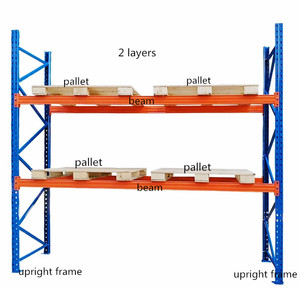
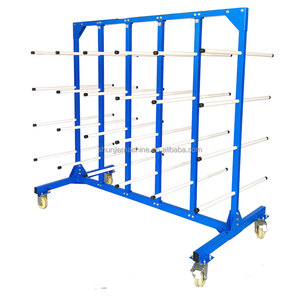
In modern high-density distribution centers throughout the Seoul Capital Area (Sudogwon)—encompassing Seoul, Incheon, and Gyeonggi Province—real estate valuation demands maximum cubic volume utilization. Gravity flow racking, known interchangeably as pallet flow or dynamic live storage racking, operates on an inclined roller track plane (typically engineered between a 3.0% and 4.0% gradient). Utilizing natural gravitational acceleration, unit loads move effortlessly from the rear loading aisle (charging face) to the front retrieval aisle (discharging face). This fundamentally bifurcates material handling traffic, eradicating forklift bottlenecks and establishing an uncompromising First-In, First-Out (FIFO) stock rotation schedule.
As a premier certified manufacturing plant and global exporter, our dynamic gravity flow solutions conform rigorously to European standard EN 15512 (Steel static storage systems – Adjustable pallet racking systems – Principles for structural design) and the CE Machinery Directive & Construction Products Regulation (CPR 305/2011). Fabricated using premium Q235B and cold-formed high-tensile Q355B structural carbon steel (equivalent to Korean KS SS400 and SM490), each upright frame profile features precision-rolled omega sections with multi-point interlocking teardrop or diamond connector punches. This optimizes torsional rigidity while accommodating dynamic live loads exceeding 1,500 kg per pallet position.
For warehouse operations serving fast-paced omnichannel retail, pharmaceutical Cold Chain distribution, and automotive assembly lines across South Korea, this zero-energy, gravity-powered automation provides high-density operational performance without the substantial capital expenditure (CapEx) or continuous electrical overhead required by fully automated shuttle AS/RS setups.
Examining how high-density dynamic flow systems solve warehouse land constraints, cold chain handling, and JIT assembly demands across South Korea's crucial logistics corridors.
In mega-fulfillment clusters spanning Icheon, Yongin, and Gwangju (Gyeonggi-do), leading e-commerce platforms like Coupang, Market Kurly, and SSG depend on speed-critical morning delivery. Pallet and carton flow systems maintain strict FIFO fresh food dispatch, eliminating picking delays during peak sorting intervals from 22:00 to 04:00.
Operating in refrigerated facilities along the Incheon Free Economic Zone (IFEZ) and Gimpo logistics axes, our low-temperature specialized gravity systems incorporate low-temperature synthetic lubricants, cryogenic poly-rollers, and corrosion-resistant hot-dip galvanized steel to eliminate thermal contraction jams.
Serving technology corridors in Hwaseong, Pyeongtaek, and Pangyo Techno Valley, carton gravity flow racks integrated with ESD-safe conductive roller tracks buffer electronics components and sub-assemblies adjacent to automated SMT manufacturing cleanrooms with zero particle shedding.
Tier-1 automotive parts suppliers in the Gyeonggi-Incheon industrial corridor use gravity carton flow lanes configured for standardized KLT and fold-flat plastic totes. This setup delivers sequenced line-side parts to assemblers without dead-leg return journeys or misplaced inventory.
With downtown Seoul commercial lease prices ranking among the highest in East Asia (Gangnam, Seongsu, Songpa), multi-tier mezzanine carton flow setups compress vertical cubic space, enabling same-hour hyper-local delivery for neighborhood groceries and retail cosmetics.
Pharmaceutical wholesalers subject to Korea Good Supplying Practice (KGSP) standards deploy flow lanes to assure non-negotiable lot control, expiry date sequencing, and unbroken chain-of-custody tracking across all vaccine and clinical distribution channels.
Procurement directors and facility engineers evaluating dynamic flow systems against alternative racking configurations can benchmark operational densities, pallet selectivity, and lifecycle maintenance characteristics below:
| Storage System Type | Stock Rotation Logic | Aisle Space Requirement | Volume Utilization | Energy / Power Cost | Throughput Velocity | Recommended Scenario |
|---|---|---|---|---|---|---|
| CE Gravity Flow Racking | Strict FIFO | Dual Aisle (Charge / Pick) | 80% – 88% (High) | Zero (Gravity Powered) | Rapid continuous flow | Perishables, FMCG, Cold Store, E-commerce |
| Standard Selective Rack | FIFO or LIFO | Multi-Aisle (50% aisle area) | 40% – 50% (Low) | Zero | Medium (forklift travel delays) | High SKU variety with low quantity per SKU |
| Drive-In Racking | Strict LIFO | Single Access Aisle | 65% – 75% (Medium-High) | Zero | Slow (risks collision in lanes) | Non-expiring homogeneous bulk items |
| Push-Back Trolley Racking | Strict LIFO | Single Operating Aisle | 70% – 78% (Medium-High) | Zero | Moderate | Medium batch storage, 2-6 pallets deep |
| Automated AS/RS (Crane/Shuttle) | Programmable (FIFO/LIFO) | Minimal Dedicated Crane Aisle | 85% – 92% (Maximum) | High Electrical Consumption | High (limited by crane speed) | Mega-DC, extreme vertical height (>20m) |
*Data calculated based on standard ISO 1200x1000mm and Korean KFI 1100x1100mm pallet footprints in typical 10m clear-height Sudogwon warehouse specs.
Key economic, structural, and technological drivers currently transforming warehouse design parameters across Seoul and Gyeonggi Province.
Industrial land prices along the Gyeongbu Expressway and Yeongdong Expressway axes have risen steeply over recent quarters. Logistics operators cannot justify cavernous aisleways dedicated solely to forklift passage. Converting traditional selective layouts to 10-to-20 pallet deep gravity flow tracks doubles cubic pallet density on identical concrete slab footprints.
Following updated seismic provisions under the Korean Building Code (KBC) and National Structural Standards (KDS 41), industrial racks exceeding 6 meters must withstand local seismic acceleration factors (Zone I / Zone II). Our systems feature heavy-duty baseplates, reinforced cross-aisle portal bracing, and positive-locking safety retainers to counter ground shaking.
South Korean corporate conglomerates (Chaebols) and transnational 3PL providers are heavily prioritizing ESG mandates and RE100 decarbonization targets. Gravity flow systems harness kinetic potential energy without electric drive motors, significantly reducing operational energy consumption and scope 2 emissions relative to powered conveyors.
A frequent root cause of premature failure in imported gravity flow systems is the misalignment between steel frame tolerances, roller track materials, and the specific pallet bottom boards deployed within the destination country. In South Korea, the overwhelming industrial standard is the KFI standard pallet (1,100 mm × 1,100 mm), composed either of injection-molded HDPE plastics with multi-runner bottoms or solid pine wood boards.
When running plastic pallets on dynamic flow tracks, standard cylindrical steel rollers often suffer from reduced coefficients of friction, resulting in uncontrolled hydroplaning under humid or sub-zero conditions. Our custom engineering team addresses this by offering triple-track configurations equipped with knurled surface finishes or vulcanized high-durometer polyurethane sleeves. This delivers dependable, non-slip contact with plastic pallet runners under full loads.
Additionally, each lane incorporates ramp-entry centering guides at the charge end. These visual funneling brackets guide forklift operators during pallet placement, avoiding collision damage to the initial roller sets and ensuring straight, jam-free tracking down the entire channel length.
Delivering over three decades of racking innovation, meticulous fabrication quality, and seamless turnkey international project delivery.
Decades of structural racking manufacturing and engineering consulting provide deep expertise in custom load capacities, high-bay stability, and optimized logistics workflows across global markets.
Fully compliant with CE EN 15512 static steel storage mandates, ISO 9001 quality frameworks, and international fire-sprinkler through-decking standards. Full compliance dossiers provided with every shipment.
Direct supply straight from our heavy manufacturing floors eliminates intermediary trading markups, giving Korean procurement teams and general contractors top-tier engineering specifications at competitive factory-gate pricing.
Our in-house design office performs complete CAD structural layout optimization and Finite Element Analysis (FEA) testing to verify beam deflection thresholds (L/200 standard) prior to fabrication release.
100% full-run roller spin checks, weld seam penetration audits, and powder-coating cross-hatch adhesion testing take place before export crating, ensuring plug-and-play assembly upon arrival at site.
Experienced shipping desk handling containerized breakbulk dispatches straight into Incheon New Port (인천신항) or Busan Port (부산항), complete with all customs documentation, material test reports (MTR), and install drawings.
Technical answers to common questions raised by general contractors, warehouse owners, and logistics planners in South Korea.
Yes. Our roller pitch, channel lane clear width, and load rating profiles are customized for standard Korean 1100×1100 mm plastic and wooden pallets. We adjust the track spacing and roller bed configurations to match pallet bottom runner patterns, preventing sagging or tracking deviations.
European Standard EN 15512 is recognized globally as an advanced design code for industrial steel storage racks. Our structural calculations use limit state design methodologies that align with the structural safety concepts of the Korean Building Code (KDS 41). We supply full engineering calculation packages to facilitate local structural engineer sign-offs.
Yes. For cold storage facilities in Gyeonggi-do and Incheon, we supply specialized sub-zero roller assemblies fitted with low-temperature synthetic grease, stainless steel internal bearings, and high-impact cryogenic polymer or galvanized steel housings rated down to -35°C without freezing or seizing up.
Standard fabrication runs for mid-sized projects (500 to 3,000 pallet positions) require approximately 20 to 30 working days from drawing sign-off. Ocean freight transit from our deep-water loading terminal to Incheon or Busan Port takes 2 to 5 days, making overall project schedules fast and dependable.
In deep-lane configurations (up to 20 pallets deep), internal centrifugal brake rollers are installed every pallet length along the track. As descent speed approaches 0.3 m/s, centrifugal internal brakes apply steady resistance, keeping pallet speeds controlled and smooth throughout the lane.
We provide full structural shop drawings, numbered part marks, 3D step-by-step assembly guides, and anchor torque specs for local Korean installers. Alternatively, we can dispatch bilingual on-site installation supervisors to direct your installation team from start to finish.
Connect with our technical engineering desk to request custom CAD layout designs, structural load calculations, and competitive factory-direct quotations for your upcoming warehouse project in Seoul or Gyeonggi-do.