1. Strategic Procurement Overview: Bridging Chinese Industrial Capacity with New Zealand Infrastructure Demands
The industrial landscape across New Zealand—stretching from the vital logistics corridors of South Auckland (Wiri, Airport Oaks, and Highbrook) to the burgeoning logistics precincts of Rolleston and Hornby in Christchurch—faces an ongoing supply challenge: industrial vacancy rates have consistently hovered below 2.5%, while commercial industrial land square-meter rates continue to climb. To remain competitive, Kiwi 3PL providers, primary exporters (dairy, meat, horticulture, and viticulture), and national retailers must optimize their internal cubic storage volume rather than continually expanding their ground footprint.
Procuring directly from leading Chinese adjustable steel shelving factories gives New Zealand enterprise buyers direct access to advanced cold-roll-forming mills, robotic plasma welding lines, and vertically integrated surface treatment plants. However, importing industrial steel storage into New Zealand is not simply a transactional buy: it is a complex engineering decision governed by New Zealand Building Code Clause B1 (Structure), strict seismic regulations under AS/NZS 4084:2023, and rigorous corrosion resistance requirements under ISO 9223 due to the country's surrounding maritime environment.
Technical Insight: Sourcing industrial adjustable shelving from a Tier-1 Chinese factory yields typical raw manufacturing cost efficiencies of 28% to 42% compared to domestic fabrication, while enabling precise, millimeter-accurate beam slot customization (50mm vs 75mm pitches), allowing warehouse operators to fully eliminate wasted vertical air space above palletized unit loads.
2. Structural Engineering Compliance: AS/NZS 4084:2023 & NZS 3404 Seismic Ductility
Unlike continental European or low-seismic Asian environments, New Zealand sits directly atop the Pacific-Australian tectonic boundary. Every commercial storage rack or high-bay adjustable shelving system installed in regions like Wellington, Hawke's Bay, Canterbury, or Marlborough must withstand lateral earthquake loading without catastrophic structural collapse. In 2023, standard AS/NZS 4084 was updated, mandating refined analytical criteria for rack design, including higher minimum load factors, revised upright perforation shear reduction formulas, and stricter baseplate deformation protocols.
Steel Ductility Ratios
Components utilize certified structural steel grades (equivalent to AS/NZS 1365 G350/G450) maintaining elongation at fracture >15%, preventing brittle snapping during cyclic seismic stress.
Oversized Seismic Baseplates
Engineered baseplates engineered with multi-hole patterns accommodate heavy-duty chemical drop-in anchors (M12 to M16) rated for uncracked and cracked slab conditions.
Beam-to-Column Locking
Heavy-gauge connector hooks with 5-to-6 claw points and high-visibility spring safety locking pins resist dynamic seismic vertical uplift forces.
Flared & F-Channel Decks
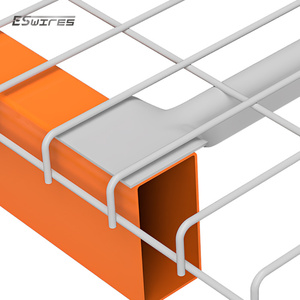
Wire mesh decks prevent uncontained falling cartons during earth tremors while maintaining 70%+ open area for early sprinkler activation under NZS 4541.
Our engineering department conducts comprehensive 3D Finite Element Analysis (FEA) for all New Zealand deployments. By simulating lateral spectral accelerations matching site-specific subsoil classifications (Class A hard rock through Class E very soft soil) in accordance with NZS 1170.5, our shelving and racking structures ensure building consent sign-off from Auckland Council, Christchurch City Council, or regional Territorial Authorities (TAs).
3. Atmospheric & Maritime Corrosion Mitigation: Surface Finishing Standards
No part of New Zealand is situated further than 130 kilometers from the sea, and major industrial centers—including the Port of Tauranga, Ports of Auckland, and Lyttelton Harbour—operate in microclimates with high salt spray and relative humidity. Left unprotected, standard mild steel shelves will experience premature oxidation, blistering, and structural cross-section degradation.
To deliver an operational lifespan of 15 to 25+ years, we implement an industrial multi-barrier finishing protocol:
- Automated 7-Stage Pre-Treatment: Raw hot-rolled and cold-rolled components pass through automated shot-blasting (Sa 2.5 standard), followed by alkaline degreasing, zinc phosphating, and deionized water rinsing to completely eliminate mill scale and microscopic contaminants.
- Thermoset Epoxy-Polyester Powder Coating: Applied using Swiss Gema electrostatic gun systems, producing an ultra-uniform dry film thickness (DFT) of 70 to 90 microns. This finish resists impact chipping from forklift handling and complies with ASTM B117 salt spray tests for over 500 hours without red rust formation.
- Hot-Dipped Galvanization (HDG): Recommended for wire mesh decking, outdoor cantilever racks, and unheated coastal packing sheds. Certified to AS/NZS 4680, our zinc bath creates an alloyed metallurgical bond with a minimum coating mass of 390 g/m² (55–65 µm minimum thickness), offering sacrificial cathodic protection against ISO 9223 C3/C4 coastal environments.
- Austenitic Stainless Steel (AISI-304 & 316): Utilized for custom cantilever arms, food-contact shelving, and meat processing facilities requiring rigorous caustic CIP (clean-in-place) chemical washdowns.
4. Localized Application Scenarios Across New Zealand Sectors
High-Density Pick Modules
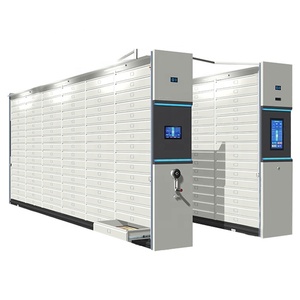
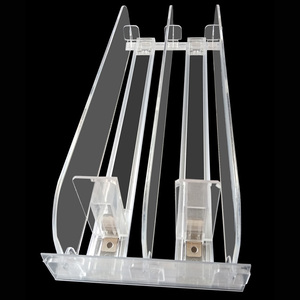
Integrating adjustable multi-tier long-span shelving with intelligent mobile compactors and shelf pushers, maximizing picking speed for apparel, electronics, and fast-moving consumer items in Mount Wellington and Highbrook distribution warehouses.
Cold Storage & Dairy Staging
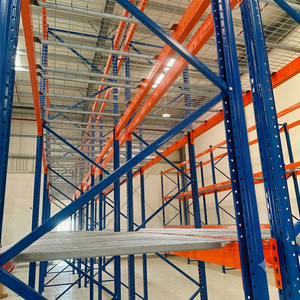
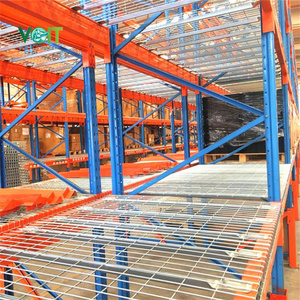
Equipped with flared channel hot-dipped galvanized wire decks and heavy-duty box-beam pallet racking operating smoothly in deep-freeze environments down to -28°C for Fonterra dairy exports and meat processing storage.
Heavy Cantilever Storage
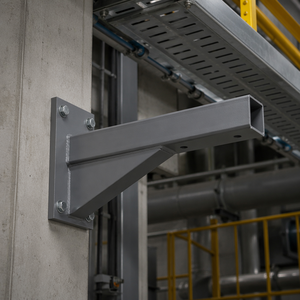
Robust hot-rolled structural steel cantilever systems purpose-built for timber packs, structural glulam beams, PVC piping, and building supplies, engineered to withstand Tauranga's humid coastal timber staging facilities.
5. 2025–2030 Trends Shaping the New Zealand Storage Landscape
The warehousing landscape in New Zealand is transforming rapidly under three macroeconomic drivers:
A. Automation-Ready Hybrid Systems: As autonomous mobile robots (AMRs) and automated guided vehicles (AGVs) enter modern distribution centers in South Auckland and Rolleston, shelving and racking tolerances must tighten from traditional +/-3mm down to sub-millimeter precision. Factory roll-forming lines running continuous optical sensor verification provide the upright straightness and beam slot repeatability needed for automated picking.
B. Embodied Carbon & Life Cycle Tracking: Kiwi infrastructure owners are scrutinizing supply chain carbon footprints. Leading Chinese mills are shifting to scrap-based Electric Arc Furnaces (EAF) and closed-loop powder-coating reclaim systems, lowering cradle-to-gate embodied carbon by up to 26% and assisting New Zealand businesses in securing Green Star building ratings.
C. Fire Safety Engineering Alignment: The New Zealand Fire and Emergency service emphasizes non-combustible vertical storage. Wire mesh decking has largely superseded hazardous solid timber shelving (such as particleboard or plywood) because it allows water from ESFR overhead sprinklers to cascade directly through the rack bays, controlling hot spots before structural steel yields.
6. Engineering Specification Comparison Matrix
| System Type | Material Grade | Surface Treatment | Typical Shelf Capacity | Seismic Rating (NZS 1170.5) | Best Suited Kiwi Industry |
|---|---|---|---|---|---|
| Adjustable Long-Span Shelving | Q235B Cold-Rolled Steel | Epoxy-Polyester 75µm | 300 – 800 kg / level | Importance Level 2 (IL2) | Automotive parts, retail storerooms |
| Heavy Selective Pallet Racking | Q355B High-Tensile Steel | Hybrid Powder / Galvanized | 1,000 – 4,500 kg / pair | Importance Level 2 & 3 (IL3) | Freight forwarders, FMCG distribution |
| Galvanized Wire Mesh Decking | Q195 Carbon Steel Wire | Electro-Zinc / HDG (AS 4680) | 800 – 1,500 kg UDL | Sprinkler compliant (NZS 4541) | Dry goods, cross-dock logistics |
| Heavy Duty Cantilever Racks | Q235B / SS304 Stainless | Hot-Dip Galv / Mill Finish | 500 – 2,000 kg / arm | Engineered Baseportals | Timber yards, pipe distribution |
| Electric Mobile Compactors | SPCC Cold-Rolled Sheet | Anti-Static Powder Coat | 80 – 150 kg / shelf | Track Floor Restraints | Government records, cleanroom labs |
7. Our Manufacturing Edge: 36 Years of Precision Engineering
With an industrial heritage spanning over 36 continuous years of racking and shelving fabrication, our integrated factories deliver an unmatched combination of raw production scale and exacting precision:
Custom Automated Roll-Forming
Equipped with 24-station rolling lines capable of processing up to 3.5mm thick high-strength steel coil with continuous punch-hole accuracy within ±0.2mm.
Robotic Laser & Plasma Cutting
6-axis robotic welding cells guarantee full-penetration welds along all beam connectors, baseplate joints, and cantilever arm saddles, eliminating weld porosity.
In-House Mechanical Testing
Every steel batch is backed by factory chemical spectrometer verification, tensile yield testing, and destructive load-testing rigs validating stated safety margins.
Export Logistics Optimization
Containers are bundled using heavy-duty steel chocks, edge protectors, and vapor corrosion inhibitor (VCI) poly-wrapping, preventing maritime transit salt damage.
8. The 5-Stage Direct Sourcing Framework for New Zealand Buyers
System Study
We evaluate your architectural floor plan, clear ceiling height, slab load ratings, and specific handling equipment (forklift turning radiuses).
Layout & FEA
Our engineers produce complete 2D/3D CAD layouts and localized seismic calculation reports tailored to your specific New Zealand region.
Precision Rolling
Manufacturing occurs under strict ISO quality controls, with continuous inspections of dimensions, weld penetration, and powder coat thickness.
Container Freight
Efficient flat-pack container loading directly to the Ports of Auckland, Port of Tauranga, Napier Port, or Lyttelton Harbour with complete customs documentation.
Installation Support
Comprehensive assembly manuals, exploded 3D component diagrams, and direct technical consultations for your local installation crews.
9. Frequently Asked Questions by New Zealand Procurement Teams
How does your factory ensure compliance with AS/NZS 4084:2023?
Our structural designs are engineered directly against the latest AS/NZS 4084 standards. We utilize certified prime steel coils with guaranteed minimum yield strengths (Q235B/Q355B equivalent to G350/G450), apply required capacity reduction factors for punched upright perforations, and provide structural engineering documentation suitable for Producer Statement (PS1) design review by New Zealand Chartered Professional Engineers (CPEng).
Can you provide seismic engineering calculations for Christchurch and Wellington?
Yes. We calculate the horizontal and vertical spectral acceleration coefficients according to NZS 1170.5 based on your warehouse's specific GPS coordinates, subsoil class (A through E), and building importance level. This ensures footplates, column sections, spine bracing, and anchor bolt specifications meet local council building consent criteria.
Why is wire mesh decking preferred over timber shelves in New Zealand?
Timber shelves represent a severe fire hazard under NZS 4541 (Automatic fire sprinkler systems). Solid timber blocks the downward flow of water from overhead ESFR sprinklers, allowing shelf fires to spread horizontally. Galvanized wire mesh decking provides over 70% open area, allowing sprinkler discharge to penetrate directly to lower rack levels while preventing loose cartons from falling.
What is the typical shipping lead time to Ports of Auckland and Tauranga?
Standard fabrication lead times average 20 to 30 days depending on project tonnage and customization requirements. Direct sea freight transit times from our primary loading ports (Shanghai or Ningbo) to Ports of Auckland or Port of Tauranga run approximately 14 to 21 days, enabling reliable turnaround from CAD approval to on-site delivery.
How are the products protected against sea salt corrosion during ocean transit?
All structural components are bundled using non-chafing polymer bands, reinforced heavy cardboard edge protectors, and high-gauge vapor corrosion inhibitor (VCI) stretch film. This multi-layer wrap prevents maritime moisture ingress and protects the electrostatic powder coating or galvanization from friction during sea transport.
Can you manufacture customized pitch increments (50mm vs 75mm)?
Yes. Our automated CNC punching and roll-forming stations can be configured for international 75mm standard pitches or high-efficiency 50mm increments. A 50mm vertical pitch allows much finer shelf level adjustment, maximizing cubic volume utilization when storing standard Australasian pallet sizes (1200mm x 1200mm Chep pallets) and irregular SKUs.
Do you supply cold-storage rated racking down to -30°C for dairy facilities?
Absolutely. For cold stores and blast freezers in the Waikato, Canterbury, and Southland dairy belts, we utilize impact-tested fine-grain steel coils treated with low-temperature thermoset epoxy powder formulations that do not crack, become brittle, or flake under continuous sub-zero thermal cycling.
How do we verify load safety and operational signage in our facility?
With every completed project, we supply comprehensive Safe Working Load (SWL) signage templates engineered to comply with AS/NZS 4084:2023. These display allowable uniform distributed loads (UDL) per pair of beams, maximum upright frame bay capacities, and first-beam clear heights for prominent display at the ends of every rack aisle.
10. Why Partnering Directly with Tier-1 Chinese Manufacturing Protects Your Margin
In an era where New Zealand commercial tenancy leases are signed under tight operational deadlines, sourcing directly from a proven Chinese manufacturing partner eliminates unnecessary domestic distribution layers. You secure factory-direct pricing, direct access to the design engineering team for custom architectural modifications, and scalable manufacturing output capable of producing hundreds of tons of high-strength structural steel within a 30-day production window.
Whether you require a multi-level mezzanine racking installation for an expanding retail logistics depot in Auckland, heavy-duty cantilever racks for a timber distribution yard in the Bay of Plenty, or high-bay seismic pallet racking for a 3PL cold store in Christchurch, our 36 years of engineering excellence and dedicated New Zealand trade focus ensure your investment delivers decades of safe, compliant, and cost-efficient operation.