Racking & Shelving Specialists — Hamriyah Free Zone, Sharjah · Serving the UAE & GCC

Explore our structural pallet flow racking, cold-formed uprights, and heavy-duty live dynamic storage components manufactured in China and delivered CIF Antwerp/Rotterdam with multimodal rail-to-road haulage directly into the Grand Duchy of Luxembourg.
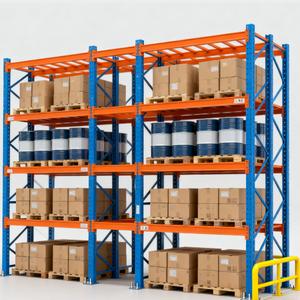
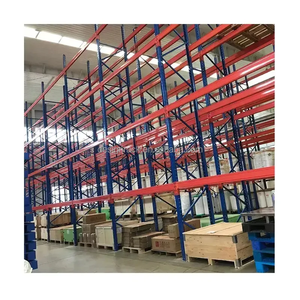
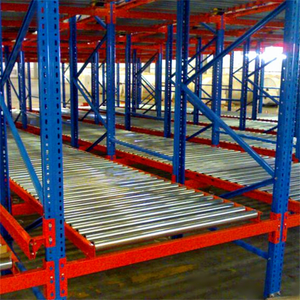
Gravity flow racking (often referred to as live pallet storage or dynamic roller racking) operates on an inclined wheel or roller track bed that converts natural gravitational pull into controlled forward motion. For Luxembourg's prime logistics real estate, this provides the highest volumetric density achievable without requiring automated electrical drives.
The efficiency of a dynamic pallet flow system hinges upon controlling pallet terminal velocity. When a loaded Euro pallet (1200 x 800 mm) or Industrial pallet (1200 x 1000 mm) carrying between 300 kg and 1,500 kg descends down an incline, uncontrolled kinetic energy poses severe hazards to inventory, structural uprights, and forklift operators.
Our engineering matrix designs lanes with a strict geometric gradient between 2.5% and 3.5% (approx. 1.5° to 2.0°), calibrated precisely to the bottom-deck characteristics of standard wooden, composite, or plastic pallets. Centrifugal brake rollers are interspersed throughout the track at intervals of one pallet length. These rollers exert a magnetic or friction-based braking torque directly proportional to the pallet's rolling speed, restricting pallet velocity to a safe, steady terminal speed of 0.25 to 0.30 meters per second.
Deceleration Safety Factor: Built-in eddy-current and mechanical brake rollers absorb impact energy, ensuring uniform lane travel irrespective of whether the pallet weighs 250 kg or 1,200 kg.
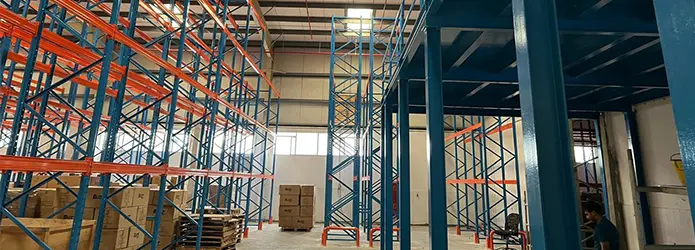
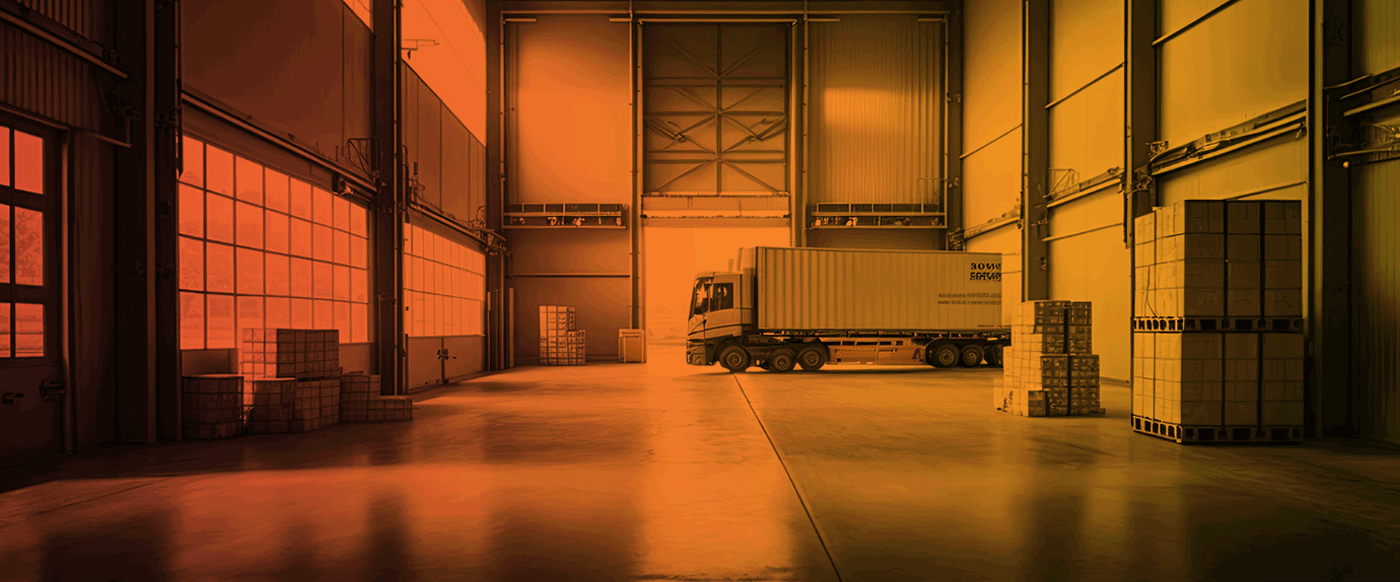
In deep-lane gravity flow systems (ranging from 5 to 25 pallets deep), cumulative line pressure represents a critical engineering obstacle. In the absence of separation, the combined weight of trailing pallets bears down directly upon the lead discharge pallet, making forklift extraction difficult, jamming roller beds, and causing pallet splintering.
Our heavy-duty live racking incorporates automatic mechanical pallet separators at the discharge picking face. When the first pallet docks against the heavy-duty end stops, an articulated spring-loaded mechanism isolates it from the queue, holding the secondary pallet 150mm upstream. Only when the forklift lifts the lead pallet clear does the separator reset, allowing the trailing queue to indexing forward smoothly one pallet pitch at a time.
Separation Reliability: 100% mechanical actuation eliminates pneumatic lines, electrical solenoids, and field wiring, guaranteeing fail-safe performance down to -30°C in deep-freeze environments.
Positioned at the nexus of the Benelux, French, and German trade corridors, Luxembourg hosts specialized distribution hubs where land premiums and strict carbon regulations necessitate high-density gravity flow solutions.
Eurohub Sud functions as one of Europe's premier intermodal rail terminals connecting the North Sea ports to Southern Europe. In high-velocity intermodal cross-docking, selective racking creates traffic bottlenecks. Gravity flow racks serve as live FIFO dynamic accumulation staging lanes between incoming rail containers and regional curtain-sided road trailers, speeding cross-dock cycle times by up to 40%.
Luxembourg Airport is an international air-freight pharma gateway operating under strict Good Distribution Practice (GDP) standards. Refrigerated and deep-freeze warehouse real estate is extraordinarily costly to operate. By eliminating intermediate access aisles, gravity flow reduces the refrigerated cubic volume required by 45%, significantly lowering energy consumption while ensuring strict FIFO stock rotation for temperature-sensitive biologics.
Supplying assembly plants in Germany (Rhineland-Palatinate, Saarland) and Eastern France requires precision JIT sequence buffering. Carton flow and heavy pallet live racks allow assembly lines to feed sub-components directly from the rear replenishment aisle while pickers retrieve items from the front face, completely decoupling picking operations from replenishment traffic.
When assessing high-density warehouse storage systems for Luxembourg facilities, supply chain directors must balance floor footprint, rotational discipline, capital expenditure, and operating expenses.
| Storage System Architecture | Space Utilization | Stock Rotation Logic | Pallet Throughput Speed | Operating Energy Cost | Forklift Aisle Demand |
|---|---|---|---|---|---|
| Gravity Pallet Flow (Live Racks) | Up to 85% (Optimal) | Strict FIFO (100% Guaranteed) | Ultra Fast (Gravity-Assisted) | Zero (Passive Kinetic) | 2 Aisles Only (Loading / Picking) |
| Standard Selective Racking | 35% - 40% (Low) | Flexible (Manual FIFO) | Moderate (Depends on Travel) | Moderate (Forklift Runtime) | Aisle for Every Double Row |
| Drive-In Pallet Racking | 65% - 75% (High) | Strict LIFO (Last-In, First-Out) | Slow (Mast Maneuvering in Lanes) | Moderate | Single Aisle per Block |
| Push-Back Trolley / Roller Racks | 65% - 70% (Medium-High) | LIFO | Medium (Resistance on Push) | Zero | Single Aisle Access |
| Automated Shuttle Systems (AS/RS) | Up to 88% (Extreme) | FIFO / LIFO Programmable | High (Automated Cart) | High (Continuous Electric/Battery) | Single Infeed/Outfeed Point |
National sustainability targets, skyrocketing warehouse rental rates, and integration with cross-border European distribution networks are transforming how logistics facilities are designed in the Grand Duchy.
With prime industrial real estate in the Luxembourg Golden Triangle commanding between €7.50 and €12.00 per square meter monthly, spreading warehouses horizontally is economically non-viable. Gravity flow racking converts wasted aisle space into revenue-generating pallet slots, boosting cubic density without the multi-million Euro capital expenditure of full automated AS/RS cranes.
Aligned with Luxembourg's Integrated National Energy and Climate Plan (PNEC) to slash greenhouse gas emissions by 55% by 2030, warehouse operators face intense scrutiny over utility footprints. Unlike motorized automated shuttles and carousels, gravity flow lanes run on passive gravitational kinetic energy, consuming zero kilowatts during operational pallet transfers.
Luxembourg logistics operators are increasingly deploying autonomous forklifts and automated guided vehicles (AGVs). Gravity flow racking provides an ideal physical buffer: loading AGVs deposit pallets at the rear entry lanes, while picking AGVs or manual operators retrieve them systematically from the discharge face without scheduling or routing conflicts.
Direct-from-mill raw material procurement, cold roll-forming lines, strict European structural engineering certifications, and 36 years of intralogistics manufacturing heritage deliver peerless cost-to-performance value for Luxembourg procurement teams.
Every dynamic flow rack structure undergoes structural calculation using limit state design methods in accordance with EN 15512:2020 and European Racking Federation (ERF) codes. Uprights are formed from certified high-tensile Q355B (equivalent to European S355JR) steel with documented 3.1 chemical and tensile test mill certificates.
Our automated pre-treatment includes 7-stage shot blasting, iron phosphating, and electrostatic thermosetting powder coating baked at 200°C. For Luxembourg refrigerated or ambient outdoor buffer shelters, we provide batch hot-dip galvanizing conforming to ISO 1461, ensuring over 25 years of corrosion-free performance.
We manage end-to-end containerized maritime export from our factory to the Port of Antwerp or Rotterdam, followed by direct scheduled container barge or rail transport straight into the Bettembourg Intermodal Terminal. Comprehensive DDP/CIF handling eliminates customs delays and inland demurrage.
Get clear, definitive answers regarding structural European standards, inland freight routes, customs duties, and cold-chain installation when procuring industrial gravity flow racks directly from China.