B2B Engineering White Paper • Direct Factory Supply
China Wholesale Vertical Storage Racks Manufacturer & Factories Serving Brazil
Precision-engineered structural steel racking systems, heavy-duty automated vertical shelving, and direct ocean-freight container logistics optimized for Brazilian logistics corridors, ports, and industrial hubs.
Export Product Lineup
High-Efficiency Warehouse Racking Systems Engineered for Export
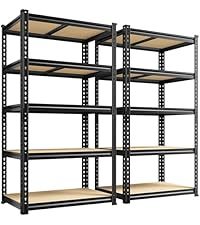
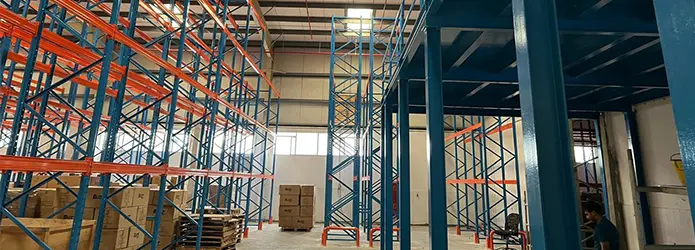
Heavy-duty, boltless, cantilever, and modular storage configurations built with high-yield cold-rolled steel (Q235B/Q355B) for high-density distribution centers across Brazil.
Engineering High-Density Vertical Storage for Brazil's Supply Chain Modernization
The logistics infrastructure of the Federative Republic of Brazil is undergoing an unprecedented structural transition. Accelerated by the explosive expansion of digital retail corridors across the Southeast (Greater São Paulo, Campinas, Rio de Janeiro, and Belo Horizonte), the rapid industrialization of the South (Curitiba, Joinville, and Porto Alegre), and the tariff-incentivized manufacturing hubs within the Zona Franca de Manaus (ZFM), enterprise operators face acute real estate valuation pressures. Prime warehousing space along key arterial routes such as the Rodovia dos Bandeirantes, Rodovia Presidente Dutra, and the Rodoanel Mário Covas has seen lease rates surge by more than 35% in recent fiscal cycles. Consequently, relying on conventional floor stacking or low-efficiency horizontal storage represents an unsustainable cost overhead for Brazilian distributors, third-party logistics (3PL) providers, and multi-facility industrial conglomerates.
To preserve working capital margins, supply chain executives are aggressively executing vertical volume densification strategies. Utilizing the clear vertical clearance of modern Class-A logistics facilities—which frequently offer 12 to 14 meters of unobstructed height—demands heavy-duty, structural steel vertical storage racking systems designed to withstand profound point-load dynamics, continuous multi-shift forklift operations, and intense ambient relative humidity. As a tier-one original equipment manufacturer (OEM) rooted in over three decades of cold-roll forming, structural analysis, and export execution, our industrial manufacturing plants in China deliver high-precision, ISO-certified storage systems engineered directly to meet the technical mandates of the Brazilian market.
This technical white paper outlines the intersection between advanced Chinese cold-rolled steel manufacturing capabilities and the rigorous performance requirements dictated by Brazilian industrial standards (ABNT NBR 15524-1 and 15524-2), maritime freight logistics protocols through the Port of Santos and Paranaguá, and localized structural configurations tailored for agricultural, retail fulfillment, automotive, and cold-chain verticals.
Engineering Specifications
Structural Racking Systems: Technical Parameter Matrix for Brazilian Importers
Comparative design thresholds aligned with Brazilian Associação Brasileira de Normas Técnicas (ABNT) and European EN 15512 safety codes.
Localized Applications Across Brazil's Strategic Economic Macro-Regions
How our heavy-duty engineering addresses climate volatility, regional logistics profiles, and municipal building regulations.
1. Greater São Paulo & Cajamar Logistics Conurbations
Cajamar, often dubbed the "Silicon Valley of Brazilian Logistics," alongside Guarulhos, Barueri, and Louveira, anchors the largest fulfillment operations in South America (serving Mercado Livre, Amazon Brasil, Magazine Luiza, and Shopee). Facilities here operate 24/7/365 with multi-level reach trucks and very narrow aisle (VNA) turret trucks.
Our heavy-duty selective vertical racks feature 50mm pitch adjustable omega-profile upright columns with seamless robotic continuous welding on box beams. This architecture delivers minimal beam deflection under constant dynamic loading, ensuring that picking cycles remain safe, rapid, and fully compatible with automated guided vehicles (AGVs) and warehouse management systems (WMS).
Engineered specifically to accommodate standard Brazilian PBR Pallets (1000mm x 1200mm) without spatial waste.
Integrated with heavy-gauge upright frame protectors to resist high-velocity forklift impact shocks.
2. Center-West & Southern Agribusiness Corridors (Mato Grosso, Paraná, Rio Grande do Sul)
The grain, soy, and meat-processing powerhouses of Sorriso, Rondonópolis, Cascavel, and Passo Fundo require non-standard industrial warehousing. Maintenance hubs and machinery distributors store colossal combine harvester spare parts, hydraulic piping, structural steel profiles, and cold-rolled steel coils.
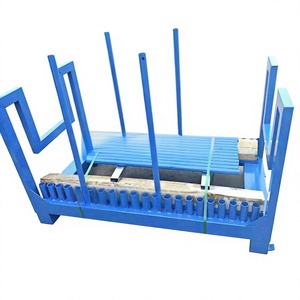
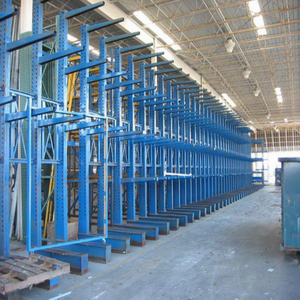
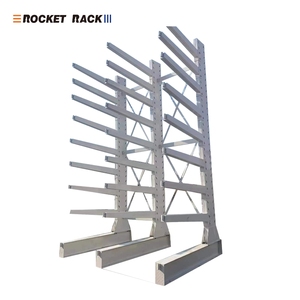
For these applications, standard pallet racking is inadequate. We deploy Heavy-Duty Cantilever Racks and Dedicated Steel Coil Turnover Cradle Racks. Fabricated from premium Q355B structural steel, our cantilever systems feature pivoting safety arms designed to yield safely upward upon unintended equipment impact rather than shearing off, protecting high-value agricultural assets.
V-shaped coil saddles engineered with calculated curvature to prevent localized steel strip denting.
Rigid vertical base assemblies anchor securely into deep-slab reinforced industrial concrete footings.
3. Zona Franca de Manaus (ZFM) & Coastal Bonded Facilities (Santos, Itajaí, Suape)
Industrial environments in Manaus (Amazonas) and coastal customs terminals (Santos, Paranaguá, Navegantes, Suape) exhibit extreme relative atmospheric humidity (>85% RH) and airborne saline chloride penetration. Substandard steel racks imported from low-tier fabricators frequently suffer internal tubular corrosion, blistering, and delamination within 18 months of commissioning.
To defeat this degradation vector, our fabrication plants apply an advanced 9-stage pre-treatment wash protocol followed by thermo-cured electrostatic epoxy-polyester powder coating. For ultra-corrosive deep cold rooms and dockside quays, we provide heavy hot-dip galvanizing conforming to ASTM A123 standards, delivering a sacrificial zinc barrier exceeding 65 microns that resists salt spray test exposure beyond 1,000 continuous hours.
Zero-ozone degassing powder formulation completely prevents humidity entrapment under the coating film.
Key technological, regulatory, and infrastructural shifts dictating warehouse procurement across South America.
Aggressive Proliferation of Dark Stores & Micro-Fulfillment
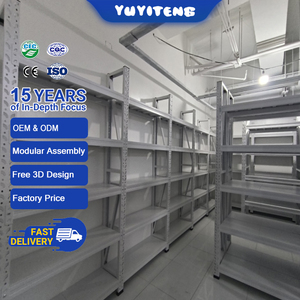
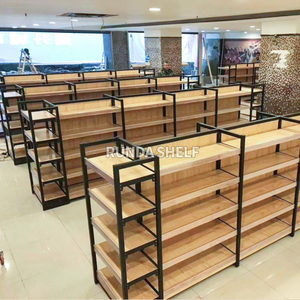
In central São Paulo, Curitiba, and Rio de Janeiro, sub-24-hour delivery expectations have driven the conversion of older commercial structures into multi-tier micro-fulfillment centers. This trend requires modular, boltless rivet racking and structural steel mezzanine floors that increase usable floor area by 200% without structural civil engineering modifications.
Rivet ShelvingUrban LogisticsMezzanines
Enforcement of Mandatory Fire Codes & Insurer Audits
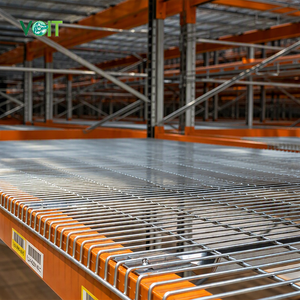
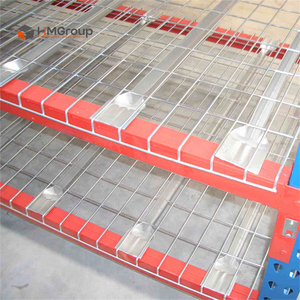
Brazilian fire marshal departments (Corpo de Bombeiros Militar) through their technical instructions (Instruções Técnicas - IT) strictly regulate in-rack sprinkler coverage for storage heights exceeding 6 meters. Solid wooden pallet decking is increasingly disqualified by international reinsurers. Galvanized wire mesh decking has become the mandated industry standard, permitting 100% water penetration and rapid smoke venting.
AVCB ComplianceNFPA 13Wire Decking
Direct-Factory Procurement to Bypass Mercosur Intermediaries
Brazilian purchasing directors are replacing regional trading markups with factory-direct procurement models from accredited Chinese manufacturers. By establishing direct container shipments into Santos, companies achieve a 30% to 45% net capital expenditure saving—even after accounting for international ocean freight, Brazilian import tariffs, and national ICMS fiscal obligations.
Direct ImportCost OptimizationFCL Freight
Why Global Leaders Partner With Us
Over Three Decades of Engineering Pedigree & Manufacturing Superiority
Harnessing automated fabrication capacity, strict metallurgical verification, and project execution rigor for international distribution centers.
36 Years of Manufacturing Precision
Built upon a foundational heritage of 36 years of industrial racking and storage system engineering, our technical teams possess an intimate understanding of beam deflection tolerances, vertical column stability, and load-bearing dynamics.
End-to-End System Study & CAD/BIM Layouts
Every international deployment begins with an exhaustive engineering system study. We review warehouse floor-slab point load capacities, reach-truck turning radii, SKU rotation velocity (FIFO/LIFO), and building clear heights before finalizing roll-forming tooling.
Automated CNC Roll-Forming Lines
Our manufacturing workshops house continuous automated roll-forming lines capable of profiling high-tensile upright steel columns up to 12 meters in a single continuous section, eliminating weak structural splice joints.
Full Metallurgical Traceability & QC
We source raw steel sheet exclusively from premier domestic steel mills (such as Baosteel and Shougang). Every production batch is certified with mill test certificates (MTC) verifying yield strength, tensile resilience, and chemical composition.
Ocean Freight Volumetric Optimization
Shipping to South America demands high cube-efficiency. Our experienced logistics teams pack uprights, beams, and wire decks into 40-foot High Cube (40HQ) containers using specialized wooden cradles and anti-scratch banding, ensuring zero transit deformation.
Dedicated Brazilian Project Support
From initial design consultations to complete Spanish and English assembly schematics, component load signage, and structural calculation documentation, we empower your local installation crews to commission systems safely and quickly.
Import Compliance Guide
The Brazilian Importer's Blueprint: Navigating RADAR, SISCOMEX, and Customs Clearance
Essential regulatory guidelines for purchasing warehouse storage racks directly from our Chinese factories into Brazil.
1. RADAR License & SISCOMEX Accreditation
Before issuing an international purchase order, Brazilian buyers must possess an active Habilitação no RADAR (Ambiente de Registro e Rastreamento da Atuação dos Intervenientes Aduaneiros) administered by the Receita Federal. Depending on your import volume, ensure your corporate CNPJ holds either RADAR Expresso (up to USD 50k/semester), RADAR Limitado (up to USD 150k/semester), or RADAR Ilimitado (for multi-container enterprise operations). All transactions are processed through the official SISCOMEX portal under the Single Foreign Trade Portal (Portal Único de Comércio Exterior).
2. NCM Harmonized Tariff Codes & Taxation Cascade
Industrial steel storage racking and selective shelving generally fall under NCM 7308.90.10 (Structures and parts of structures of iron or steel – Other) or related sub-classifications. The standard taxation cascade upon entry into Brazilian customs encompasses:
II (Imposto de Importação): Standard tariff for finished structural steel goods.
IPI (Imposto sobre Produtos Industrializados): Federal excise tax based on duty-paid value.
PIS / COFINS-Importação: Federal social contributions creditable against output taxes.
ICMS: State value-added tax collected by the destination state (e.g., SP, PR, SC).
Pro-Tip for Brazilian Importers: If your operational expansion qualifies under regional investment incentive frameworks (such as São Paulo's Investe SP or Santa Catarina's Pró-Emprego), duty deferrals or ICMS credit benefits may dramatically lower landed acquisition costs.
3. Bill of Lading (B/L) & Commercial Documentation Precision
Brazilian customs (Alfândega) enforces zero-tolerance scrutiny over documentation discrepancies. We supply verified, fully aligned commercial invoices, detailed packing lists specifying net and gross metric weights per container bundle, mill test certificates (MTC), and clean ocean Bills of Lading displaying exact NCM codes and CNPJ tax identifiers. Original documents or electronic certified copies are released punctually to prevent demurrage charges at Brazilian port terminals.
Procurement Clarity
Frequently Asked Questions: Purchasing Racking Systems from China for Brazil
How do your rack designs comply with Brazilian standard ABNT NBR 15524?
Our structural engineering team designs systems in rigorous adherence to ABNT NBR 15524-1 (Principles of structural design for pallet racking) and NBR 15524-2 (Operation and maintenance guidelines). We utilize finite element analysis (FEA) to verify upright column compression, beam deflection under maximum design loading (adhering strictly to the L/200 limit), and seismic base-plate anchor configurations. Structural calculations are accompanied by technical datasheets for verification by your local civil engineer (CREA).
Are your beam and frame dimensions compatible with standard Brazilian PBR Pallets?
Yes, 100%. The Brazilian Standard Pallet (Palete Padrão Brasileiro - PBR 1) measures 1,000mm width by 1,200mm depth. Our standard selective pallet rack beams are manufactured at 2,300mm (for 2 PBR pallets per level) and 3,400mm (for 3 PBR pallets per level), factoring in the mandatory 75mm minimum lateral clearance between pallet loads and vertical frames as required by safe operating procedures.
What is the typical ocean freight transit time from your factory to Brazilian ports?
Direct ocean container shipping from major Chinese seaports (Ningbo, Shanghai, or Shenzhen) to the Port of Santos (São Paulo) or Port of Paranaguá (Paraná) typically takes between 38 and 45 days port-to-port. Shipments bound for the Port of Itajaí/Navegantes (Santa Catarina) or Suape (Pernambuco) average 42 to 48 days. Production lead times for standard 5 to 15 container orders are typically fulfilled within 20 to 25 business days.
How do you protect steel components against salt water and rust during long maritime voyages?
Every export shipment undergoes seaworthy packing protocols. Upright frames and beams are bundled with high-tensile polyester strapping, wrapped in multi-layer volatile corrosion inhibitor (VCI) stretch film, and interleaved with protective foam spacers to eliminate friction scratches. Small accessories, hardware bolts, safety pins, and base plates are vacuum-sealed in heavy moisture-proof polybags within reinforced export crates containing industrial silica desiccant packs.
Can you provide customized paint colors to match our corporate identity (e.g., Mercado Livre Yellow, Blue/Orange)?
Absolutely. Our automated electrostatic powder-coating lines accommodate all standard international RAL color codes. Common enterprise selections for Brazilian facilities include RAL 5015 / RAL 5010 (Gentian/Industrial Blue) for vertical upright frames paired with RAL 2004 (Pure Orange) or RAL 1023 (Traffic Yellow) for crossbeams to maximize visibility and operator safety under facility lighting.
What documentation do you provide to facilitate Brazilian customs clearance?
We furnish an exhaustive export documentation dossier: Commercial Invoice (specifying exact NCM classifications and Incoterms), Packing List with metric weights and dimensions, Certificate of Origin (Certificado de Origem), Mill Test Certificates (MTC) proving steel chemical and physical yield traits, and complete Bill of Lading copies. All documentation strictly mirrors your import declaration instructions to ensure hassle-free clearance through Receita Federal.
Ready to Engineer an Optimized Vertical Storage Racking Facility?
Connect directly with our senior structural storage engineers. Receive a comprehensive CAD warehouse layout proposal, beam structural calculation dossier, and direct factory pricing delivered within 24 hours.