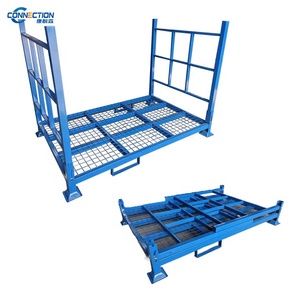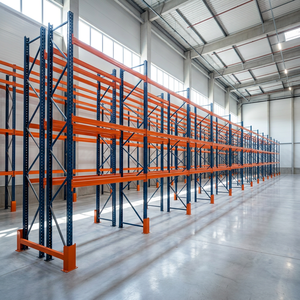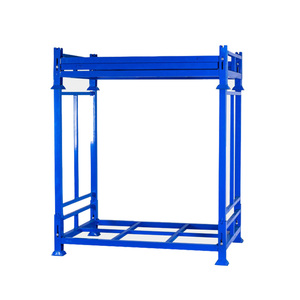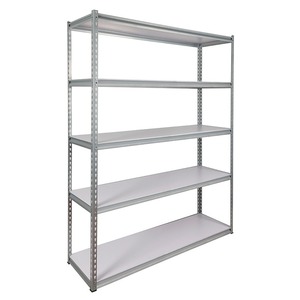
Custom OEM Stackable Steel Racks Manufacturers & Factory serving the Indonesia market

Heavy-Duty Modular Post Pallets, Folding Mesh Stillage, and Demountable Pallet Stacking Solutions Engineered for Indonesian Industrial Parks, Cold Hubs, and Cross-Dock Facilities.

Factory-Direct Heavy-Duty Systems

High-Density Stackable Rack Series for Industrial Operations

Manufactured from high-grade structural carbon steel (Q235B/Q355B) with anti-corrosive electrostatic powder coatings and hot-dip galvanization, our stackable storage systems eliminate permanent rack footprints while ensuring high-density load containment across Java, Sumatra, and the Indonesian archipelago.

36+
Years Engineering Pedigree
Proven international manufacturing track record
Q355B
Structural High-Tensile Steel
Enhanced elastic limit & seismic deflection resistance
85-95%
Humidity Anti-Corrosion
Dual degreased, phosphated & powder-coated finish
4-5 High
Static Stacking Rating
Precision cup-and-cone interlocking alignment
Localized Engineering Whitepaper

Engineering Stackable Racks for Indonesia’s Severe Operating Environments

Deploying warehouse racking systems across the Indonesian archipelago presents distinct operational challenges: aggressive tropical humidity, strict seismic building codes under SNI 1726, and dynamic load demands across rapidly expanding industrial corridors.

Tropical C4-Grade Surface Protection

Indonesia experiences average relative humidity levels ranging from 75% to over 95%, combined with coastal salt-fog exposure near critical trade ports such as Tanjung Priok (Jakarta) and Tanjung Perak (Surabaya). Standard commercial paint coatings deteriorate rapidly, inducing structural oxidation at critical weld seams.

  • 7-Stage pre-treatment with zinc phosphating immersion
  • 80-120 µm electrostatically cured polyester powder coat
  • Hot-dip galvanization (ISO 1461) available for cold rooms

Seismic Deflection & Dynamic Damping

Positioned along the Pacific Ring of Fire, industrial zones across West Java (Cikarang, Karawang, Suryacipta) require storage infrastructures engineered to withstand peak ground accelerations (PGA). Stackable racks must balance rigid stacking with kinetic damping.

  • Compliant with SNI 1726:2019 / FEMA 460 seismic principles
  • Deep-drawn target cups prevent stack dislodgement
  • Structural hollow sections (SHS) prevent torsional buckling

Freight Optimization for Sea Shipping

Importing steel structures into Indonesian seaports requires maximizing container utilization rates. Loose, welded conventional racks waste massive volumetric space, dramatically increasing ocean freight costs and landing expenses.

  • Knockdown (KD) posts allow dense 40HQ container packing
  • Base frames nest tightly to reduce shipping cube by up to 65%
  • Pre-labeled sub-assemblies ensure rapid depot unloading

Engineering Note on Cold-Rolled vs Hot-Rolled Profiles: Our stackable stillages and post pallets utilize custom-rolled Q355B low-alloy steel profiles. Compared to generic structural steel, this metallurgical composition delivers a 35% higher yield strength (355 MPa vs 235 MPa), allowing reduced tare weight without sacrificing static stacking capacities under full 3000 KG unit loads.

Localized Industrial Applications

Strategic Deployment Across Indonesia's High-Growth Sectors

From Tier-1 automotive corridors in Bekasi to massive agribusiness hubs in Sumatra and e-commerce sortation facilities in Greater Jakarta (Jabodetabek), custom OEM stackable steel racks solve critical floor space and logistical bottlenecks.

Automotive Supply Chains (Karawang & Cikarang)

Indonesia’s automotive manufacturing epicenter requires rapid changeover buffering for stamped panels, powertrain components, and wire harnesses. Fixed selective racking creates permanent aisle obstacles in rented tenant warehouses (GIIC, KIIC, MM2100). OEM stackable racks enable dynamic buffer zones that can be assembled, stacked four units high during peak model assembly, and completely cleared during re-tooling cycles.

Tire Manufacturing & Bulk Rubber (East Java & Banten)

Major tire manufacturers and rubber processing facilities in Cilegon, Surabaya, and Medan handle bulky, non-rigid goods that cause conventional wooden pallets to fail. Our foldable wire mesh stacking stillages and post racks prevent bead damage, accommodate both passenger and commercial agricultural tire diameters, and facilitate 360-degree forklift approach handling.

Fishery, Meat & Cold Storage Logistics (Muara Baru & Bitung)

In refrigerated cold storage facilities operating at -25°C, cubic floor area carries a huge energy cost. Bolted selective racks require fixed 3.2-meter reach truck aisles. Our hot-dip galvanized stackable post pallets allow dense drive-in block stacking without aisles, increasing usable cold room storage density by up to 220% while resisting icing condensation corrosion.

FMCG & E-Commerce Sortation (Jabodetabek Hubs)

Online platforms and 3PL distribution centers (operating in Marunda, Halim, and Tangerang) experience extreme volume volatility during annual shopping festivals (Harbolnas 11.11 and 12.12). Demountable stackable steel racks allow instant staging capacity creation in temporary receiving aprons, dissolving buffer bottlenecks without infrastructure capital expenditure.

Palm Oil (CPO) & Chemical Storage (Sumatra & Kalimantan)

Processing facilities in Riau, North Sumatra, and East Kalimantan require rigid containment for 200-liter steel drums, intermediate bulk containers (IBCs), and chemical bagging. Reinforced tubular base-frame stackable racks contain high-mass fluid dynamics, preventing hazardous drum rolling and foundation cracking on unanchored warehouse floors.

Raw Agricultural & Tobacco Warehouses (Central & East Java)

Tobacco, cocoa, coffee, and grain operations in Semarang, Kudus, and Malang require natural air circulation to prevent mold formation and interior fermentation. Stackable steel mesh stillages provide unrestricted airflow through heavy-gauge galvanized side grilles, protecting crop quality during multi-month curing and curing retention.

Architectural Comparison

Stackable Steel Racks vs. Fixed Selective & Drive-In Systems

Choosing the correct storage geometry depends on building lease tenure, floor slab depth, inventory turnover velocity, and CAPEX lifecycle targets.

Performance Parameter OEM Stackable Post Racks Fixed Selective Pallet Racks Drive-In Static Racks
Civil Floor Anchoring Zero Anchoring Required Heavy M16/M20 chemical anchors Continuous floor slab anchoring
Warehouse Layout Flexibility 100% Dynamic / Demountable Fixed / Requires dismantling team Rigid structural configuration
Cubic Storage Utilization Very High (Dense block stacking) Moderate (35-45% floor coverage) High (Eliminates travel aisles)
Suitability for Leased Facilities Optimal (Zero slab damage) Poor (Slab repair costs on exit) Low (High reinstatement costs)
Empty Return Logistics 4:1 to 6:1 Nesting Ratio Non-collapsible structural beams Non-collapsible
Forklift Approach Accessibility 4-Way entry for all forklifts 2-Way entry per pallet position Single-entry directional lanes
Seismic Damping Mechanism Kinetic friction dissipation Base plate anchor stress shear Prone to cross-aisle torsion
Manufacturing Pedigree

Why Global Procurement Teams Choose Our Factory Direct Solutions

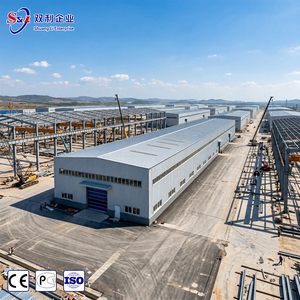
Backed by over 36 years of industrial rack design, engineering, and manufacturing expertise, our manufacturing plants integrate automated robotics, cold-roll profiling lines, and turnkey logistical support for direct export to Indonesian ports.

Robotic Precision Fabrication

Every stackable post and base cradle is produced using automated CNC fiber lasers and robotic gas-metal arc welding (GMAW). Consistent penetration depth ensures weld integrity under cyclic dynamic drop testing, preventing weld fracturing during high-speed forklift loading.

Stringent Multi-Stage Quality Control

Raw steel coils are chemically and metallurgically verified upon mill arrival. Finished batches undergo hydrostatic test loading up to 1.5x rated design capacity, cross-cut powder adhesion testing (ASTM D3359), and salt-spray chamber exposure exceeding 500 hours.

Tailored OEM / ODM Customization

Whether your facility operates standard 1200x1000mm wooden pallets, 1100x1100mm Asian polymer skids, or oversized automotive engine cradles, our engineering group models custom target guide cups, detachable side curtains, and drop-in wire decks tailored to your workflow.

Indonesian Procurement FAQ

Frequently Asked Questions by Indonesian Buyers

Detailed answers regarding customs compliance, import documentation, SNI standards, sea shipping containerization, and installation protocols.

What are the import duties and HS codes for stackable steel racks entering Indonesia?
Industrial steel storage racks and stillages are typically classified under HS Code 7308.90.99 (other structures and parts of structures of iron or steel). Under the ASEAN-China Free Trade Area (ACFTA) or Regional Comprehensive Economic Partnership (RCEP), importers holding a valid Form E can import these goods at 0% preferential import duty, with only standard Value Added Tax (PPN 11%) applied by Indonesian Customs (Bea Cukai).
Do these stackable racks require Indonesian National Standard (SNI) mandatory certification?
Custom modular industrial stackable racks are classified as logistics machinery accessories rather than primary civil building structures; therefore, they do not fall under mandatory Building Material SNI marking (such as rebar SNI 2052). However, our steel mills provide certified mill test certificates (MTC) conforming to ASTM A36, EN 10025, and structural design calculations aligned with SNI 1726 (Earthquake Resistance Building Regulations).
How do stackable racks handle seismic activity in Java and Sumatra industrial zones?
Unlike fixed pallet racks where seismic energy transfers directly into floor anchor anchor bolts—causing concrete spalling or column buckle—stackable racks absorb lateral kinetic force via calculated interface friction. Our inverted bell-mouth docking cups feature deep structural collars (minimum 75-100 mm capture depth) that prevent post displacement during seismic sway.
What surface finish is recommended for high-humidity coastal zones like Jakarta and Surabaya?
For indoor dry ambient warehouses in Jabodetabek, our standard 7-stage pre-treatment plus 80-100µm exterior-grade polyester electrostatic powder coating provides strong corrosion protection. For cold storage (-20°C) or open-sided facilities located near coastlines, we advise specifying Hot-Dip Galvanization (HDG) to ISO 1461 standards, providing a sacrificial zinc layer exceeding 65µm that prevents rust for decades.
How many units can be packed inside a standard 40ft High Cube (40HQ) ocean container?
Because our systems feature fully demountable posts and nesting base pans, ocean freight utilization is exceptionally efficient. Depending on overall base dimensions (e.g., 1400x1200 mm), a 40HQ container typically accommodates 140 to 220 complete sets (bases plus upright posts), significantly reducing the landing cost per pallet position in Indonesia compared to pre-welded, rigid cages.
What is the typical production and ocean transit lead time to Indonesian main ports?
Standard OEM production for 1-5 full container loads (FCL) requires 18 to 25 business days from technical drawing sign-off. Ocean shipping direct to Pelabuhan Tanjung Priok (Jakarta) takes approximately 9-12 days; to Tanjung Perak (Surabaya) approximately 11-14 days; and to Belawan (Medan) approximately 12-15 days, providing predictable supply chain planning.

Optimize Your Indonesian Warehouse Capacity With Direct OEM Stacking Racks

Request an immediate engineering consultation. Share your warehouse floor dimensions, SKU parameters, and target stack height—our senior structural storage designers will deliver comprehensive 2D/3D layout simulations and factory-direct CIF quotes within 24 hours.

Inquire Now