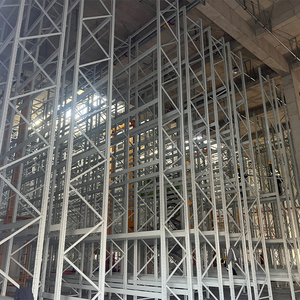
Industrial Pallet Racking for Raw Material Warehouse with Factory Direct Service
- High-yield Q355B cold-rolled structural steel
- Up to 4,500 kg per beam level capacity
- Custom upright profiling for bulky coils & billets

Explore our factory-direct dynamic pallet flow, heavy-duty raw material shelving, and temperature-controlled storage modules engineered for high-throughput distribution hubs across Osaka, Sakai, and Kobe.
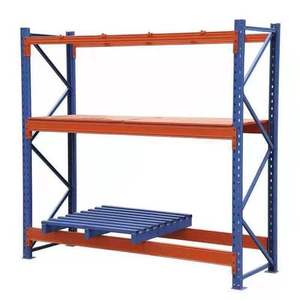
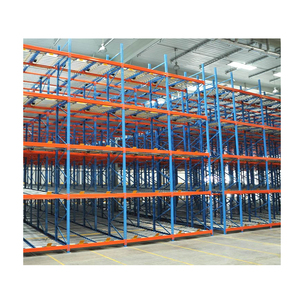
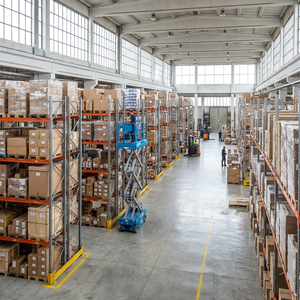
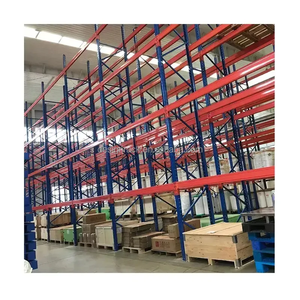
As the primary economic engine of Western Japan, the Greater Osaka metropolitan zone—anchored by the Hanshin Industrial Region, the busy Port of Osaka (Nanko, Sakishima, Maishima), and inland logistics corridors like Ibaraki and Takatsuki—faces unprecedented pressure. Industrial land prices across the Osaka Bay waterfront have risen sharply, while nationwide operational constraints have made traditional, sprawling warehousing models obsolete.
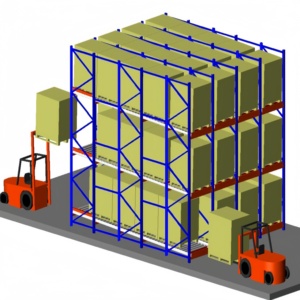
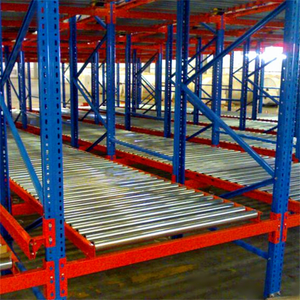
Live Pallet Racking (also classified internationally as Pallet Flow or Gravity Roller Racking) represents the most space-efficient, strictly rotated mechanical storage methodology available to Japanese procurement directors today. Operating entirely on controlled gravitational kinetic energy, pallet flow systems eliminate internal forklift access aisles. Goods are loaded from the rear replenishment aisle (incline entry) and glide smoothly across engineered roller tracks to the front picking face on a strictly enforced First-In, First-Out (FIFO) basis.
In high-density industrial storage, gravity must be tamed through uncompromising engineering. Uncontrolled pallet acceleration presents severe hazards to personnel, goods, and rack structures. Our export-grade Live Pallet Racking systems incorporate three foundational mechanical mechanisms:
1. Internal Centrifugal Speed Regulators (Brake Rollers): Positioned at precise intervals along the flow lane (typically every pallet length), our indirect centrifugal brake rollers continuously regulate the forward velocity of loaded pallets to an optimal speed of 0.2 to 0.3 meters per second, regardless of whether the pallet weighs 300 kg or 1,500 kg.
2. Progressive Load Separation Mechanisms: When multiple heavy pallets accumulate in a lane, the cumulative forward hydrostatic pressure against the leading pallet at the pick face can make forklift extraction hazardous or physically impossible. Our mechanical pallet separators mechanically isolate the front pallet from the rear queue, locking the following pallets several centimeters back until the front unit is fully lifted away.
3. Bi-Directional Entry and End-Stop Protection: Laser-cut steel entry funnels guide forklift operators during pallet placement, while heavy-duty shock-absorbing end-stops and catch trays secure the front pallet firmly at the discharge face, engineered to absorb dynamic impacts without structural fatigue.
| Storage System Type | Space Efficiency | Stock Rotation | Handling Speed | Seismic Stability (JIS) | Recommended Osaka Application |
|---|---|---|---|---|---|
| Live Pallet Racking (FIFO) | Ultra-High (85% Cube) | Strict FIFO | Rapid (Dedicated Aisles) | High (Interlocked Lanes) | FMCG, Cold Stores, Nanko Import Hubs |
| Selective Pallet Racking | Moderate (40% Cube) | Universal Access | Standard | Moderate (Tall Single Bays) | Low-Throughput, Mixed Raw Materials |
| Drive-In Racking (LIFO) | High (70% Cube) | Strict LIFO | Slow (Forklift Enters Rack) | Low-Moderate (No Cross-Beams) | Seasonal Bulk, Non-Perishable Goods |
| Push-Back Trolley Racking | High (65% Cube) | LIFO (2-6 Deep) | Moderate | Moderate-High | Medium-Velocity Buffer Warehousing |
| Automated AS/RS Crane System | Maximum (90%+ Cube) | Software Configurable | High (Fully Robotic) | High (Engineered Steel) | Mega-Distribution Centers, Mega Capex |
Osaka's strategic position as the logistics epicenter of Western Japan requires purpose-built storage solutions customized to specific regional operational zones and strict municipal guidelines.
Concentrated around Nanko (South Port), Sakishima, and Maishima, refrigerated facilities handle perishable marine cargo, premium agricultural imports, and pharmaceutical goods subject to strict temperature validation.
Home to thousands of advanced small-to-medium metalworking, machining, and electronics enterprises. Plants require rapid, just-in-time (JIT) delivery of high-density sub-assemblies to assembly staging areas.
Strategically positioned along the Meishin and Shin-Meishin Expressway links in Ibaraki, Takatsuki, and Settsu, large-scale 3PL fulfillment centers require ultra-fast truck loading turnaround times.
Regulatory shifts, labor caps, and seismic codes make structural reliability and automated gravity throughput mandatory criteria for Osaka procurement directors.
Japan's strict regulatory ceiling capping commercial truck driver overtime at 960 hours per year has caused intense friction at freight terminals across Osaka. Warehouses that force long unloading queues risk carrier abandonment. Dynamic pallet live lanes provide high-density buffer staging immediately adjacent to outbound loading bays, enabling drivers or terminal staff to load a full 10-ton trailer in less than 15 minutes.
With the Kansai region actively preparing for potential Nankai Trough earthquake scenarios, facility owners and insurers demand higher safety factors. Japanese standard JIS B 8928 specifies strict allowable stress and horizontal seismic acceleration thresholds. Our systems feature heavy-duty ductile baseplates, double-column reinforcement sleeves, and back-to-back dynamic cross-bracing that dampen lateral seismic waves without structural collapse.
The standard Japanese Industrial Standard (JIS) T11 pallet (1,100 × 1,100 × 144 mm) dominates Kansai retail, beverage, and electronics distribution. Unlike European (1200×800) or American (48×40 in) pallets, square T11 pallets require specific roller spacing (typically 50mm or 75mm roller pitch) and specialized 3-track or full-width steel roller configurations to eliminate pallet bottom-board deflection and stalling.
Backed by 36 years of specialized engineering experience, we deliver precision industrial storage systems worldwide with turnkey technical oversight from system study through Osaka customs port delivery.
More than three decades of engineering expertise across demanding distribution, aerospace, and cold-storage sectors ensures zero guesswork on complex structural dynamic flow projects.
Every project initiates with a comprehensive data audit: clear ceiling height, slab floor load capacity, forklift mast profiles, pallet weight tolerances, and seasonal turnover velocity.
Seamless containerized export shipping directly into the Port of Osaka (Nanko container terminal) or Port of Kobe, complete with JIS/ISO structural certifications and bilingual assembly drawings.
From robotic continuous seam welding to certified steel mill test reports (MTR), every component is tested for tensile load, roller bearing spin endurance, and paint thickness before crating.
Clear engineering, regulatory, and logistics answers regarding live pallet racking design, local standards compliance, and port delivery into Western Japan.
The Japanese Industrial Standard (JIS) T11 pallet measures exactly 1,100 mm × 1,100 mm and is constructed either from injection-molded plastic with perimeter cross-ribs or traditional wood. Our pallet flow tracks are designed with customizable 3-track or full-width steel roller configurations. We set roller spacing at 50mm or 75mm centers to ensure at least three roller support points remain in contact with the bottom runners at all times, preventing pallet sag, roller binding, or runaway momentum.
Yes. We utilize Finite Element Analysis (FEA) to verify the seismic resilience of every system according to JIS B 8928 and the Japanese Building Standard Act. For Osaka and coastal Hanshin regions, we engineer our structural uprights using high-yield Q355B cold-rolled steel, heavy-duty floor anchor footplates, and multi-plane diagonal frame bracing capable of absorbing design ground acceleration values (Kh) designated for Osaka Prefecture seismic hazard zones.
Our cold-storage live pallet racking systems are purpose-built for sub-zero environments down to -30°C. We apply hot-dip galvanization or low-temperature impact-resistant epoxy coatings to steel members to prevent condensation corrosion. Furthermore, our roller bearings are packed with synthetic low-temperature aerospace grease that does not congeal or seize in freezing ambient conditions, guaranteeing steady flow performance even in blast freezer zones.
Standard production cycles range between 4 to 6 weeks depending on project square footage. Ocean transit from our export manufacturing hubs into the Port of Osaka (Nanko Container Terminal) or Port of Kobe takes approximately 10 to 18 days. We supply full export clearance documentation, including Commercial Invoices, Packing Lists, Certificates of Origin, Mill Test Certificates, and detailed CAD/3D structural installation blueprints.
In deep live pallet flow lanes (for example, 10 to 20 pallets deep), the cumulative forward gravitational weight can exert thousands of kilograms of forward line pressure against the lead pallet. We eliminate this issue by installing automatic mechanical pallet separators. When the front pallet reaches the discharge stop, a mechanical trip-lock holds back the remaining queue 150mm upstream. When the forklift lifts out the front pallet, the separator automatically releases the next pallet in controlled sequence.
Absolutely. Our export systems are manufactured with precision CNC punched slot patterns (50mm or 75mm pitch) and modular bolt-together frame bracing that local Japanese installation crews can assemble easily without field welding or modifications. We provide comprehensive, numbered step-by-step 3D exploded layout drawings, fastener torque specifications, and can supply remote engineering video support to verify laser leveling and roller gradient calibration.
Share your warehouse floor plan, ceiling clear heights, and pallet specifications. Our senior intralogistics engineers will prepare a comprehensive 2D/3D volumetric analysis, dynamic gravity lane calculation, and factory-direct export proposal within 24 business hours.
Inquire Now