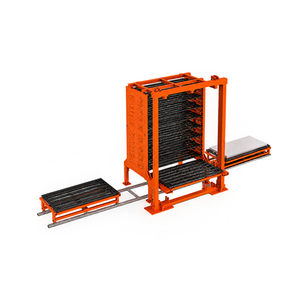
Heavy Duty Sheet Metal Automated Storage Rack
Automated vertical tower storage optimized for dense sheet metal cassette management, reducing footprint by up to 75% in manufacturing facilities.

Engineered for extreme structural stability, vertical density, and seamless integration with mechanical rail or wire-guided material handling machinery across European multi-tier hubs.
Automated vertical tower storage optimized for dense sheet metal cassette management, reducing footprint by up to 75% in manufacturing facilities.
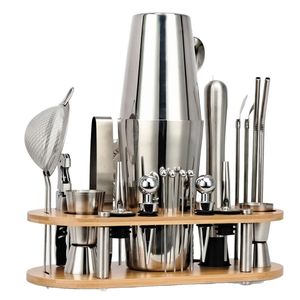
Precision-fabricated, corrosion-resistant stainless steel modular shelving designed for hospitality, culinary storage, and beverage dispensary areas.
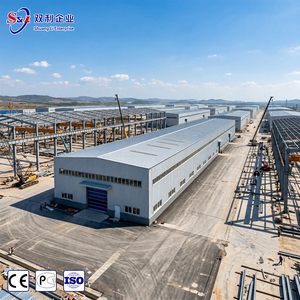
Multi-tier structural racking integration combined with stair towers and catwalks, transforming vertical cube clearance into multi-level pick modules.

Hygienic wall-mounted commercial racking system meeting European food processing regulations and NSF sanitation standards for cleanrooms.
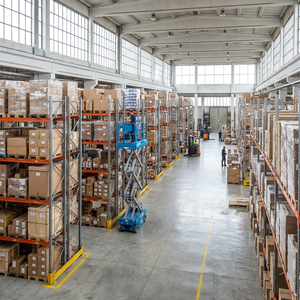
Heavy-duty cold-rolled steel structural pallet racking configured for high-bay VNA applications with guide rails and high-torque bolted upright frames.
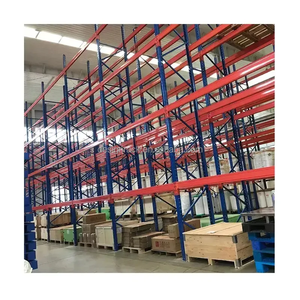
Certified beam connector profiles and cold-formed profile steel columns engineered for maximum rigidity under intense cyclic material handling stress.
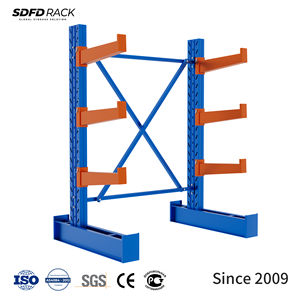
Unobstructed linear cantilever racking without front uprights, configured for long industrial timber, profiles, and extrusions in narrow service aisles.
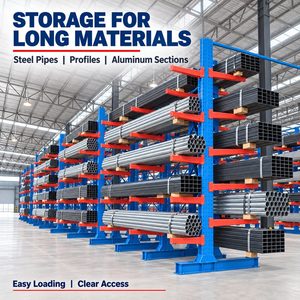
High-capacity structural H-beam cantilever design featuring pivot-arm safety interlocks, tailored for heavy bar stock and sheet packs in specialized logistics yards.
As Europe’s premier freight gateway, the Netherlands faces unprecedented industrial land constraints. Discover how Very Narrow Aisle (VNA) structural architecture delivers decisive operational ROI across Rotterdam, Venlo, and Schiphol.
The Dutch logistics landscape is governed by sharp economic trade-offs. Strategically nestled at the mouth of the Rhine-Meuse-Scheldt delta, the Netherlands commands over 45% of European continental distribution center (EDC) square footage. However, the Randstad conurbation (Amsterdam, Rotterdam, The Hague, Utrecht) along with pivotal eastern corridors like Venlo, Tilburg-Waalwijk, and Moerdijk suffer from severe industrial land scarcity. Industrial parcel acquisition costs regularly climb past €350 to €550 per square meter, while prime warehouse lease rates have surged past €110–€140/m² annually.
Traditional selective racking configurations operate with transfer aisle widths ranging between 3.2 and 3.8 meters to accommodate standard counterbalance or reach trucks. This design expends over 55% to 62% of valuable warehouse footprint purely on vehicular navigation rather than revenue-generating pallet capacity. For European logistics executives operating under Dutch fiscal parameters, horizontal warehouse expansion is economically unviable.
Very Narrow Aisle (VNA) racking systems compress aisle widths down to an exact 1.50m – 1.85m while pushing vertical clearance heights from typical 8.5-meter limits up to 15.0m to 17.5m. By replacing conventional horizontal clearance with precision-guided vertical cube utilization, Dutch 3PL, retail, and manufacturing enterprises routinely achieve an immediate 40% to 52% increase in pallet storage capacity within identical building envelopes.
Implementing high-bay Narrow Aisle Racking in the Netherlands introduces distinctive civil and geotechnical engineering challenges rarely encountered elsewhere in Europe. Significant portions of Dutch industrial terrain—notably in South Holland, North Holland, and Flevoland—consist of reclaimed polders characterized by deep, water-saturated peat and soft clay strata.
When a 16-meter VNA upright transmits combined static and dynamic operating point loads exceeding 180 kN to 240 kN per baseplate, conventional unpiled ground slabs will suffer differential settlement. In a narrow aisle, even a sub-millimeter differential slab settlement causes mast sway at upper beam levels, amplifying sway deviations into catastrophic rack impacts. Our structural engineering protocols evaluate the interplay between Dutch pile-supported concrete slabs (onderheide betonvloeren), point-load stress dissipation, and baseplate anchorage depth, ensuring strict compliance with Eurocode 3 (EN 1993-1-3) and European Racking Federation (ERF) standards.
VNA racking is not merely static steelwork—it acts as an integrated vertical railway system. Dimensional tolerances must adhere strictly to European and German industrial standards.
Under EN 15620, narrow aisle installations fall under Class 100, 200, or 300 tolerances. Man-up turret trucks and automated narrow-aisle cranes require millimeters-level installation tolerances across upright plumblines, beam deflection ceilings (L/200), and top-tie bracing.
Floor flatness is the critical determinant of VNA truck travel speed and safety. We specify slab parameters based on DIN 18202 (Zeile 4) and VDMA guidelines ("Floors for Use with VNA Trucks"), ensuring the Fmin/Fx transverse and longitudinal profile prevents vehicle mast wobble.
Aisle guidance dictates structural chassis protection and operating velocity. We engineer low-profile inverted steel angle rails (100x75x10mm) anchored directly to the slab, as well as low-frequency inductive floor wire guidance systems for unrestricted floor crossover operations.
| System Architecture | Aisle Width (Clearance) | Vertical Reach Limit | Space Utilization Ratio | Floor Flatness Demand | Ideal Dutch Application |
|---|---|---|---|---|---|
| Narrow Aisle (VNA) Pallet Racking | 1.50m – 1.85m | Up to 17.5 meters | 85% – 92% Maximum | High (VDMA / DIN 18202 Zeile 4) | Logistics corridors (Venlo, Tilburg, Rotterdam) |
| Standard Wide-Aisle Selective Racking | 3.10m – 3.80m | Up to 10.5 meters | 40% – 50% Standard | Standard (DIN 18202 Zeile 3) | General industrial, low-throughput stockrooms |
| Drive-In / Deep Reach Racking | 1.80m – 2.20m | Up to 11.0 meters | 70% – 80% (LIFO Only) | Moderate | Bulk homogeneous items, seasonal cold storage |
| Automated Storage & Retrieval (ASRS / Crane) | 1.40m – 1.60m | Up to 40.0 meters | 90% – 95% Automated | Critical (FEM 9.831 tolerances) | Mega-eCommerce fulfillment centers, high throughput |
Our engineering teams design bespoke narrow aisle installations tailored to the specific regulatory, throughput, and cargo parameters of regional Dutch industrial clusters.
Serving high-velocity breakbulk, bonded customs depots, and international container transshipment. Systems feature heavy heavy-duty upright frames (up to 30-tonne bay capacity) designed to resist dynamic forklift docking vibration and corrosive maritime coastal air.
High-throughput pan-European cross-dock distribution facilities. Designed with top-tie portal beams, integrated anti-collapse mesh screen panels, and picking platforms configured for rapid multi-tier man-up order picking fleets.
Temperature-controlled floral, fresh produce, and pharmaceutical cold storage (-25°C to +4°C). Incorporating specialized cold-resistant structural steel that prevents ductile-to-brittle transitions and optimizes cold room airflow circulation.
Specialized cleanroom logistics and semiconductor component buffer storage. Systems incorporate ESD-conductive grounding systems, clean powder-coat finishes, and compartmentalized shelf dividers for cleanroom-grade inventory management.
Discover how the transition toward automated guided vehicles (AGVs), strict ESG certifications, and robotic logistics drives next-generation VNA rack engineering.
Labor scarcity across Dutch logistics clusters has triggered an accelerated shift from manual combi-trucks to unmanned autonomous turret AGVs. Autonomous vehicles demand millimeter-exact pallet positioning targets, optical positioning reflectors embedded in rack uprights, and anti-sway stiffness dampening protocols.
New build distribution centers across the Netherlands increasingly require BREEAM-NL 'Excellent' or 'Outstanding' sustainability ratings. Our racking components are manufactured from high-yield, low-carbon recycled European steel (S355MC / S420MC), supported by comprehensive Environmental Product Declarations (EPD).
Facilities storing dangerous goods under Dutch PGS 15 guidelines require strict integration of in-rack ESFR sprinkler lines within narrow aisle framework. Our beam calculations accommodate dedicated pipe brackets, liquid spill drop trays, and certified flues that comply with NFPA and Dutch FM Global insurer standards.
Backed by 36 years of industrial rack design, complete quality control, and rigorous structural analysis, we deliver turnkey reliability from preliminary layout to final Dutch inspection sign-off.
Every upright frame, profile beam, and floor anchor in our narrow aisle portfolio is manufactured on continuous CNC cold roll-forming lines. We employ premium structural strip steel adhering strictly to EN 10025 specifications. Our factory testing encompasses destructive tensile checks, weld radiography, and cyclic fatigue testing to ensure integrity under constant 3-shift 24/7 operating cycles.
We eliminate procurement risks by managing the entire project lifecycle. From the initial physical building survey and dynamic truck simulation to local NEN-EN 15635 compliance handovers, our structural engineers maintain direct accountability at every phase.
Building survey, column spacing, floor slab load calculations, and throughput modeling.
Custom upright section selection, seismic analysis, guide rail positioning, and sprinkler integration.
Certified steel sourcing, beam robotic welding, multi-stage pretreatment, and factory test reports.
Experienced rigging crews utilizing optical laser transits to guarantee EN 15620 plumb tolerances.
Full structural certification, safe working load plaques (NEN-EN 15635), and operations sign-off.
Direct answers to the structural, spatial, civil, and regulatory queries encountered when procuring Narrow Aisle Racking in the Netherlands.
Minimum aisle clearance is primarily governed by the truck model and pallet dimensions. For standard Euro-pallets (800 x 1200mm) handled by man-up turret trucks, typical working aisles range from 1,600mm to 1,750mm. For block pallets (1000 x 1200mm), aisles expand slightly to 1,750mm – 1,850mm. Safety clearances under NEN-EN 15620 dictate a minimum 100mm mechanical clearance between the truck chassis or load and the racking structures.
Standard commercial floor flatness is insufficient for VNA operations exceeding 6 meters. We perform optical profile surveys using floor profilers (e.g., FloorPro or F-Meter) to verify transverse slope (dZ) and longitudinal elevation change (dX) against VDMA guidelines and DIN 18202 Zeile 4. If discrepancies or slab undulations are discovered, automated laser-guided grinding is performed along the exact wheel paths of the turret truck prior to rack rail installation.
Standard freestanding interior pallet racking does not usually require a full omgevingsvergunning if installed inside an existing compliant warehouse. However, if the high-bay racking connects to the building frame (rack-clad warehouse / silobouw), or if the building structural live load envelope or sprinkler distribution design is fundamentally altered, notification and structural calculation submission to the local Dutch Building Control authority (Bouw- en Woningtoezicht) is mandatory.
In polder zones like Rotterdam Europoort or Schiphol, warehouses rest on driven concrete piles. If your slab is unpiled or experiences long-term micro-settlement, high-bay VNA racks can tilt out of vertical alignment. We engineer oversized steel load-spreading baseplates, use heavy chemical M16/M20 anchor bolts, and enforce structural top-tie bracing trusses across aisle heads to tie the racking into a unified, monolithic structural grid.
Under Dutch Working Conditions legislation (Arbowet) and European standard NEN-EN 15635, warehouse operators must conduct weekly visual checks by a designated Person Responsible for Storage Equipment Safety (PRSES), alongside a mandatory, documented annual expert inspection by a certified racking safety engineer. Damaged components are categorized under Green, Amber, or Red risk levels with strict repair timelines.
Low-profile steel guide rails (100x75mm angle) provide physical chassis protection, allow rapid full-speed entry into the aisle without truck deceleration, and protect bottom upright columns from corner collisions. Wire guidance involves cutting a thin slot into the concrete to lay an inductive frequency wire (e.g., 5.2 kHz). While wire guidance offers a clean floor without trip hazards, it requires pristine floor flatness and precise electronic calibration.
For racking installations reaching beyond 10.5 meters, Dutch fire regulations and insurers (such as FM Global and CEA 4001) frequently require multi-level in-rack sprinkler pipework. Our beam calculations incorporate specific hydraulic dead loads and accommodate sprinkler pipe flues within the transverse flue space (typically 75mm–100mm between back-to-back pallets) to ensure unobstructed spray distribution without sacrificing pallet positions.
Our standard project timeline spans 6 to 9 weeks from approved technical fabrication drawings to on-site delivery in Rotterdam, Moerdijk, or Amsterdam. Standard frame and beam profiles are held in modular staging inventory, allowing fast dispatch, while specialized structural top ties and guide rail systems are fabricated to exact project CAD specifications.
Yes, in many instances upright frames and beams can be salvaged and reconfigured into narrow aisle geometry. However, because VNA systems subject uprights to heightened vertical point loads and tighter deflection limits, structural re-certification under EN 15512 is mandatory. Additional top-tie bracing, aisle lead-in horns, floor guide rails, and baseplate reinforcements must be added during reconfiguration.
For standard ambient ambient warehouses, a high-durability epoxy-polyester electrostatic powder coating (cured at 200°C) provides exceptional scratch, wear, and impact resistance. For cold storage (-25°C), agricultural greenhouses, or aggressive coastal logistics hubs near Rotterdam Maasvlakte, we advise pre-galvanized upright frames combined with hot-dip galvanized beam finishes for complete anti-corrosion protection.