Racking & Shelving Specialists — Hamriyah Free Zone, Sharjah · Serving the UAE & GCC

Explore our export-grade logistics configurations designed for European standard pallet formats, cross-docking facilities, and industrial manufacturing plants.

A rigorous examination of volumetric capacity, forklift kinematics, and floor-space economics in the Central European logistics corridor.
Double Deep Racking works on a fundamental spatial reconfiguration: two single pallet racks are placed back-to-back, allowing pallets to be stored four deep between working aisles (two pallets deep per side). This reduces the total number of handling aisles by approximately 35% to 45% compared to conventional standard selective pallet racking. By eliminating unnecessary forklift access corridors, warehouses achieve a net storage volume increase of 50% to 60% on the exact same concrete slab area.
Unlike drive-in or drive-through systems that enforce rigid single-lane bulk loading, a double deep configuration provides rapid access to 50% of stored stock immediately, with the remaining 50% accessible by moving just one pallet. For mid-range SKU counts operating under a First-Expired, First-Out (FEFO) or Last-In, First-Out (LIFO) batch methodology, this setup yields the lowest capital expenditure per pallet position of any dense storage infrastructure available.
Converts dead aisle transit zones into active vertical pallet slots. Specifically engineered for facilities running high pallet counts per SKU line.
Significantly lower initial CAPEX than automated shuttle carts or complex VNA wire-guided systems, delivering immediate ROI within 14–18 months.
Fabricated using high-yield cold-rolled micro-alloyed structural steel with FEA stress verifications, beam connector safety pins, and impact upright guards.
Engineering parameters for industrial facility planners and supply chain architects evaluating pallet rack efficiency.
| Storage Architecture | Floor Space Efficiency | Direct Selectivity | Handling Equipment Required | Structural Complexity | Typical Austrian Application |
|---|---|---|---|---|---|
| Double Deep Pallet Racking | High (~60-65%) | 50% Immediate (2 deep) | Reach Truck + Pantograph / Deep Forks | Medium (Reinforced Beams) | Cold Stores, 3PL FMCG, Auto Tier-1 (Graz/Wels) |
| Standard Selective Racking | Low (~35-40%) | 100% Immediate (1 deep) | Standard Counterbalance / Reach Truck | Low (Standard Box Beam) | General Retail Distribution, High-SKU Spares |
| Drive-In / Drive-Through | Very High (~70-75%) | Low (Lane-dependent) | Standard Counterbalance Forklift | Medium-High (Top/Back Bracing) | Beverage Bottling, High-Volume Homogeneous Batches |
| Radio Shuttle Automation | Maximum (~80-85%) | Lane Automated (FIFO/LIFO) | Automated Cart + Standard Forklift | High (Rail/Sensor Integration) | Deep Freeze (-28°C), High-Throughput Central Hubs |
| Very Narrow Aisle (VNA) | High (~55-60%) | 100% Immediate | Specialized VNA Turret Truck / Man-Up | High (Superflat Floor DIN 18202) | E-commerce Fulfillment Centers, High-Bay Archives |
Engineered storage topologies solving specific footprint, climatic, and workflow bottlenecks across the Austrian economic landscape.
As Austria's premier freight cross-docking center, facilities along the A1/A8 motorway axis handle tremendous batch volumes of industrial machinery components, plastics, and consumer durables. OEM Double Deep systems allow 3PL providers in Marchtrenk and Enns to consolidate secondary inventory rows for fast-moving items, maintaining swift dispatch times while eliminating the overhead of auxiliary external warehousing.
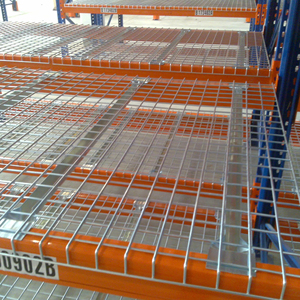
Driven by Tier-1 automotive manufacturing and OEM contract vehicle production (e.g., around Graz), suppliers manage palletized stamping dies, structural sub-assemblies, and electrical powertrains. Our double deep frames are custom-configured with heavy-duty structural steel box beams designed for concentrated point loads exceeding 1,500 kg per pallet, fully integrated with heavy-gauge wire mesh decking for operator safety.
Refrigerated and frozen food logistics in Schwechat and Wiener Neudorf incur massive electrical utility expenditures per cubic meter cooled. Implementing double deep configurations condenses storage into a tighter thermal footprint, decreasing air volume overhead by 25%. Our racks utilize specialized low-temperature powder coatings and high-impact micro-alloyed steel resistant to cold-induced brittle fracture down to -30°C.
In narrow Alpine valleys where geographical zoning strictly restricts building footprint expansions, logistics parks along the Brenner transit corridor must build vertically. We supply high-bay double deep structures up to 13.5m clearance heights, structurally verified for regional ground acceleration (PGA) seismic criteria under ÖNORM B 4015 and Eurocode 8.
Navigating strict Austrian workplace safety mandates (AStV) and sustainable logistics modernization.
Procuring heavy industrial racking in the Republic of Austria requires strict adherence to both harmonized European Committee for Standardization (CEN) guidelines and local statutory workplace regulations. The Austrian Arbeitsstättenverordnung (AStV) along with the Allgemeine Unfallversicherungsanstalt (AUVA) safety directives stipulate stringent parameters for rack end-frames, aisle clearances, and load notification signage.
ÖNORM EN 15635 Compliance & Inspection Protocols: Austrian law mandates annual independent expert safety inspections of pallet racking systems. As an OEM/ODM manufacturer, our production line implements traceable laser etching on all load-bearing uprights and beams, simplifying the recording of deflections, impact tolerances, and upright column plumbness. Furthermore, our designs factor in the TRVB 127 S fire protection standards, configuring flue spaces between back-to-back double deep rows (typically 100mm to 150mm clearance) to ensure proper in-rack sprinkler water distribution during thermal emergencies.
Austrian logistics operators are increasingly pairing double deep racking with automated pantograph reach AGVs, utilizing optical barcode guidance on base beams to automate batch replenishment.
Compliant with Austrian ESG sustainability directives, our OEM factory utilizes VOC-free, heavy-metal-free thermosetting electrostatic polyester powder finishes cured at optimized thermal thresholds.
In accordance with Eurocode 3 (EN 1993-1-3) and Eurocode 8, our in-house structural engineers furnish project-specific static calculations verified for Austrian localized seismic zones.
Combining 36 years of intralogistics manufacturing authority with precision European project execution.
Founded on three and a half decades of continuous metallurgical and intralogistics manufacturing experience, our enterprise operates high-capacity, fully automated continuous roll-forming lines, robotic continuous-weld cells, and computer-controlled electrostatic powder coating facilities. We do not merely supply commodity racking; we serve as an end-to-end technical manufacturing partner for Austrian warehouse system integrators, general contractors, and corporate end-users.
Analysis of slab bearing capacity (kN/m²), ceiling trusses, fire sprinkler envelopes, and reach-truck mast kinematic curves.
Finite element beam-to-column connector testing, deflection calculations, and precise BIM/AutoCAD 3D architectural drawings.
Cold-rolled structural steel profiling with high-precision 50mm/75mm hole pitches, automated multi-punching, and robotic welding.
Shot-blasting to Sa 2.5 standard, multi-stage degreasing, eco-friendly powder coating, and rigorous destructive batch load testing.
Container-optimized shipping via Port of Hamburg or Port of Koper to Austria, full installation manual sets, and EN 15635 signage.
Clear engineering, operational, and commercial answers for warehouse executives and supply chain procurement leads.
Connect with our senior intralogistics structural engineers today. We supply complete AutoCAD warehouse layout proposals, static finite-element calculations, and competitive OEM/ODM factory quotations tailored to Austrian market specifications.