Racking & Shelving Specialists — Hamriyah Free Zone, Sharjah · Serving the UAE & GCC
Precision-fabricated warehouse racking components, industrial wire decking, and modular storage hardware engineered for extreme load factors, rapid deployment, and high volumetric efficiency.
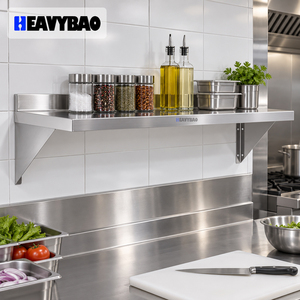
Sanitary SUS304 brushed stainless steel floating shelf system engineered for cleanrooms, commercial food prep zones, and sub-zero staging areas.
View Engineering Specs →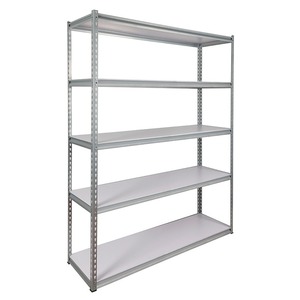
Heavy-gauge modular stacking post pallets with electrostatic anti-corrosion coating, offering temporary buffer flexibility in Tokyo manufacturing hubs.
View Engineering Specs →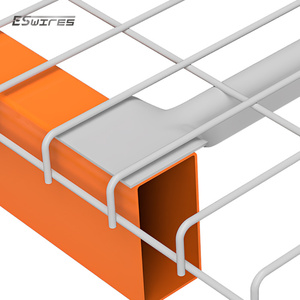
High-strength hot-dipped galvanized wire decking providing fire-sprinkler water penetration and seismic fall protection conforming to fire codes.
View Engineering Specs →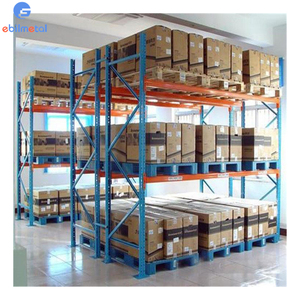
Robust structural steel pallet framework supporting up to 3,000 kg per level, featuring roll-formed uprights optimized for heavy industrial staging.
View Engineering Specs →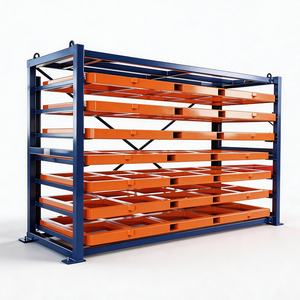
CE-compliant multi-tier industrial racking platform tailored for high-bay manual picking, spare parts replenishment, and high SKU consolidation.
View Engineering Specs →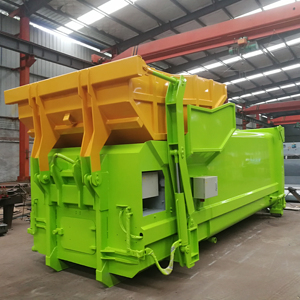
Heavy-duty hydraulic mobile packaging refuse and corrugated waste compactor, streamlining warehouse cleanliness in constrained port distribution hubs.
View Engineering Specs →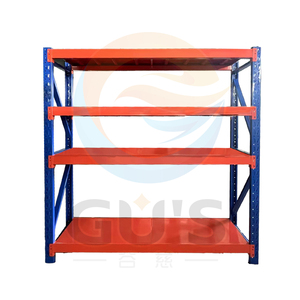
Interlocking boltless steel racking designed for intermediate tire racks, automotive staging, and rapid adjustment without specialized tools.
View Engineering Specs →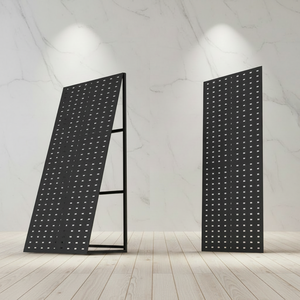
High-capacity structural steel architectural display and storage framework for bulky architectural panels, quartz stone slabs, and building timber.
View Engineering Specs →A Technical Evaluation on Space Maximization, Last-In-First-Out (LIFO) Lane Economics, and Seismic Mitigation Under Japanese Building Standards.
In metropolitan Tokyo and surrounding prefectures (Kanagawa, Saitama, and Chiba), warehouse operators encounter the most challenging industrial real estate environment in the Asia-Pacific region. Industrial land lease rates in Tokyo Bay facilities (Koto-ku, Shinagawa-ku, and Ota-ku) command extreme premiums, driving facility architects to demand up to 80% volumetric cubic efficiency. Traditional selective pallet racking reserves 60% of floor space strictly for operational forklift access aisles. In contrast, Drive-In Pallet Racking completely eliminates intermediate corridors, forming a solid block of continuous storage lanes where counterbalanced or reach forklifts navigate directly into the structural rack bays.
As an experienced OEM/ODM manufacturer supplying multinational 3PLs and Japanese industrial distributors, our custom-engineered drive-in systems operate on continuous one-sided cantilever support rails. Structural integrity is guaranteed by integrating cold-formed Q355B and SS400 structural steel profiles with high-tensile upright omega-sections. Upright column depths and gauge thicknesses (1.8mm to 2.5mm) are custom calculated using Finite Element Analysis (FEA) to withstand both severe dynamic forklift docking forces and the horizontal seismic acceleration forces governed by JIS B 8951 (Japanese Industrial Standards for Pallet Racks).
Calculated baseplates with twin chemical anchoring (M16/M20) engineered to absorb seismic drift and lateral ground acceleration coefficients exceeding 0.3g in Tokyo Bay alluvial strata.
Precision-milled cantilever rail configurations compatible with standard Japanese JIS T11 pallets (1,100 × 1,100 mm) as well as global ISO 1,200 × 1,000 mm Euro/Asian formats.
Low-temperature impact ductile steel alloys that resist low-temperature embrittlement at -25°C to -35°C, essential for coastal Tokyo chilled food storage terminals.
Our OEM/ODM manufacturing capability ensures that every drive-in structure is built to match specific operational throughputs. By engineering tapered entry guide rails, heavy-duty floor-mounted guide channels, and reinforced base column protectors, our systems safeguard against structural impact fatigue—reducing lifecycle operational maintenance costs for warehouse facility managers across the Greater Tokyo Metropolitan area.
Custom-engineered Drive-In and high-density racking configurations deployed across Tokyo's strategic multimodal distribution nodes, automated hubs, and temperature-controlled logistics centers.
High thermal retention is paramount in sub-zero facilities situated along the port terminals of Oi, Ariake, and Kawasaki. Drive-in racking concentrates frozen seafood, meat, and processed foods into unified chilled blocks, minimizing refrigerated air cubic volume, slashing electrical HVAC expenditure by up to 35%, and preventing temperature loss.
Along the outer beltways of Ken-O Expressway, Tomei Expressway, and Gaikan Expressway, major consumer brands deploy our drive-in systems for homogeneous product runs. With deep lanes accommodating 6 to 12 pallets per depth, seasonal beverage cases and packaged goods move swiftly through batch-rotation LIFO cycles with minimal handling touches.
Serving industrial manufacturing facilities across the Keihin and Keiyo Industrial Zones, our OEM heavy-duty drive-in systems house dense batches of standardized auto parts, stamped components, and raw metal stillages. Heavy-gauge column profiles prevent damage from frequent high-tonnage forklift insertion.
Key economic, demographic, and regulatory transitions influencing modern warehouse racking procurement across Tokyo, Yokohama, and the broader Kanto logistics sector.
Strict caps on overtime for commercial truck drivers in Japan (the "2024 Logistics Problem") necessitate rapid truck turnaround times and dense regional consolidation nodes. Warehouses can no longer afford disorganized, fragmented aisle navigation. High-density drive-in racking enables rapid loading dock staging of full-truckload (FTL) identical SKU shipments, directly curbing driver wait times.
Following regular seismic activity across the Kanto Plain, Japanese procurement directors mandate heightened dynamic sway tolerances. Buyers now demand verified structural certifications ensuring rack frames flex without unseating cantilever beams or dropping pallets during resonant ground motion. Our OEM drive-in designs utilize top horizontal portal ties and rear diagonal cross-bracing systems to dissipate lateral shear.
With acute labor shortages across Japan's aging demographic, facility operators are increasingly converting traditional manual drive-in lanes into semi-automated radio shuttle racking channels. Our factory specializes in customized OEM rail profiles engineered to support both standard forklift cantilever travel and autonomous battery-powered pallet runners interchangeably.
Tokyo metropolitan environmental guidelines demand low-VOC emissions and high scrap-steel recyclability in all industrial construction. Our manufacturing lines implement non-toxic electrostatic epoxy-polyester coatings cured at optimal thermal profiles, delivering superior scratch resilience while adhering strictly to international RoHS and green warehouse compliance benchmarks.
Data-driven technical analysis comparing volumetric space utilization, access dynamics, seismic factors, and capital expense metrics across primary industrial pallet systems.
| System Typology | Density Factor | Pallet Access / Rotation | Seismic Stability (JIS B 8951) | Typical Application in Tokyo | CapEx vs. ROI Ratio |
|---|---|---|---|---|---|
| Drive-In Racking | Ultra-High (up to 85%) | LIFO (Last-In, First-Out) / Block Lanes | High (Integrated Top & Back Portal Bracing) | Cold storage, bulk beverage, seasonal FMCG | Highest ROI per m³ |
| Selective Pallet Racking | Moderate (~40-50%) | 100% Direct Access / FIFO Compatible | Moderate (Requires standard column dampers) | Retail order picking, multi-SKU 3PL warehouses | Low Initial CapEx |
| Radio Shuttle System | Maximum (up to 90%) | LIFO or FIFO / Semi-Automated | Very High (Rigid Structural Channel Framing) | Automated cold distribution centers, food manufacturing | High CapEx / Fast Payback |
| Heavy Long Span Shelving | Medium (~55%) | Manual Hand-Loading Access | High (Modular bolted uprights) | Automotive spare parts, e-commerce fulfillment | Economical |
Combining 36 years of industrial steel engineering heritage, advanced cold-roll forming lines, and precision export logistics directly connecting to Port of Tokyo and Port of Yokohama.
Every Tokyo project initiates with a rigorous spatial analysis: floor slab load bearing ($kN/m^2$), mast clear heights, reach truck turning radii, and sprinkler clearances. We produce complete 2D/3D DWG schematics and structural static calculations before metal stamping begins.
Backed by 36 years of deep industrial storage manufacturing, our automated factories utilize CNC continuous roll-forming lines, laser profiling, and multi-axis robotic welding cells, ensuring dimensional tolerances within ±0.5mm across uprights, arms, and rails.
All structural steel batches are traceable to primary mills with certified mechanical yield strength and chemical composition reports. Every component undergoes strict ultrasonic weld inspection, salt-spray anti-corrosion testing, and loading deflection verification.
We offer complete white-label manufacturing for Japanese racking distributors, system integrators, and engineering contractors. We deliver custom color matching (Munsell/RAL), branded load notification plaques, and unique proprietary pitch hole punchings.
Our export packing lines utilize heavy-duty export steel skids, vapor-corrosion-inhibiting (VCI) shrink wrap, and corner protectors to ensure zero moisture damage during maritime transit, directly unloading at Tokyo Ohi Container Terminal or Yokohama Port without freight delays.
From bilingual technical documentation and site assembly sequencing guides to structural engineering recalculations for building department filings, our responsive technical team supports your project team from procurement to commissioning.
Answers to technical, regulatory, and logistical questions commonly raised by facility directors and procurement managers specifying warehouse racking systems in Japan.
Our drive-in structures for Japanese buyers are engineered with heightened seismic redundancy. We integrate heavy-duty top portal cross-ties, spine diagonal bracing towers, and oversized floor baseplates anchored with dual heavy-duty chemical expansion studs. Finite element modeling ensures the system dissipates horizontal earthquake acceleration without catastrophic joint shearing or upright buckle.
Yes. As an OEM/ODM manufacturer, our continuous cantilever side rails and entry flares are custom profiled to fit standard Japanese JIS T11 pallets (1,100 × 1,100 mm), Euro pallets (1,200 × 800 mm), or global ISO standard pallets (1,200 × 1,000 mm). The support rail lip width and guide margins are calibrated to prevent pallet displacement even during rapid reach-truck retrieval.
The Tokyo Fire Prevention Ordinance mandates minimum unobstructed clearances between top pallet loads and in-rack/ceiling fire sprinkler heads (typically 45cm to 50cm). Our system study includes building service integration, ensuring overall rack upright heights, lane depths, and vertical flue apertures maintain complete compliance with local ward fire department requirements.
In regions such as Koto-ku, Shinagawa, or Yokohama Port where square-meter warehousing lease rates are steep, selective racking wastes roughly 50-60% of floor area on forklift lanes. Drive-in systems increase floor space utilization to 75-85% by consolidating lanes, reducing your cost per pallet position significantly over a 5-to-10-year lease horizon.
We provide full-depth floor-mounted heavy-duty steel guide rails (either heavy formed angle iron or structural C-channels) that direct forklift wheels safely down the center of each bay. Additionally, we install heavy-gauge, high-visibility yellow floor column protectors at the entry uprights, absorbing accidental wheel or mast impacts and preventing structural upright failure.
Yes. For cold chain applications in Tokyo Bay, we supply special low-temperature certified steel alloys that maintain ductile impact strength without cold-temperature embrittlement. Furthermore, our finishes include specialized low-temperature powder coatings or hot-dip galvanizing conforming to ISO 1461 to prevent surface oxidation in humid freeze-thaw cycles.
Standard OEM/ODM production cycles range between 3 to 4 weeks depending on tonnage and custom tooling requirements. Containerized maritime shipment to Port of Tokyo or Port of Yokohama typically takes 7 to 14 days, followed by streamlined customs clearance, providing a total turnaround timeline that rivals or exceeds domestic suppliers.
Absolutely. We regularly operate as an offshore tier-1 OEM manufacturing partner for domestic racking contractors and material handling brands. We can roll-form proprietary hole patterns, match custom brand paint formulas, laser-cut custom distributor logos into frame bracing, and package with custom Japanese labeling.
Whether you are expanding a cold-storage warehouse along Tokyo Bay or modernizing an automated 3PL facility along the Ken-O Expressway, our senior racking structural engineers are ready to deliver custom CAD layouts, seismic load calculations, and competitive OEM manufacturing quotations.