Racking & Shelving Specialists — Hamriyah Free Zone, Sharjah · Serving the UAE & GCC
Custom OEM/ODM manufacturing engineered to RMI (Rack Manufacturers Institute) and ANSI MH16.1 specifications. Direct container shipments to the Port of Seattle & Port of Tacoma terminals.
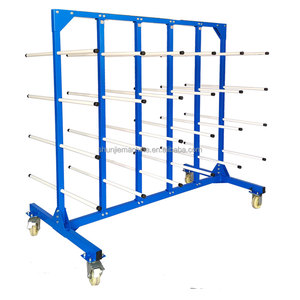
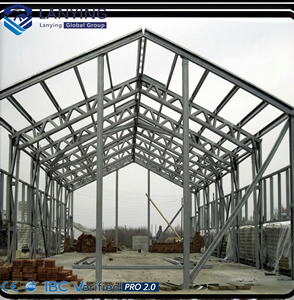
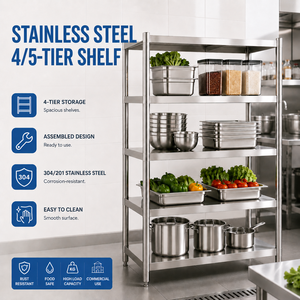
Pallet flow racking—also recognized in logistics as gravity flow racking or live dynamic storage—is an engineered high-density material handling framework designed to eliminate internal access aisles and enforce rigid First-In, First-Out (FIFO) stock rotation. As industrial square footage lease rates in Seattle's pivotal Kent Valley, Fife, and Sumner corridors hover near historical highs, maximizing volumetric floor space efficiency ($\text{m}^3/\text{m}^2$) has become an operational imperative for supply chain executives and 3PL providers.
Our OEM/ODM manufacturing plant fabricates pallet flow racking systems utilizing specialized structural channel steel or high-tensile cold-rolled upright columns. Operating on inclined wheel beds or full-width roller tracks set at an engineered slope (typically calibrated between $3/8\text{"}$ to $1/2\text{"}$ per foot, or roughly $3.0\%\text{ to }4.2\%$), unit loads move autonomously under gravity from the charge (loading) face to the discharge (picking) face.
Independently calibrated mechanical brake rollers regulate descending speed to an engineered $0.25\text{ m/s}$, preventing runaway momentum regardless of whether the pallet weighs 800 lbs or 3,000 lbs.
Custom pneumatic or mechanical escapement gates hold back upstream line pressure from the discharge pallet, allowing forklift operators to extract the pick pallet cleanly without friction pinches.
Heavy-gauge steel end-stops engineered with built-in energy absorbing polymer dampeners cradle the lead pallet, isolating dynamic kinetic shock from the primary building upright frame.
In high-throughput distribution environments throughout the Puget Sound region, a failure to balance pitch against pallet bottom-board integrity results in catastrophic line hang-ups or unsafe discharge speeds. Our OEM design protocols utilize dynamic flow simulations that calibrate roller diameter (e.g., $\varnothing 50\text{mm}$, $\varnothing 60\text{mm}$, or dual-flanged steel skate wheels) against the precise coefficient of friction of standard 48x40 GMA pallets, plastic chemical pallets, and heavy beverage skids.
The Puget Sound industrial basin is situated squarely within the Cascadia Subduction Zone, subjecting warehouse developments in Seattle, Tacoma, Kent, Renton, and Everett to stringent Seismic Design Category D and E mandates under the International Building Code (IBC) and ASCE 7 provisions. A standard catalog rack engineered for low-seismic midwestern geographies will fail King County and Pierce County building code plan reviews.
Because pallet flow systems concentrate massive live weight inside dynamic roller channels over long multi-tier lane depths (often 4 to 20 pallets deep), horizontal seismic forces ($F_p$) exert severe overturning moments on baseplates and anchoring hardware. As an experienced OEM/ODM factory, we calculate and reinforce each frame specifically for local seismic conditions:
Heavy $10\text{mm} - 16\text{mm}$ laser-cut baseplates distributing shear stress, pre-punched for dual Hilti or Simpson Strong-Tie post-installed adhesive or mechanical wedge anchors.
Full structural testing conformance with the Rack Manufacturers Institute standards, providing licensed Washington State PE (Professional Engineer) stamped calculation packages for permit issuance.
Full-height structural tube inserts or welded double-column backing on the first 48 inches of aisle-facing uprights to endure forklift impacts without loss of structural vertical integrity.
Logistics engineers evaluating warehouse renovations across the Northwest Seaport Alliance (NWSA) maritime gateway must balance cubic density against labor retrieval cycles. Pallet Flow Racking represents the highest possible storage density while preserving 100% strict FIFO sequence.
| Storage Topology | Space Utilization Ratio | Stock Rotation Logic | Handling Travel Requirement | Seismic Vulnerability Index | Best Seattle Application |
|---|---|---|---|---|---|
| Pallet Flow (Gravity) | 85% - 90% (Ultra High) | Strict FIFO (100% Guaranteed) | Lowest (Dedicated load/pick aisles) | Engineered (Torsional Bracing Req.) | Cold Storage, Perishables, 3PL FMCG |
| Drive-In / Drive-Thru | 75% - 85% (High) | LIFO (Last-In, First-Out) | High (Forklift drives into rack bay) | Critical (High unbraced column risk) | Low-SKU bulk seasonal items |
| Push-Back Racking | 70% - 75% (Medium-High) | LIFO (Carts on inclined rails) | Moderate (Front aisle access only) | Moderate (Nested cart dynamics) | Medium SKU velocity, Kent Valley 3PL |
| Standard Selective | 40% - 45% (Low) | Unrestricted Access | Highest (Multiple wide travel aisles) | Baseline (Standard anchorage) | High SKU proliferation, aerospace parts |
Our OEM/ODM structural systems are customized to interface seamlessly with the operational demands across Washington State's core economic sectors:
Sub-zero refrigeration environments (-20°F) in Fife and Tacoma handling Alaskan salmon, shellfish, and flash-frozen agricultural produce require low-temperature food-grade greases and stainless roller bearings to prevent roller freeze-ups.
Rapid cross-docking operations along the I-5 corridor require dynamic gravity staging lanes. High-velocity carton buffer lanes directly charge case-picking operations with zero operator transit congestion.
In Everett and Snohomish County aerospace machining ecosystems, flow racks coordinate raw sheet metals, composite tooling, and aluminum extrusions using custom wide polymer rollers and anti-marring finishes.
Seattle craft breweries, wineries, and beverage bottlers utilize heavy-duty 3-lane roller beds to manage dense keg and can pallet stacks under strict FIFO rotation, eliminating out-of-date canned inventory losses.
Founded on rigorous structural engineering principles, our manufacturing infrastructure delivers turnkey storage solutions from comprehensive site layout simulations to pre-cleared maritime logistics. We specialize in large-scale OEM/ODM contracts for warehouse integrators, general contractors, and end-user enterprise logistics operators across North America.
Key technical, regulatory, and commercial answers for facility managers and warehouse engineers procuring pallet flow and industrial storage systems in Washington State.
Storage racks exceeding 8 feet in height or supporting heavy dynamic loads require a building permit in jurisdictions like Seattle, Kent, and Tacoma. We provide structural drawings and calculation packages stamped by a registered Washington State Professional Engineer (PE), detailing baseplate anchoring, frame geometry, and Cascadia zone spectral response accelerations ($S_s, S_1$).
While lanes can technically span 2 to 25 pallets deep, high-efficiency distribution facilities in Kent Valley typically deploy between 4 to 12 pallets deep. Beyond 10 pallets, lane dynamics demand sophisticated multi-stage centrifugal speed brakes and mechanical separation devices to eliminate excessive hydrostatic line pressure on the pick face.
Pallet bottom configuration is critical. Standard wooden GMA 48x40 pallets require parallel bottom runners aligned with the roller beds. Missing bottom boards, protruding nails, or warped wood can stall a lane. For mixed or plastic pallet pools, our OEM engineering team specifies full-width steel roller tracks or skate wheel layouts with tighter roller centers to ensure continuous motion.
Because pallet flow creates dense solid blocks of inventory, local fire marshals require engineered flue spaces. In high-density flow blocks, longitudinal and transverse flue spaces are maintained via engineered lane dividers, and in-rack fire sprinkler systems (such as ESFR overhead heads coupled with level-specific in-rack water lines) are pre-integrated into our upright frame punchings.
Yes. Sub-zero applications in seafood and frozen food distribution utilize specialized low-temperature sealed bearings, synthetic lubricants rated down to -40°F, and galvanized or stainless steel roller assemblies. This prevents moisture freezing and bearing seizure common with standard warehouse grade components.
Standard OEM manufacturing spans 3 to 5 weeks depending on configuration volume. Containerized freight sails directly across trans-Pacific routes into The Northwest Seaport Alliance terminals (Terminal 18 in Seattle or Husky/Washington United Terminals in Tacoma), minimizing domestic overland drayage costs across the Pacific Northwest.
OEM (Original Equipment Manufacturing) produces structural rack beams, frames, and flow beds strictly according to your existing engineering blueprints and beam punch profiles. ODM (Original Design Manufacturing) involves our in-house engineering team calculating the layout, dynamic slope, brake positioning, seismic structural sizing, and building code compliance from scratch based on your CAD facility drawings.
Push-Back racking functions on a LIFO (Last-In, First-Out) discipline with loaded nested carts pushed upward on a shallow incline from a single aisle, accommodating 2 to 6 pallets deep. Pallet Flow enforces true FIFO rotation with dedicated load and unload aisles, supporting up to 25 pallets deep. Operations with strict date code requirements (food, pharma) must deploy Pallet Flow.
Due to the continuous movement of counterbalanced forklifts and reach trucks along charge and discharge aisles, we configure heavy-gauge rolled-steel upright column protectors, floor-mounted bullnose corner deflector guards, and full structural channel floor guide rails down the loading aisles to absorb mast impacts.
In many cases, existing heavy-duty structural beams and columns can be retrofitted with drop-in flow track assemblies, provided the uprights have adequate section modulus and structural capacity to support the concentrated dynamic loads, and the slab anchoring satisfies current seismic codes.
Submit your facility dimensions, floor slab load ratings, and pallet specifications. Our application engineers will calculate lane slopes, dynamic braking intervals, and provide full budgetary layout proposals with seismic engineering estimates.