Racking & Shelving Specialists — Hamriyah Free Zone, Sharjah · Serving the UAE & GCC
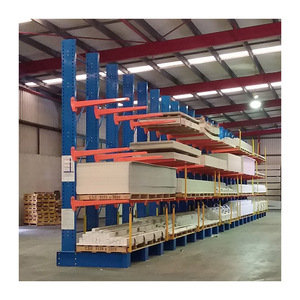
From heavy-duty selective steel framing and automated pallet shuttle systems to custom cantilever arms and sanitary stainless steel units, our manufacturing facility delivers ISO9001 and CE-certified racking directly to Algerian industrial hubs including Algiers, Oran, Constantine, and Sétif.
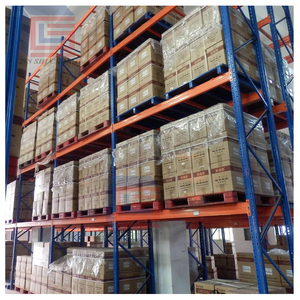
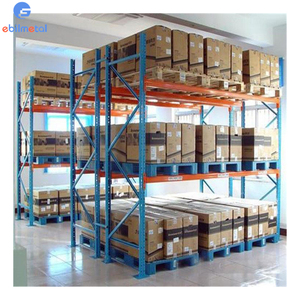
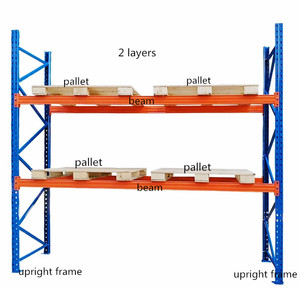
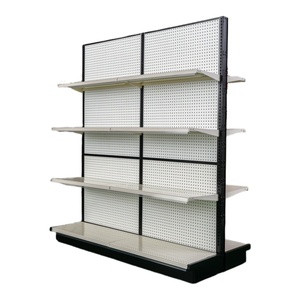
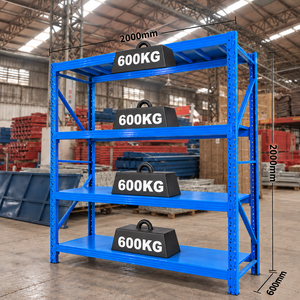
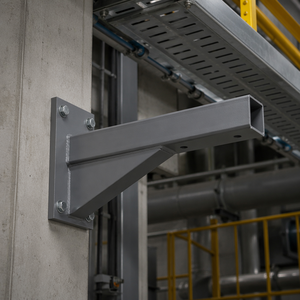
In modern logistics infrastructure across North Africa, land acquisition and refrigeration costs require maximum volumetric utilization. The semi-automated Radio Shuttle (Pallet Runner) system separates vertical forklift access from horizontal channel transport, doubling storage density compared to standard selective pallet racking.
The core automated shuttle is powered by high-capacity Lithium Iron Phosphate (LiFePO4) battery packs, engineered to endure thermal stress between -25°C in Algerian frozen food hubs and +45°C in Sahara desert border logistics. Integrated dual-frequency RF wireless controllers allow forklift operators to command pallet replenishment, continuous retrieval, inventory counts, and auto-pallet rearrangement from up to 80 meters away.
The racking structure is precision-rolled with heavy-duty guide rails that function simultaneously as structural ties and shuttle running tracks. In high-velocity batch operations like dairy or beverage processing in Zone Industrielle Rouiba-Réghaïa, channels can be arranged for FIFO (First-In, First-Out) with rear loading and front picking. For deep seasonal stockpiling, LIFO (Last-In, First-Out) maximizes building clear heights up to 18 meters.
Safety in narrow deep-lane storage is paramount. Every shuttle integrates front and rear laser distance meters, mechanical anti-collision bumpers, and ultrasonic depth detectors. If an irregular pallet underside, wooden splinter overhang, or misaligned base stringer is detected, the shuttle automatically stops, applies electro-magnetic regenerative brakes, and transmits a telemetry fault code directly to the industrial remote console.
Algeria’s logistics landscape is undergoing an unprecedented modernization push. Driven by national import substitution policies, industrial expansion in high-plateau zones, and the expansion of Mediterranean deep-water ports, Radio Shuttle systems provide targeted strategic advantages across distinct industrial sectors.
Algeria is Africa's second-largest pharmaceutical manufacturing market. Facilities in Sidi Abdellah, Dar El Beïda, and Oued Smar require strict temperature-controlled storage (+2°C to +8°C and +15°C to +25°C). Radio shuttle systems dramatically cut cold air volume losses by removing forklift aisles, minimizing thermal leakage and ensuring full batch traceability for national laboratory compliance.
The southern date harvest and coastal fruit/vegetable processing corridors require immense seasonal storage capacity. In refrigerated chambers (Chambre Froide), energy consumption represents up to 40% of facility operating costs. Dense shuttle channels store hundreds of pallets deep with zero forklift heat emission into the refrigerated zone, dropping refrigeration power overhead by up to 28%.
Western Algeria’s automotive production lines and petrochemical logistics hubs handle heavy raw materials, resins, polymer compounds, and automotive assemblies. Heavy-duty pallet runners with 1,500kg unit load capacity handle continuous round-the-clock throughput, feeding staging lanes directly into packaging lines without congested forklift traffic.
As Algeria's premier commercial distribution crossroads, Sétif (El Eulma) and Constantine serve as wholesale and retail transshipment points. Near the deep-sea container terminal of Djendjen (Jijel), high-cube bonded warehouses utilize 16-meter tall shuttle racking to store imported consumer goods and manufactured hardware prior to customs clearance.
An empirical analysis of economic reforms, infrastructure modernization, and industrial warehousing investments transforming the Algerian market.
Historically, Algerian warehouses relied on manual block stacking (gerbage au sol) or entry-level selective pallet racking. However, escalating industrial land values in the Wilaya of Algiers and Oran—reaching exceeding 30,000 to 55,000 DZD/m² in prime zones—have rendered single-tier storage financially unsustainable. Facility directors are converting low-ceiling buildings into high-cube facilities featuring radio shuttle density.
Under Algeria’s agricultural self-sufficiency and export enhancement policies, the government has mandated investments in modern cold storage infrastructure to minimize post-harvest spoilage. The National Logistics Master Plan has catalyzed private and public investment in automated cold stores where shuttle racking preserves thermal continuity and eliminates the high mast-forklift damage common in traditional drive-in setups.
Algerian procurement organizations are rapidly modernizing from manual paperwork to enterprise Warehouse Management Systems (WMS). Radio shuttle carts can interface via API and industrial Wi-Fi/ZigBee gateways with corporate ERPs (SAP, Oracle, local solutions). Automated SKU tracking, batch expiry dating, and real-time bay allocation eliminate picking inaccuracies and optimize container de-stuffing cycles.
Selecting the correct warehouse rack format requires balancing capital investment against volumetric efficiency, operational throughput, and forklift fleet requirements.
| Evaluation Parameter | Radio Shuttle Racking | Drive-In Racking System | Standard Selective Pallet Racks | Push-Back Cart Racking |
|---|---|---|---|---|
| Volumetric Space Utilization | Up to 88% Maximum | Up to 70% Medium-High | 40% - 50% Conventional | 65% - 72% Moderate |
| Operational Picking Velocity | Fast (Shuttle moves inside lane) | Slow (Forklift enters rack lane) | Fast (Immediate open access) | Moderate (Gravity assisted) |
| Structural Collision Risk | Extremely Low (No truck entry) | High (Forklift strikes uprights) | Moderate (Aisle corner impact) | Low (Aisle edge only) |
| Stock Rotation Flexibility | Both FIFO & LIFO Configurable | Strictly LIFO (Lane based) | Full 100% Direct FIFO Access | Strictly LIFO |
| Maximum Lane Depth | Up to 40 Pallets Deep | Limited to 8-10 Pallets Deep | 1 to 2 Pallets Deep | 2 to 5 Pallets Deep |
| Cold Store Energy Savings | Optimal (Minimal chilled volume) | High (Dense block) | Poor (High aisle dead-space) | Moderate |
Northern Algeria is located along the tectonic boundary between the African and Eurasian plates, making it a seismically active zone. Warehouse racking structures in Algiers (Zone III), Chlef (Zone III), Blida (Zone III), and Oran (Zone IIa) must comply with stringent seismic design criteria.
Racking failures under seismic excitation can cause catastrophic warehouse collapse, inventory destruction, and life-safety hazards. Unlike static shelving, a fully loaded 12-meter radio shuttle system carries hundreds of tons of dynamic mass. Our structural engineering department performs Finite Element Analysis (FEA) calibrated specifically to the seismic acceleration coefficients specified by the Organisme National de Contrôle Technique de la Construction (CTC).
Integrated Storage Solutions provides complete turnkey delivery from initial laser site surveys and custom roll-forming to international freight delivery and on-site supervisor installation across Algerian wilayas.
We collect spatial clear heights, floor slab compressive ratings, pallet dimensions (Euro 800x1200 / Industrial 1000x1200), and SKU turnover rates.
Our engineering department designs high-density channel layouts and performs Finite Element Stress Analysis to verify load deflections.
Automated roll-forming lines stamp, profile, and punch uprights from certified prime coil steel, followed by durable epoxy powder baking.
Components are bundled for sea freight directly to Port of Algiers, Oran, or Djendjen with full documentary customs support (EUR.1 / Certificate of Origin).
Experienced assembly supervisors guide local teams, conduct shuttle track leveling tests, calibrate sensor thresholds, and train operators.
Cutting out trading middlemen ensures competitive pricing and exact structural accountability. Every column upright, shuttle rail, support bracket, and electronic cart is manufactured under rigorous quality systems meeting CE, FEM 10.2.02, and ISO 9001:2015 standards.
Practical answers addressing procurement regulations, customs clearance, letters of credit (Crédit Documentaire), installation standards, and technical maintenance for Algerian operations.
Industrial racking imported under HS Code Chapter 73 (Articles of iron or steel, 7308.90) is subject to Algerian Customs (Douanes Algériennes) duties, temporary safeguard duties (DAPS) where applicable, and domestic VAT (TVA at 19%). Our export logistics team provides all mandatory documentation, including Clean Inspection Certificates, EUR.1 / Certificates of Origin, detailed commercial invoices, and bilingual packing lists to ensure fast clearance through Port of Algiers, Oran, or Béjaïa.
Yes. Under Algerian foreign exchange regulations managed by the Bank of Algeria, industrial equipment imports are typically processed via Irrevocable and Confirmed Documentary Credits (Credoc / L/C) or Documentary Remittance (Remise Documentaire). Our financial department is experienced in complying with commercial bank terms (such as BEA, BNA, CPA, or private institutions like Société Générale Algérie), ensuring full alignment with pro-forma and shipping schedules.
Yes. Our radio shuttles can be engineered with adjustable width sensors or dual-profile wheel tracks to accommodate both 800x1200mm Euro pallets (EPAL 1) and 1000x1200mm industrial perimeter-base pallets (EPAL 2 / ISO pallets). The shuttle’s optical sensors detect pallet depth and stop points automatically, preventing overhang collision.
Because radio shuttle systems concentrate high pallet loads over dense ground areas, the warehouse concrete floor slab should ideally have a minimum compressive strength of C25/30 (or B25 according to Algerian DTR specifications) and a thickness of at least 180mm to 220mm, reinforced with welded mesh. Slab flatness should adhere to DIN 18202 or TR34 FM2 specifications to maintain precise beam and rail alignments.
For temperature-controlled operations, our shuttle carts are fitted with specialized cold-chain LiFePO4 battery modules equipped with internal thermostatic heating plates and moisture-sealed IP65 electronic control boxes. This eliminates battery degradation and condensation short-circuits when transitioning between ambient staging areas and sub-zero storage chambers.
We offer flexible deployment options: either deploying senior project installation engineers to supervise and certify your local contractor workforce, or supplying complete turnkey assembly crews. Our supervisors oversee optical rail leveling, torque checks on anchor bolts, and laser sensor calibration, concluding with full load test certification and local operator training.
While drive-in racking offers high storage density, it requires forklift operators to drive directly into narrow structural lanes. In practice, this leads to frequent upright collisions, structural fatigue, and slow pallet retrieval cycles. Radio shuttle eliminates forklift entry entirely; the truck stays in the main service aisle while the autonomous cart performs deep channel transport. This reduces rack maintenance costs by up to 90% and increases loading speed by over 200%.
Every system shipment includes a 2-Year Operational Spares Pack consisting of spare polyurethane drive wheels, laser sensor arrays, optical limit switches, extra wireless remote controls, and a backup battery set with an autonomous charging station. System electronics feature modular plug-and-play wiring harnesses, allowing internal warehouse technicians to perform routine component swaps within minutes.
Whether you are planning a new distribution warehouse in Rouiba, a date export cold storage facility in Biskra, or upgrading an industrial logistics depot in Oran, our engineering team will calculate your volumetric space capacity, dynamic throughput, and provide full layout CAD drawings within 48 hours.
Get Catalog