Racking & Shelving Specialists — Hamriyah Free Zone, Sharjah · Serving the UAE & GCC

Warehouse safety barriers, column guards, and crash bollards are deployed to safeguard high-density steel racking systems against material handling equipment (MHE) collisions. Discover our precision-engineered core industrial storage systems supplied across Oman.
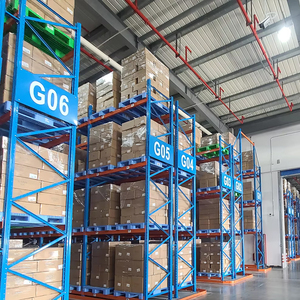
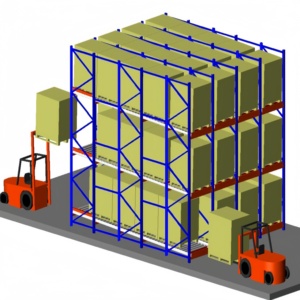
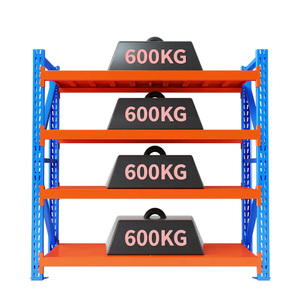
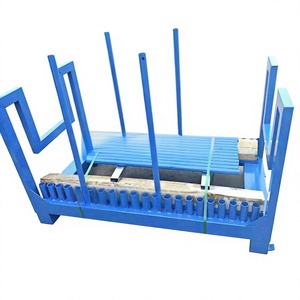
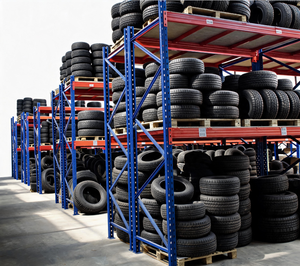
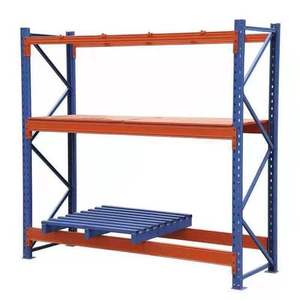
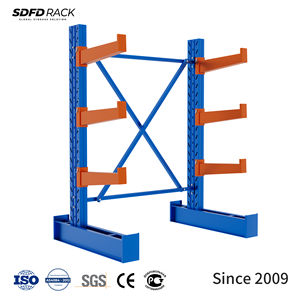
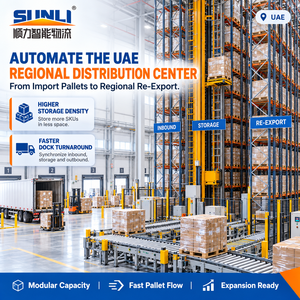
In accordance with the accelerated industrial expansion orchestrated under Oman Vision 2040, the logistics landscape across Muscat, Sohar, Duqm, and Salalah is witnessing unprecedented densification. Modern high-bay warehouses and automated fulfillment centers operate fleets of Counterbalance Forklifts, Reach Trucks, and Autonomous Guided Vehicles (AGVs) operating in tight cross-aisle configurations. Within these facilities, unshielded structural columns, building fabric, mezzanine support posts, and selective pallet rack uprights represent critical single-point failure nodes.
According to international logistics engineering risk studies, over 84% of structural rack collapses originate from repeated low-velocity material handling equipment (MHE) impacts on vulnerable end-of-aisle upright frames. Consequently, selecting certified, impact-tested warehouse safety barriers is not merely a passive occupational health mandate; it is a structural risk mitigation imperative that directly protects multi-million-dollar capital investments, inventory integrity, and operator lives.
When evaluating safety barriers for procurement in Oman, structural engineers prioritize kinetic energy containment capacity, calculated using the standard dynamic motion equation:
For example, a standard 3,500 kg laden forklift traveling at an operational speed of 2.8 m/s (approx. 10 km/h) delivers a kinetic strike energy of approximately 13,720 Joules upon impact. If an uncertified rigid steel barrier lacks dynamic deflection mechanics or adequate floor anchor shear tolerance, this massive kinetic force shears anchor bolts out of the concrete floor slab (typically C25/30 or C30/37 in Oman), fracturing the floor screed and transferring remaining impact shock straight into the rack upright.
Navigating the spectrum between Traditional Structural Tubular Steel, High-Impact Flexible Memory Polymers, and Ductile Cast Iron Solutions in harsh Middle East industrial conditions.
| Barrier Technology | Tested Joules Rating | Impact Mechanics | Corrosion (Sohar/Salalah Marine C4/C5) | Floor Slab Anchor Stress | Oman Vision 2040 Lifecycle ROI |
|---|---|---|---|---|---|
| Integrated Heavy Structural Steel (A36 / S275JR) | 6,000J – 16,000J | Rigid plastic deformation; absorbs shock by bending; requires beam replacement post-severe impact. | Requires hot-dip galvanizing + 80μm epoxy powder coat to prevent coastal rust. | High shear & pull-out stress on concrete anchors during 90° perpendicular strikes. | Cost-Effective Initial CapEx (Standard GCC choice for heavy industrial yards). |
| Engineered Flexible Memory Polymer (HDPE / Memaplex) | 8,000J – 25,000J+ | Elastic kinetic dissipation; flexes on impact, redistributes energy, recovers original shape automatically. | 100% immune to corrosion, moisture, acid spills, and coastal saline air. UV94 stabilized. | Significantly lower anchor stress; patented internal rubber shock-absorbing dampeners. | Lowest Total Cost of Ownership (Ideal for fast-moving FMCG & e-commerce fulfillment). |
| Cryogenic Sub-Zero Polymer Blends | 7,500J – 18,000J | Specialized polyolefin elastomers formulated to eliminate low-temperature embrittlement down to -30°C. | Zero oxidative degradation in condensation-heavy cold store ante-rooms. | Minimal floor spalling risk under extreme thermal differential contraction. | Mandatory for Cold Chain (Fisheries in Sur, Dairy in Salalah, Pharma in Muscat). |
| Modular Ductile Cast Iron Bollards | 12,000J – 22,000J | High tensile cast iron with internal elastomeric pivot joint; withstands heavy wheel-hub clipping. | Moderate; requires regular primer inspection in high-humidity zones. | Moderate; rotational baseline reduces shear moments. | High Longevity (Suitable for exterior truck loading docks and yard perimeters). |
Based on manufacturing capacity, kinetic testing accreditations (PAS 13 / EN 15512), regional GCC inventory readiness, and direct export logistic networks into the Sultanate of Oman.
Positioned with extensive manufacturing and warehouse integration facilities in Hamriyah Free Zone, Sharjah, ISS brings 36 years of specialized GCC engineering excellence directly into Oman. Operating dedicated overland transit routes via the Hatta and Wajajah border corridors, ISS delivers heavy-duty structural steel crash barriers, wraparound upright protectors, and customized heavy vehicle lane segregation systems designed in unison with racking installations.
Turnkey warehouse safety integration, custom CAD layout simulations, swift 48-hour site deliveries to Sohar, Muscat, and Nizwa, and compliance with Oman Civil Defence & Ambulance Authority (CDAA) fire egress guidelines.
A global pioneer in polymer barrier systems, manufacturing multi-layered advanced polymer extrusion safety barriers. Widely exported to GCC distribution hubs, A-SAFE provides PAS 13:2017 compliant barrier products designed to deform, absorb, and reform without permanent floor damage, frequently deployed in Tier 1 automated logistics operations.
Zero-paint polymer color retention, food-contact compliant hygiene finishes, and high suitability for mega FMCG warehouses in Khazaen Economic City.
Located strategically in the Sohar Industrial Estate (Madayn), specializing in heavy-gauge structural S275 steel barrier bollards, heavy drive-in rack entry protectors, and loading dock guide rails tailored for industrial port logistics and petrochemical transshipment terminals.
Direct local In-Country Value (ICV) contribution, immediate hot-dip galvanizing plant access, and rapid delivery for heavy engineering sites in Al Batinah North.
Renowned European manufacturer of high-density extruded flexible polymer safety bollards, rack protectors, and pedestrian handrails. Products are engineered with modular components that can be configured for complex material flow intersections in automated centers.
Comprehensive dynamic test certifications (TÜV Rheinland), high visibility coloration, and anti-static variants suitable for electronics and hazardous chemical zones.
Specializing in fabricated steel column wrap guards, end-of-aisle double tubular crash barriers, and mezzanine perimeter protection nets with direct logistical coverage across Musandam, Muscat, and Dhofar regions.
Competitively priced dual-rail steel systems and rapid dispatch for industrial spare-parts warehouses and commercial wholesale traders.
Italian manufacturer specializing in techno-polymer industrial protections, particularly low-profile ground bumpers, wall fenders, and cold-storage floor barrier curbs designed to withstand high operational humidity and refrigerated environments.
High-grade cryogenic polymer resilience for fisheries storage facilities across Duqm and Salalah ports.
Large-scale steel manufacturing complex producing Armco-style corrugated W-beam crash barriers, structural square-hollow-section (SHS) bollards, and perimeter vehicle arrestor barriers widely utilized in external Omani logistics staging yards.
Bulk container and trailer flatbed land shipping directly to Ibri, Nizwa, and Muscat via the Rub Al Khali highway route.
German industrial safety brand manufacturing certified TÜV-tested polyethylene impact barriers, wide-angle warehouse surveillance mirrors, and rack-end crash absorption buffers optimized for high-risk intersection zones.
High aesthetic standard for multi-national pharmaceutical storage facilities and automated sorting stations.
Turkish fabricator exporting modular powder-coated steel safety railings, rack-leg steel clamshell protectors, and pedestrian swing gates through direct sea freight into Sultan Qaboos Port and Salalah Port.
Flexible fabrication tolerances and budget-friendly modular configurations for standard light-to-medium industrial warehousing.
High-volume export manufacturer providing cast-iron core embedded safety bollards, forged rack base anchors, and automated warehouse perimeter safety cages tailored for international OEM projects and global EPC contracts.
Large batch production for massive greenfield port terminal expansions and bonded customs warehouse zones in Duqm.
Tailoring impact barrier mechanics, anti-corrosion metallurgy, and anchoring profiles to distinct environmental and operational profiles across the Sultanate.
Profile: Heavy industrial handling, metals fabrication, petrochemicals, bulk maritime cargo.
Barrier Challenge: Severe marine atmospheric salinity (ISO 9223 C4/C5 classification) combined with high-tonnage heavy counterbalance forklifts. Standard raw or lightly primed steel barriers corrode within 18 months.
Engineered Solution: Heavy-gauge hot-dip galvanized structural steel tubular barriers (minimum 85μm zinc layer) with epoxy top-coats or corrosion-proof solid polymer crash rails anchored with 316-grade stainless steel wedge expansion bolts.
Profile: National inland dry port, high-throughput retail logistics, FMCG e-commerce consolidation, dry food storage.
Barrier Challenge: Rapid material flow with mixed traffic: high-speed reach trucks, order pickers, and automated guided vehicles (AGVs) operating in close proximity to pedestrian picking lanes.
Engineered Solution: High-impact flexible polymer pedestrian segregation barriers with integrated acoustic warning lights, self-closing safety gates, and end-of-row double-rail rack protectors certified to 14,000 Joules.
Profile: Specialized oil & gas support bases, energy infrastructure staging, large raw material storage, heavy machinery maintenance.
Barrier Challenge: Severe environmental extremes (ambient desert heat exceeding 48°C, high coastal humidity, intense UV degradation) alongside 8-ton to 15-ton heavy container handlers.
Engineered Solution: Heavy ductile cast-iron and extra-heavy reinforced steel barriers with chemical resin anchor studs, combined with UV94-stabilized polymer column wraps to prevent thermal embrittlement.
Profile: Global container transshipment hub, pharmaceutical manufacturing, seafood cold storage, dairy distribution.
Barrier Challenge: Microclimate swings during the Khareef (monsoon season) with 100% relative humidity, coupled with deep sub-zero (-25°C) freezer operations.
Engineered Solution: Cryogenic-grade non-porous polymer barriers with zero water absorption (preventing microbial harborages in hygienic pharmaceutical/food facilities) and anti-corrosive stainless steel hardware.
Driven by national modernization programs and foreign direct investment in Omani supply chains, warehouse safety barrier specifications are undergoing three fundamental transformations:
Historically, Omani warehouse developers installed standard mild steel angle-iron or tubular barriers welded directly to floor plates. While rigid steel provides strong initial stopping resistance, its inability to dynamically recover means that minor everyday clipping damages the barrier permanently while transmitting shock loads directly into the concrete floor. This causes anchor hole enlargement and concrete spalling, requiring expensive slab breakout and structural re-anchoring. Modern GCC engineering tenders increasingly mandate PAS 13:2017 compliant polymer barriers or hybrid elastomeric-cushioned steel posts that absorb kinetic strikes without cracking the underlying foundation slab.
In advanced fulfillment hubs across Muscat and Sohar, passive barriers are being paired with active IoT shock-sensor beacons. If an reach-truck strikes an end-of-aisle protector above a pre-set threshold (e.g., >3,000 Joules), an embedded tri-axial accelerometer automatically logs the collision incident, transmits the timestamp to the Warehouse Management System (WMS), and flags the specific rack aisle for mandatory structural inspection under EN 15635 protocols.
The Civil Defence and Ambulance Authority (CDAA) of Oman has updated structural fire and life-safety guidelines for commercial logistics centers. Barriers installed along primary egress routes must provide unobstructed travel clearances (typically minimum 1,200mm clear width) and must feature high-contrast photoluminescent strips or ISO 3864 compliant reflective bands to guide personnel during emergency facility blackouts.
Established in Hamriyah Free Zone, Sharjah, ISS operates as the premier integrated warehouse storage and protection partner for industrial enterprises across the UAE and Oman.
We do not simply sell standalone barriers; our storage engineers analyze your floor slab thickness, compressive concrete strength, MHE turn radius, pallet load weights, and picking flow to design an optimized crash protection grid that eliminates blind-spot collisions.
From our central manufacturing and staging base in Hamriyah Free Zone, our logistics fleet provides streamlined customs-cleared overland delivery directly through Hatta/Wajajah into Oman, ensuring zero project downtime and rapid replenishment of damaged components.
Our certified installation teams handle high-precision concrete core drilling, dynamic chemical resin anchoring, and post-installation torque calibration, backed by comprehensive annual rack safety audits and CDAA compliance documentation.
Practical answers to technical questions concerning import procedures, installation standards, concrete slab specifications, and safety regulatory compliance across the Sultanate.
Standard industrial safety barriers absorbing between 8,000J and 14,000J require a minimum concrete slab thickness of 150mm to 200mm with a compressive strength of at least C25/30 or C30/37. In heavy logistics facilities (such as those in Sohar Port with heavy counterbalance forklifts), heavy-duty barriers may require M16 to M20 chemical anchor capsules embedded at a minimum depth of 120mm to prevent floor breakout under shear strike loads. During our initial ISS system study, we review your slab core data to recommend suitable mechanical wedge or chemical resin anchoring systems.
Standard commercial plastics suffer thermal degradation and ultraviolet embrittlement under intense GCC solar exposure and high ambient temperatures. However, industrial warehouse barriers manufactured from UV94-stabilized high-density polymers or elastomeric polyolefins are tested for continuous thermal operation between -10°C and +50°C without losing tensile elongation or impact memory. For external yards or semi-open cross-dock canopies across Oman, we specify specialized UV-inhibited polymer blends or heavy hot-dip galvanized steel systems.
Thanks to GCC customs agreements and strategic road networks, overland freight dispatched from our Hamriyah Free Zone hub typically reaches Muscat or Sohar within 24 to 48 hours upon loading. Cargo clearing occurs via the Bayan customs system through the Hatta-Al Wajajah or Mezyad-Hafeet border posts. ISS prepares all necessary commercial invoices, certified GCC Certificates of Origin (COO), and technical spec sheets to ensure rapid customs release with zero border delays.
While CDAA primarily regulates fire prevention, egress corridor clearances, and sprinkler network clearances, their safety inspection checklists explicitly mandate the physical protection of emergency exit routes, fire risers, electrical main panels, and primary building columns against vehicular collision. Furthermore, international occupational health regulations adopted by major Omani entities (such as PDO, Madayn, and Asyad Group) enforce strict physical segregation between pedestrian walkways and mechanical handling equipment.
Although flexible polymer barriers involve a 20% to 35% higher initial purchase CapEx compared to standard welded steel, their 5-year Total Cost of Ownership is typically 50% to 70% lower. Structural steel barriers dent, bend, crack the floor slab, and require continual welding, repainting, and floor repair after every moderate collision. Flexible polymer barriers absorb repetitive impacts, return to original alignment, produce zero floor damage, and never require repainting, making them far more cost-effective for high-turnover logistics centers.
Cold chain facilities (common in Sur, Salalah, and Muscat) require cryogenic-tested barriers that do not crack under sub-zero thermal stresses down to -30°C. Furthermore, food and seafood export facilities require non-porous, corrosion-free surfaces that resist washdown detergents and eliminate rust flaking. We supply specialized polymer barriers with stainless steel base hardware that provide full cold-temperature elasticity and comply with global food contact hygiene requirements.
Connect directly with Integrated Storage Solutions (ISS) engineering consultants. Share your facility layout, MHE operational speeds, and storage system profiles for an immediate, customized collision safety study and competitive factory-direct quote.