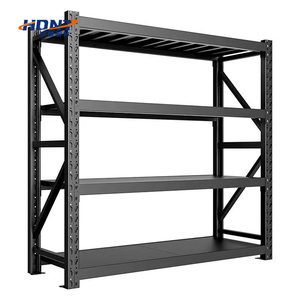
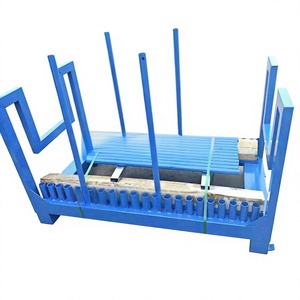
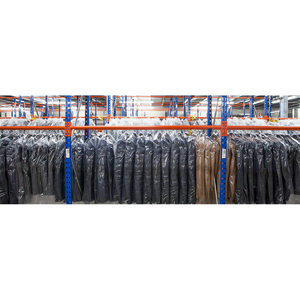
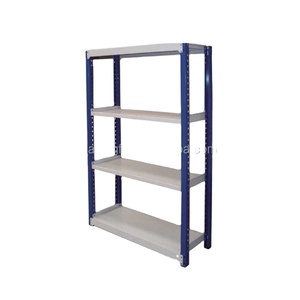
Direct OEM Cold Chain Engineering · Canada Standards Compliant

Top China Cold Room Shelving Supplier & Suppliers in the Canada Market

Heavy-duty structural storage, sub-zero ductile alloys, and certified NSF/HACCP hygienic shelving engineered for Canadian walk-in freezers, cold storage hubs, and food processing facilities.

Factory-Direct Catalog

Featured Cold-Resistant & Heavy-Duty Storage Systems

Precision-manufactured in China under stringent ISO 9001 and Canadian CSA S16 structural guidelines. Engineered to withstand high load demands and severe sub-zero thermal cycling.

36+ Years of Precision Racking & Cold Storage Engineering
-45°C Verified Impact Toughness Without Structural Embrittlement
35-45% Procurement CapEx Savings vs. Local Canadian Distributors
100% CSA S16 / CSA S136 / NBCC Seismic Compliance Capability
Strategic Sourcing White Paper

Navigating the Canadian Cold Storage Sourcing Landscape

Why forward-thinking Canadian supply chain directors and refrigerated 3PL operators are bypassing intermediary markups to partner directly with premier Chinese cold-chain shelving manufacturers.

Operating temperature-controlled facilities in Canada represents one of the world's most capital-intensive warehousing environments. From the high-energy refrigeration requirements in the sweltering humid summers of Southern Ontario to the sub-zero blast-freezing operations of the Calgary beef packaging corridor, facility managers face an acute operational squeeze: refrigerated real estate in Canadian tier-one markets costs up to 2.8 times more per square foot than ambient warehousing. Maximizing cubic volume utilization is not merely an efficiency initiative—it is vital to commercial viability.

Historically, Canadian procurement teams relied heavily on domestic distributors or US-based supply chains, enduring exorbitant middleman distribution markups (typically 30% to 55%), long backlog lead times, and standardized catalog dimensions that fail to optimize non-standard ceiling heights in older retrofitted buildings. Direct partnership with an established Chinese cold room shelving manufacturer eliminates unnecessary intermediaries, delivers factory-direct CAD/BIM custom engineering, and drastically lowers total cost of ownership (TCO) while rigorously matching Canadian structural and sanitation mandates.

Material / Treatment Specification Cold Rating Range Corrosion & Washdown Performance Impact Toughness (Charpy V-Notch) Recommended Canadian Applications
Q355D / Low-Temp Structural Steel -20°C to -40°C Requires Hot-Dip Galvanizing or Dual-Epoxy ≥ 27 Joules at -20°C Heavy-Duty Pallet Racking, Drive-In Systems (Ontario & Alberta Hubs)
Hot-Dip Galvanized (ASTM A123 / 85μm+) -45°C to +60°C Exceptional resistance to moisture & condensation Preserves base metal ductility under thermal shock Seafood Blast Freezers (BC & Maritimes), Blast Tunnels
Polypropylene Modular Decks (PP Core) -38°C to +88°C 100% Rust-proof, impervious to brine & sanitizers High flexural modulus; shatter-resistant NSF Commercial Kitchens, Supermarket Walk-Ins, Walk-in Coolers
AISI 304 / 316 Stainless Steel Down to -80°C (Ultra-Low) Total chemical passivation, withstands acid washes Austenitic matrix prevents cold-brittle failure Montreal Pharmaceutical Corridors, Cleanrooms, CFIA Inspection Rooms
Thermoset Antimicrobial Powder Coat -25°C to +40°C Resistant to chipping, prevents bacterial biofilm Standard elasticity; requires zero pinhole defects FMCG Distribution Centers, Dry Chilled Storage, Dairy Staging

*Data verified through laboratory Charpy V-Notch testing conforming to ASTM E23 and CSA S16-19 structural requirements.

Targeted Deployments

Localized Application Scenarios Across Canada

From coastal marine humidity to interior continental sub-zero cold, our custom systems are tailored to provincial operational profiles and logistical realities.

British Columbia

Metro Vancouver Seafood & Port Staging

Operating in proximity to the Port of Vancouver and Richmond processing centers. High relative humidity combined with saline blast chilling requires heavy-gauge hot-dip galvanized racking that eliminates electrolytic corrosion from marine brine.

Alberta

Calgary & Edmonton Meat Packing Hubs

Designed for extreme cold (-30°C to -40°C) carcass and boxed-beef distribution. Features structural steel beams certified against brittle cleavage fractures, coupled with heavy structural guide rails for high-frequency reach truck loading.

Ontario

Greater Toronto Area (GTA) 3PL Mega-Logistics

High-turnover FMCG and retail grocery corridors along the 401 and Brampton/Vaughan logistics parks. Focuses on high-bay selective and automated drive-in pallet configurations that optimize million-cubic-foot volumes with FIFO/LIFO flexibility.

Quebec

Montreal Pharmaceutical & Dairy Supply

Strict compliance with Health Canada and CFIA guidelines. Incorporates laser-cut 304 stainless steel and NSF-certified modular polymer shelving that withstands continuous chemical sanitization and steam-cleaning cycles without degradation.

Structural Integrity

Engineering for Canadian Cold-Room Physics & Building Codes

Sub-zero temperatures fundamentally alter steel metallurgy. Standard warehouse racking fails rapidly under refrigerated stress unless engineered to Canadian specific codes.

Ductile-to-Brittle Transition Mitigation

Carbon steel experiences a dramatic drop in impact toughness at sub-zero temperatures. An impact that causes a minor dent at +20°C can trigger catastrophic brittle cleavage failure at -28°C.

  • Specially sourced micro-alloyed low-carbon steel (Q355D/E)
  • Certified Charpy V-notch energy absorptions down to -40°C
  • Elimination of high-stress notch geometries in upright punchings

CSA S16 & NBCC 2020 Seismic Engineering

Canada's National Building Code (NBCC) imposes stringent seismic spectral acceleration parameters, notably in Vancouver, the Fraser Valley, and parts of Quebec (St. Lawrence Seismic Zone).

  • Calculated according to CSA S16-19 and CSA S136-20
  • Heavy-gauge seismic footplates with expanded anchor patterns
  • P.Eng structural stamping support available for permit sign-off

Thermal Slab & Frost Heave Accommodation

Cold warehouse slabs are constructed over insulation layers with sub-floor warming systems to avoid frost heave. Anchoring into these complex composite floor slabs requires specialized engineering.

  • Optimized anchor embedment depth preventing barrier puncture
  • Thermal isolation shims mitigating heat transfer through column bases
  • Engineered load dispersion plates preserving under-floor insulation
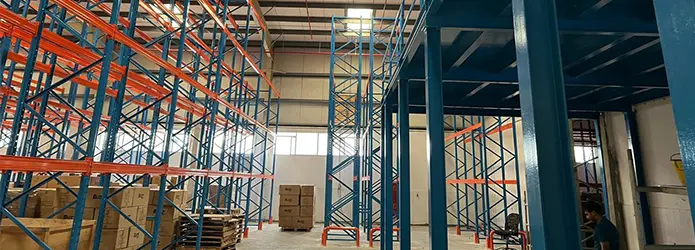
Heavy-duty warehouse racking installation and engineering expertise
Enterprise Manufacturing Caliber

36 Years of Precision Engineering Heritage & Global Execution

Built upon a foundational legacy of structural rack engineering spanning more than three decades, our manufacturing infrastructure combines robotic welding automation, ultra-precision cold-roll forming mills, and comprehensive in-house sheet metal laser cutting. Every cold-room shelving component shipped to Canada is produced under a unified Quality Management System.

From custom CNC punching that guarantees sub-millimeter tolerances on connector slots to specialized post-weld hot-dip galvanizing kettles that ensure complete metallurgical bonding, we solve the engineering complexities that generalist suppliers overlook.

Turnkey Delivery Framework

Our Proven 5-Stage Cold-Chain Engineering Workflow

From initial site study and thermal volume assessment to overseas containerization and Canadian dockside arrival, every project follows a rigorous engineering pipeline.

01. Thermal System Study

We review your refrigeration evaporator positions, airflow channels, pallet dimension envelope (48"x40" GMA or custom), unit weights, and sub-slab heating profiles to prevent cold air stagnation.

02. 3D Structural Modeling

Engineers draft comprehensive CAD/BIM layouts calculating stress distributions, upright bucking capacities under cold-reduction factors, and dynamic forklift impact parameters in tight freezer aisles.

03. Metallurgy QC & Testing

Components undergo raw material spectrometry, weld bead ultrasonic inspection, Charpy V-Notch impact verification at -30°C, and coating thickness gauge audits before factory sign-off.

04. Containerized Sea Transit

Shipments are packaged with moisture-wicking desiccant packs and robust steel crating to avoid ocean salt-spray corrosion during transit via Port of Vancouver or Halifax/Montreal.

05. Canadian Assembly & Support

We provide detailed assembly blueprints, marked installation schematics, load plaque documentation, and direct coordination with local Canadian installation contractors and P.Eng inspectors.

Industry Foresight

Canadian Cold Storage Trends Shaping Racking Demand

Technological and regulatory shifts transforming how Canadian temperature-controlled facilities design their storage footprints.

Transition to Natural Refrigerants (CO2 & Ammonia)

As Canadian facilities comply with Federal Halocarbon Regulations, retrofitting to transcritical CO2 and low-charge ammonia cooling creates localized micro-climates. Racking finishes must resist high-pressure defrost surges, intense condensation cycles, and potential trace vapor exposures without peeling.

Semi-Automated Pallet Shuttle Integration

Skyrocketing labor costs in Ontario, Alberta, and BC have accelerated the adoption of radio shuttle systems inside deep-freeze rooms. Human forklift operators spend less time inside the -25°C box. Our custom shuttle racking rails feature cold-hardened galvanized channels with sub-millimeter tracking tolerances.

Cube Maximization & Vertical Expansion

With urban industrial land constraints in Vancouver and Toronto, new builds are reaching clear heights of 40 to 50 feet. High-bay selective racking and multi-tier picking mezzanines engineered with high-rigidity structural steel enable operators to double storage density over identical refrigerated footprints.

Procurement Clarity

Frequently Asked Questions for Canadian Buyers

Addressing legal compliance, CBSA customs clearance, structural certification, and logistical execution for China-to-Canada cold storage projects.

How do we address Canadian SIMA anti-dumping and countervailing duties on steel racks?

The Canada Border Services Agency (CBSA) enforces Special Import Measures Act (SIMA) rules on specific steel storage racking imports from China. As an experienced exporter, we structure our tariff classifications (under HS 7308.90), offer legitimate normal value reviews, or supply customized modular configurations and non-standard components that conform transparently to Canadian customs laws, avoiding unexpected import assessment penalties.

Can your Chinese manufacturing facility supply Canadian P.Eng stamped drawings?

Yes. While our in-house engineering team completes the preliminary calculations, CAD layouts, and finite element stress analyses according to CSA S16-19 and CSA S136-20, we collaborate seamlessly with licensed Canadian provincial Professional Engineers (P.Eng) across BC, Alberta, Ontario, and Quebec to review, seal, and stamp structural drawings for your municipal building permits.

Why is hot-dip galvanizing superior to standard powder coating in Canadian walk-in freezers?

In walk-in freezers subjected to continuous door openings, rapid temperature swings create heavy condensation on steel uprights. Standard paint or low-grade powder coating can develop micro-cracks over thermal contraction cycles; moisture penetrates behind the paint, causing hidden sub-film corrosion. Hot-dip galvanizing produces an iron-zinc alloy layer metallurgically bonded to the steel that resists rust and self-heals minor scratches.

Do your hygienic shelving options conform to CFIA and Health Canada sanitation standards?

Yes. Our modular polypropylene (PP) freezer shelving series and Grade 304/316 stainless steel shelving are NSF/ANSI Standard 2 certified. They feature vented shelf plates that lift off effortlessly for commercial dishwashing, eliminate porous crevices where Listeria or Salmonella can harbor, and fully comply with Canadian Food Inspection Agency (CFIA) requirements for direct food handling.

What is the typical transit duration from China to Canadian distribution centers?

Standard ocean freight transit from major Chinese manufacturing terminals (Shanghai/Ningbo/Shenzhen) to the Port of Vancouver is approximately 14 to 18 days. Transit via CP/CN rail to inland terminals in Calgary, Edmonton, and Toronto typically adds another 5 to 8 days. East coast delivery directly to Montreal takes approximately 28 to 32 days via Panama or transshipment routes. We provide comprehensive DDP, CIF, or FOB door-to-door tracking.

How do you accommodate Canadian pallet sizes (48"x40" GMA) in your upright frame depths?

While European markets utilize 1200x800mm Euro-pallets, the North American standard is the 48"x40" (1219x1016mm) GMA wood or plastic pallet. We custom roll our upright frames to exact 42" (1067mm) depths to provide the standardized 3" front and rear overhang required for safe forklift placement in reach-truck and counterbalanced operations.

How do your rack systems compensate for sub-slab cooling pipes and insulation?

Standard concrete anchors cannot be driven recklessly into freezer floors without risking puncturing heating conduits or vapor barriers. Our structural engineering package specifies seismic base plates engineered with custom spacing to disperse loads across the slab's compressive capacity, and coordinates embedment depths that honor the concrete layer's specific engineered thickness.

What is the minimum order quantity (MOQ) and sample evaluation policy?

For industrial warehouse racking projects, we typically handle orders from single 20ft/40ft full container loads (FCL) up to multi-megawatt distribution center fit-outs. For specialized commercial walk-in cooler shelving (such as our NSF polypropylene modular series), mixed container loads are fully supported. Rapid sample bays can be air-couriered for local mechanical evaluation and stakeholder review.

Optimize Your Canadian Cold Storage Infrastructure Today

Consult with our cold-chain structural engineers to receive customized CAD layouts, Charpy impact-certified metallurgy specifications, and factory-direct landed pricing for your next Canadian walk-in cooler, blast freezer, or distribution mega-hub.

Send an Inquiry