Engineering White Paper · Japan Logistics Standard
Top China Pallet Support Bars Manufacturers & Factory for the Japan Market
High-precision JIS-compliant cross beams, heavy-duty racking pallet supports, and structural reinforcement systems engineered for seismic resilience, automated AS/RS facilities, and JIS T-11 standard pallet formats.
Precision Engineered Storage Components
Industrial Racking & Pallet Support Solutions
Manufactured with high-tensile cold-rolled steel, strict dimensional tolerances (±0.5mm), and certified loading factors tested to meet stringent Japanese industrial and warehouse specifications.
36+Years of Racking & Heavy Steel Fabrication Heritage
±0.5mmRoll-Forming Precision for AS/RS Crane Accuracy
100% JISCompliance with Japanese T-11 Pallet Dimensions
Grade SS400Certified High-Tensile Structural Raw Materials
Technical Insight & Engineering Rationale
Why Pallet Support Bars Are Critical for Japan Warehouse Infrastructure
In Japan’s hyper-dense and seismically active warehousing sector, pallet support bars (also known as cross-ties or pallet support beams) are not simple accessories—they are safety-critical load-bearing components.
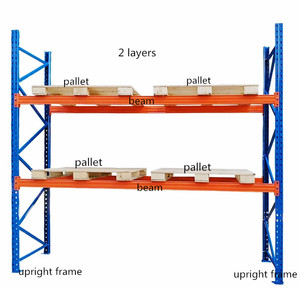
Procuring storage solutions for the Japanese logistics sector requires navigating strict structural safety standards, rapid automated workflows, and the omnipresent threat of seismic events. Standard selective pallet racking depends on two horizontal load beams to seat the front and rear edges of wooden or plastic pallets. However, the standard Japanese pallet size—JIS T-11 format (1,100 mm × 1,100 mm)—creates a tight contact margin when installed on typical 1,000 mm or 1,100 mm depth frame uprights. Without engineered pallet support bars, deflections in pallet bases, minor operator misalignment, or wood grain fatigue can cause catastrophic pallet drop-through.
As an established Chinese manufacturing leader with more than 36 years of industrial steel engineering experience, we fabricate heavy-duty pallet support bars tailored to the operational realities of Japanese distribution centers. Our manufacturing process incorporates precision robotic cold-roll forming, automated punch slotting, and rigorous weld integrity testing to ensure every support bar functions seamlessly under dynamic seismic loads.
Flanged (Top-Hat) Support Bars
Engineered with extended horizontal lip flanges that rest across the crown of the load beam. This design features pre-punched fastener holes that lock directly to the beam with Tek screws or safety pins, preventing lateral slippage during seismic ground accelerations.
Thickness: 1.5 - 2.5mmLoad: Up to 1,500 kg/pairStandard JIS Pallet Flush
Step-Beam Drop-In Cross Bars
Specifically contoured to seat flush inside standard step beams (common in international high-capacity facilities). By sitting flush with the top surface of the beam, these bars enable smooth manual and automated forklift fork insertion without snagging pallet skids.
Flush Profile AlignmentZero ObstructionSeismic Tie Effect
Heavy-Channel Inverted Ties
Fabricated using thick structural U-channel or box-welded steel profiles. Used in high-tonnage heavy manufacturing, mold storage, and machinery warehousing across Nagoya and Kitakyushu industrial zones where point loads exceed 2,000 kg per pallet.
Anti-drop retention under Great Hanshin/Tohoku seismic codes
Seismic Anti-Dislodgement Passed
Surface Treatment Options
Epoxy thermosetting powder (60-80μm) or Hot-Dip Galvanized
RoHS / Green Building non-toxic compliance & anti-rust durability
Eco-Coating / Anti-Corrosion Verified
Production Capacity & Lead Time
15,000 units/week via automated continuous roll-formers
Staggered, on-time delivery into Tokyo, Yokohama, Kobe ports
High Capacity Direct Dispatch
Field Deployments in Japan
Where China-Manufactured Support Bars Deliver Measurable Value
From modern robotic logistics facilities in Kanto to cold-storage hubs in Hokkaido, our precision storage bars maintain facility integrity.
Automated AS/RS Warehouses (Kanto & Kansai)
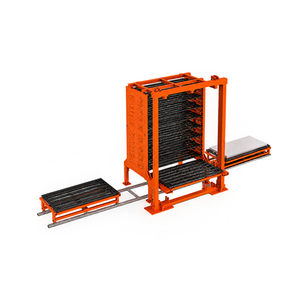
In high-throughput automated storage and retrieval systems operating in Kanagawa and Chiba, robotic stacker cranes move at speeds exceeding 4 m/s. Pallet support bars ensure defective or undersized plastic pallets do not tilt or deflect, preventing sensor trip-outs and system shutdowns.
Deflection Limit: L/250High Repetition Tolerances
Sub-Zero Cold Chain Storage (-25°C)
Widespread across fisheries and frozen food distribution hubs in Hokkaido, Niigata, and Fukuoka. Our hot-dip galvanized and cold-resistant alloy pallet support bars resist brittle fracture at sub-zero temperatures and resist moisture condensation rust during rapid thermal cycles.
Hot-Dip Galvanized ≥ 65μmNo Cold Embrittlement
Automotive Tier-1 Just-In-Time Centers
Serving automotive assembly corridors surrounding Aichi Prefecture and Shizuoka. Custom-punched pallet support bars secure heavy steel stillages, wire containers, and custom plastic dunnage boxes containing engine parts, body dies, and transmission components.
High Point-Load TolerancesSaddle Notch Options
Industry Modernization
Emerging Trends Shaping Japanese Warehouse Procurement
How supply chain transformations, seismic retrofitting, and labor shortages in Japan drive demand for advanced pallet support technologies.
Trend 01
The "2024 Problem" & Pallet Standardization
With Japan's stricter overtime limits on truck drivers taking effect, fast palletized turnover has replaced hand-loading (te-zumi). Facilities are standardizing exclusively on T-11 pallets. Chinese factories supplying precisely matched, pre-assembled pallet support bars allow Japanese logistics firms to quickly retrofit older racking without replacing entire upright frame systems.
Trend 02
Rigorous Post-Earthquake Structural Retrofits
Following recent earthquake advisories, building inspectors throughout Japan are requiring secondary safety fall-prevention measures on intermediate beam levels. Pallet support bars act as structural cross-ties that restrain beam spread (buckling outwards) during strong ground shaking, significantly reducing progressive collapse risks.
Trend 03
Hybrid Wood-to-Plastic Pallet Transition
Sanitary standards and automation are driving Japanese firms away from wood pallets toward injection-molded plastic pallets. Because plastic skids can sag when loaded over 1,000 kg at summer ambient temperatures, our heavy-gauge three-bar support configurations eliminate center-sag risks while preventing pallet drop-through.
36 Years of Manufacturing Excellence
Why Japanese Buyers Partner with Our China Factory
We bridge high-volume Chinese steel manufacturing efficiency with Japanese quality control expectations.
Raw Steel Traceability
Direct supply partnerships with Baosteel and Shougang. Every production lot includes full mill certificates, spectrometer chemistry validation, and mechanical tensile test reports.
Automated Roll-Forming
Multi-station automated cold-roll lines ensure crisp bends, precise channel depths, and consistent hole punching at tolerances within ±0.5 mm across production batches.
Bilingual CAD & FEA
Our engineering department conducts finite element analysis (FEA) to confirm load calculations and deflection limits under dynamic seismic conditions before manufacturing begins.
Export Packaging
Steel bundled with anti-scratch spacers, desiccant packs, and waterproof poly-wrapping to prevent rust and surface damage during maritime transit to Osaka, Tokyo, and Nagoya.
Procurement Clarity
Frequently Asked Questions for Japanese Importers & Contractors
Detailed answers addressing engineering validation, customs compliance, and installation safety.
?Can you manufacture pallet support bars matching Japanese racking brands?
Yes. We produce custom-engineered flange profiles, drop-in step clips, and slotted attachments fully compatible with domestic Japanese racking brands such as Daifuku, Okamura, Sanwa, and Nakabayashi, as well as European standard racking profiles.
?How do your products comply with Japanese seismic safety guidelines?
Our pallet support bars feature mechanical locking tabs and pre-punched fastener holes that secure directly into load beams using self-tapping screws. This prevents support bars from jumping or sliding off beams during high horizontal seismic accelerations (Kochi and Tokai design criteria).
?What quality documentation is provided with container shipments?
Every shipment is accompanied by a comprehensive Quality Dossier: Raw Material Mill Test Certificates (MTC), coating thickness inspection logs, load deflection test reports, dimensional inspection sheets, and a Certificate of Origin (COO).
?What is the recommended number of pallet support bars per pallet position?
For standard JIS T-11 pallets (1,100 × 1,100 mm) loaded up to 1,000 kg, two heavy-duty support bars per position are standard. For loads from 1,200 kg to 2,000 kg, or when using flexible plastic pallets, our engineers recommend three support bars per pallet bay.
?What are typical ocean freight lead times to main Japanese ports?
Production cycles generally require 15 to 25 days depending on total tonnage. Ocean freight transit from Shanghai or Ningbo ports to Tokyo, Yokohama, Osaka, or Kobe typically takes only 3 to 5 days, making China the most agile and cost-effective sourcing partner for Japan.
?Can we request custom powder coating colors to match our corporate identity?
Certainly. We provide complete RAL and DIC color code customization using durable polyester powder coatings. Common choices include safety orange (RAL 2004), traffic yellow (RAL 1023), gentian blue (RAL 5010), and silver zinc finishes.
Ready to Optimize Your Japanese Facility's Racking Safety?
Connect directly with our senior structural engineers to calculate beam deflection, request technical drawings, or receive a factory-direct container price quote.