Industrial Intralogistics Engineering

Top Trusted Gravity Flow Racks Manufacturer & Exporter for Nagoya

High-Density FIFO Pallet & Carton Flow Systems Engineered for Aichi Prefecture's Automotive, Aerospace, and Cold-Chain Manufacturing Hubs.

36+
Years Engineering Lineage
JIS-B8961
Racking Safety Compliance
85%
Max Cubic Space Recovery
0kW
Zero-Power FIFO Kinematics
Precision Heavy-Duty & Dynamic Systems

Engineered Storage Portfolio for the Greater Nagoya Hub

Manufactured to rigorous structural tolerances, our high-density gravity flow and heavy racking components streamline parts kitting, high-turnover buffering, and resilient material staging.

Engineering Whitepaper Analysis

The Physics of Zero-Energy Dynamic Gravity Flow in Nagoya’s Modern Logistics Corridors

In the epicenter of Japan’s manufacturing heartland—the Chubu and Greater Nagoya metropolitan industrial region—warehouse real estate and intralogistics throughput face unprecedented operational constraints. Rising land values surrounding Nagoya Port, paired with the structural labor transformation dictated by Japan's 2024 transport overtime regulations, require logistics planners to extract every cubic millimeter of storage efficiency while eliminating transit latency. Gravity flow racks (also designated across Japan as live storage or pallet flow systems) represent the zenith of passive, high-density warehousing by utilizing controlled kinetic potential rather than electricity to move palletized and cartonized inventory along an inclined track.

Operating strictly under the First-In, First-Out (FIFO) inventory sequence, our custom-engineered gravity flow rack assemblies rely on calculated slope gradients typically calibrated between 2.5% to 4.0% (1.5° to 2.3° pitch). This inclination allows unit loads ranging from 25 kg plastic containers (TP/Tote boxes) up to 1,500 kg industrial steel pallets to glide smoothly from the replenishment charge face to the picking discharge face. By consolidating access to only two working aisles—one loading and one retrieval—gravity flow systems compress warehouse footprint requirements by up to 50% compared to conventional selective pallet racking, while completely decoupling forklift loading traffic from high-velocity picking operators.

Kinematic Speed Regulation & Pallet Separation Technology: Unlike rudimentary roller tracks that suffer from runaway velocity acceleration or line stagnation, our heavy pallet flow systems incorporate internal magnetic eddy-current and centrifugal brake rollers spaced dynamically along the lane length. A mechanical pallet separator gate at the unload terminal isolates the lead pallet from backpressure exerted by following pallets, preventing line jams and ensuring smooth extraction by reach trucks, counterbalance forklifts, and automated guided vehicles (AGVs).

For warehouse facilities operating across Aichi Prefecture, where industrial floor slabs must adhere to the Building Standards Act of Japan (Kenchiku Kijun-hō) and stringent seismic resilience criteria against potential Tokai-Nankai trough tremors, structural integrity cannot be compromised. As a global manufacturer and dedicated exporter, we employ cold-formed high-tensile steel grades (equivalent to JIS G 3101 SS400 and SM490), heavy-gauge column uprights with oversized base plates, and epoxy-polyester architectural powder coating that withstands both harsh cold-storage sub-zero environments and high-humidity maritime industrial conditions.

Tailored Intralogistics Deployment

High-Impact Regional Applications Across Greater Nagoya

From the tier-one automotive corridors of Toyota City and Kariya to the multi-temperature distribution centers hugging Nagoya Harbor, our gravity flow systems serve diverse sector challenges.

Automotive JIT / Kanban Buffer Lines

Installed directly along final assembly and kitting bays in Toyota City and Obu. Gravity carton flow tracks feed standard Japanese automotive collapsible containers (Ori-con) directly to operators, eliminating line-side parts starvation and maximizing ergonomic pick speed.

Cold Storage & Port Perishables

Situated within multi-temperature frozen hubs (-25°C to -30°C) around Nagoya Port. Full-density pallet flow minimizes chilled air loss, increases thermal mass containment, and guarantees uncompromising FIFO turnover for imported meats, seafood, and dairy.

Komaki 3PL & High-SKU Fulfillment

In Komaki and Ichinomiya logistics megahubs, multi-tier gravity flow picking modules seamlessly integrate with pick-to-light (PTL) hardware and take-away conveyor networks, providing rapid sortation for fast-moving consumer goods and e-commerce orders.

Aerospace Staging & Fasteners

Tailored for aerospace component manufacturing plants across Chita and Gifu. Heavy-duty roller tracks staged with steel skid boxes facilitate batch traceability, zero-shock deceleration for calibrated precision parts, and strict lot-number control.

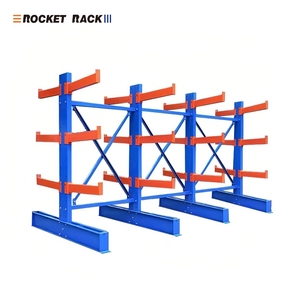
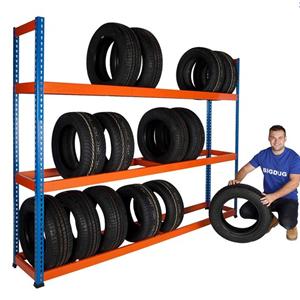
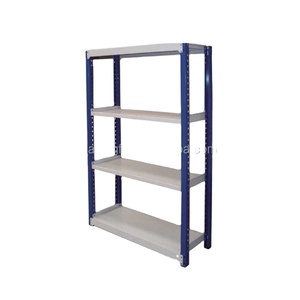
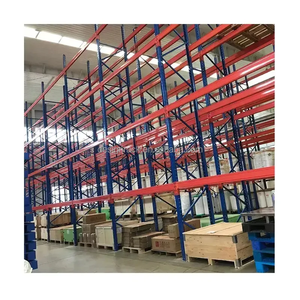
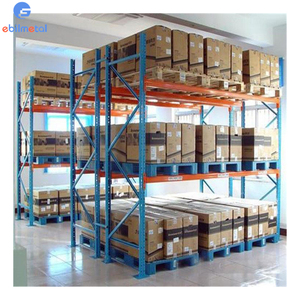
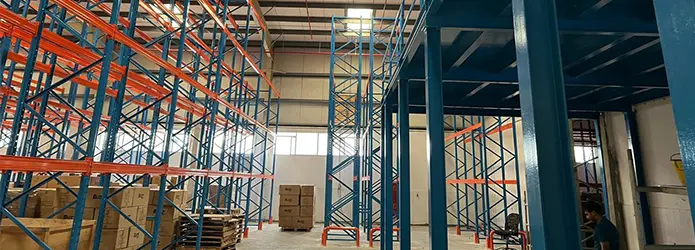
Heavy-duty warehouse rack installation with high-density gravity flow channels
Precision Engineering Specs

Custom Track Dynamics & Structural Reliability

Every gravity flow system exported to the Japanese market undergoes finite element analysis (FEA) to confirm resistance to horizontal seismic accelerations while maintaining track deflection tolerances below 1/500 under full design load.

  • Full compatibility with standard Japanese JIS T-11 (1,100 × 1,100 mm) wooden and plastic pallets.
  • Triple-wheel galvanized steel roller tracks engineered with permanently lubricated precision shielded bearings.
  • Self-tripping speed controllers guarantee steady descent velocities strictly between 0.15 m/s and 0.3 m/s.
  • Integrated entry funnels and safety end-stops forged from high-impact structural steel profiles.
Get a Quote
Strategic Market Evolution

Trends Reshaping Chubu's Warehousing Infrastructure

Evaluating the macroeconomic, regulatory, and demographic catalysts driving the adoption of dynamic gravity racking across Central Japan.

Regulatory Driver

Mitigating the "2024 Logistics Problem"

With Japan's strict 960-hour annual overtime cap for commercial truck drivers now legally active, rapid dock turnaround is mandatory. Gravity flow staging racks placed at inbound and outbound dock aprons enable full trailer-load pre-staging. Drivers discharge and pick up pallets without waiting for conventional aisle-by-aisle forklift retrievable staging, cutting truck dwell times at Nagoya facilities by up to 45%.

Engineering Standard

Tokai Seismic Resilience & JIS Structural Codes

Due to ongoing seismic risk assessments along the Nankai Trough, Nagoya logistics buyers strictly audit racking dynamic load stability. Our systems incorporate seismic base isolation footings, deep-expansion anchor bolts with pull-out safety factors exceeding 2.0, and positive-locking safety brakes on gravity tracks to prevent pallets from dislodging or surfing during ground acceleration oscillations.

Automation Synergy

Passive Gravity Interfacing with AGVs & AMRs

Nagoya facilities are actively overcoming severe labor shortages by pairing automated guided vehicles (AGVs) with zero-energy gravity racks. Gravity channels feed cartons and pallets directly to pick stations where autonomous mobile robots (AMRs) perform retrieval. This hybrid automation maximizes throughput while circumventing the millions in capital and electrical expense required by full AS/RS cranes.

Engineering Systems Evaluation

Technical Benchmark: Gravity Flow vs. Alternative Storage Typologies

A rigorous engineering comparison to support procurement directors and warehouse engineers in selecting optimal racking architecture for high-velocity facilities.

Storage Topology Space Cube Utilization Picking Inventory Rotation Aisle Requirements Power Consumption Cycle Time Efficiency
Dynamic Pallet Flow (Gravity) Maximal (80% - 85%) Strict FIFO (Automatic) 2 Aisles (Charge & Discharge) 0 kWh (Pure Gravity Kinetic) Ultra-Fast (<45s / pallet)
Standard Selective Racking Low (40% - 45%) FIFO or LIFO (Manual) 1 Aisle per 2 Racks 0 kWh Moderate (Forklift travel latency)
Drive-In Pallet Racks High (70% - 75%) Strict LIFO (Prone to aging) 1 Shared Access Aisle 0 kWh Slow (Forklift enters rack lane)
Automated AS/RS Crane System Maximal (85% - 90%) Fully Programmable Dedicated Machine Lanes High (Continuous Electrical Draw) Fast (Mechanical dependent)
Push-Back Trolley Racks Medium-High (65% - 70%) Strict LIFO 1 Operating Aisle 0 kWh (Manual forklift force) Moderate (2 to 5 pallets deep)
Why Leading Importers Partner With Us

Manufacturing Capabilities & Export Authority

Combining 36 years of international warehousing design pedigree with rigorous Japanese dimensional standards and direct sea freight dispatch into the Port of Nagoya.

01

36 Years Precision Manufacturing

Over three decades refining industrial storage systems, rack engineering, and structural fabrication. Our multidisciplinary engineering desk conducts full static and dynamic finite element modeling on every exported rack structure.

02

Certified Metallurgy & Welding

Fabricated exclusively from high-grade structural coil with documented Mill Test Certificates (MTR). Robotic automated seam welding ensures consistent weld throat depths and flawless fatigue life under continuous dynamic cyclic loading.

03

Tailored JIS Component Standards

Unlike generic manufacturers that push Western dimensions, our gravity rollers, guide rails, and entry shoes are custom tooled to match the standard Japanese JIS 1,100 × 1,100 mm (T-11) footprint and domestic plastic container sizing.

04

Direct Freight to Port of Nagoya

Streamlined logistics management with complete Japanese export documentation, packing lists, container space optimization, and seaworthy bundle crating to ensure zero surface scratches or deformation during oceanic transit.

Procurement Knowledge Base

Frequently Asked Questions for Nagoya Engineering Teams

Essential structural, operational, and commercial insights to guide purchasing managers and system integrators sourcing gravity flow solutions.

Are your gravity flow racks compatible with standard Japanese JIS T-11 pallets?

Yes. We specifically engineer our track widths, roller wheel diameters, and dynamic lane spacing to suit standard JIS T-11 (1,100 mm × 1,100 mm) wooden and plastic pallets. Track configurations can also be customized for Euro pallets (800 × 1,200 mm), US GMA pallets (40 × 48 in), or specialized automotive metal skid containers.

How do you control pallet descent speeds over deep lanes (e.g., 10 to 20 pallets deep)?

We install calibrated magnetic eddy-current or internal friction brake rollers at pre-calculated intervals along the lane. These rollers automatically apply proportional braking force without requiring electrical power, maintaining a safe, continuous glide speed between 0.2 and 0.3 meters per second regardless of whether the pallet weighs 300 kg or 1,200 kg.

What seismic measures are integrated for Tokai earthquake zone compliance?

All structural designs incorporate heavy-duty seismic baseplates, certified M16/M20 chemical expansion ground anchors, and cross-bay portal bracing verified via structural FEA software. Gravity lanes are equipped with secondary anti-rebound latching mechanisms and safety end-stops to retain pallets during seismic ground roll.

Can your roller tracks operate reliably inside sub-zero cold storage warehouses?

Absolutely. For cold-chain facilities operating in the Minato or Tobishima areas near Nagoya Port down to -30°C, we specify low-temperature synthetic lubricants inside shielded roller bearings, stainless steel roller shafts, and low-temperature ductile steel to eliminate brittle failure and roller freezing.

How does the pallet separator system prevent backpressure on the unloading forklift?

Our mechanical separator device locks the line of secondary pallets approximately 300 mm behind the lead pick pallet. This removes hundreds of kilograms of hydrostatic backpressure from the lead unit, allowing the forklift operator or AGV mast to smoothly tilt and extract the pallet without binding or track damage.

What documentation is provided to satisfy Japanese building code inspections?

Every export order includes structural engineering calculation sheets, Mill Test Certificates (MTR) verifying steel tensile and yield properties, weld penetration inspection reports, and comprehensive dimensional layout drawings to facilitate smooth local permit approvals.

What is the typical shipping lead time and customs process into the Port of Nagoya?

Standard manufacturing cycle times range from 3 to 5 weeks depending on volume, followed by oceanic transit to Nagoya Port (typically 7 to 14 days from East Asian ports). We provide complete container loading manifests, fumigation certificates (if timber dunnage is used), and commercial invoices for rapid Japan Customs clearance.

Can carton flow roller tracks be retrofitted onto our existing warehouse pallet racks?

Yes. Our carton flow bed modules feature universal beam clips designed to seat securely on standard step beams, box beams, and structural channels from major Japanese and international racking manufacturers, enabling rapid operational upgrades without replacing your structural frames.

What surface finish options are available for humid coastal industrial environments?

We offer heavy-gauge electrostatic epoxy-polyester powder coating (60-90 microns) pre-treated with zinc-phosphate washing, as well as full hot-dip galvanized (HDG) steel components that offer multi-decade corrosion defense against marine air and coastal humidity around Ise Bay.

How do you support system layout design and load profile optimization?

Our engineering team performs a comprehensive system study based on your CAD warehouse layout, ceiling clearance, concrete slab compressive capacity, and pallet dimensional/weight distribution. We provide 3D isometric designs, lane gradient simulations, and operational flow consulting prior to production sign-off.

Ready to Modernize Your Nagoya Warehouse?

Request an Engineered Layout & Direct Factory Quote

Consult directly with our dynamic storage engineering specialists. We will analyze your SKU velocity, pallet footprints, and clear ceiling heights to deliver an optimized gravity flow layout engineered for uncompromising throughput.

Get a Quote