Warehouse Safety Barriers Supplier & Suppliers serving South Africa

Industrial asset protection, heavy-duty racking impact mitigation, and automated logistics security engineered to international OSHA & SANS structural integrity benchmarks.

36+
Years Engineering Experience
1500+
Turnkey Logistics Projects
20kJ+
Impact Resistance Ratings
100%
SANS & SEMA Verified Quality
Engineered Product Lines

Integrated Racking, Structural & Impact Barrier Systems

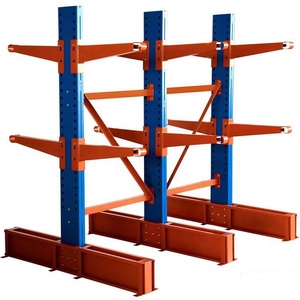
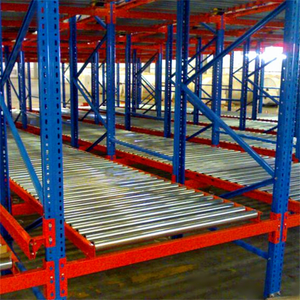
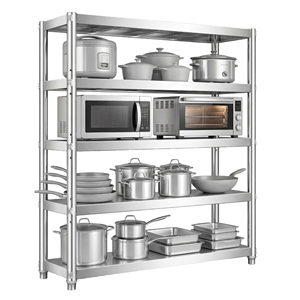
Combining heavy-duty spatial storage frameworks with robust impact perimeter protection. Select verified industrial units tailored to high-velocity South African distribution hubs.

Technical Whitepaper

Structural Safety Barrier Integration in South African Warehouses

A comprehensive examination of asset protection, Occupational Health and Safety Act (OHSA) alignment, and floor slab impact dynamics in Southern Africa's primary distribution nodes.

In modern industrial facilities across Gauteng, KwaZulu-Natal, and the Western Cape, the interface between heavy materials handling equipment (MHE) and static storage infrastructure presents substantial operational risks. Industrial reach trucks and counterbalance forklifts weighing in excess of 4,000 kg carrying full payloads generate catastrophic kinetic forces even at walking paces. As a dedicated warehouse safety barriers supplier serving South Africa, our engineering protocol centers on protecting critical racking uprights, automated conveyors, pedestrian personnel routes, and building structural columns from unavoidable impact collisions.

South African logistics operations face specific workplace compliance mandates under the Occupational Health and Safety Act 85 of 1993 (OHSA), General Safety Regulations 2, and the Driven Machinery Regulations. Facilities are legally tasked with eliminating cross-traffic hazards and protecting structural racking assets from progressive collapse. Standard steel bolt-down channel angles frequently tear up 30–40 MPa concrete floor slabs upon impact, requiring costly structural resin repairs and protracted aisle shutdowns. Our approach integrates polymer-based flexible barriers alongside heavy-duty structural steel crash barriers engineered to disperse kinetic shock waves across deep multi-point anchored footplates.

Whether managing high-density selective pallet racking corridors in City Deep or automated logistics complexes along the R21 Corridor, deploying the proper safety barrier taxonomy is vital for reducing total lifecycle maintenance overhead, preventing catastrophic inventory loss, and maintaining verified supply chain resilience.

Operational Deployment

Localized Industrial Application Scenarios in South Africa

Engineering certified floor barriers, column wrap shields, and rack protectors to counter region-specific operational environments across South African logistics hubs.

Gauteng Inland Freight & E-Commerce Corridors

Distribution centers across Midrand, Pomona, and Jet Park operate on rapid, high-cycle turnaround schedules. Forklift traffic density in narrow aisle (VNA) setups demands dynamic, impact-resilient protection.

  • Racking End-of-Aisle Barriers: Heavy double-rail guards absorbing counterbalance turn impacts.
  • High-Speed Pedestrian Segregation: Demarcated walkways guarding picking staff from multi-directional reach trucks.
  • Dock Leveler Perimeter Shields: Guardrails around loading bays preventing reversing vehicle incursions.

Coastal Ports & Cold Chain Terminals (Durban & Cape Town)

Harbor-adjacent logistics zones around Durban Port and Table Bay contend with aggressive maritime saline air alongside sub-zero freezer cold-chain challenges.

  • Corrosion-Resistant Polymer Guardrails: Non-rusting polymer barriers that do not flake or require repainting under humid marine ambient conditions.
  • Cryogenic Cold Storage Bumpers: Impact barriers tested to maintain high elasticity and energy dispersion at -28°C without brittle fractures.
  • Container Freight Station (CFS) Bollards: Core-drilled heavy tubular steel bollards capable of stopping heavy loaded container handlers.

Automotive & Heavy Fabrication (Eastern Cape & Rosslyn)

Automotive assembly centers in Gqeberha, East London, and Pretoria move heavy stamped steel, engines, and battery packs via Automated Guided Vehicles (AGVs) and tugger trains.

  • Machinery Safety Enclosures: Heavy-gauge mesh barriers and low-level deflection curbs guarding expensive robotic cells.
  • Automated Guided Vehicle (AGV) Guide Barriers: Continuous perimeter curbing that prevents sensor blindspot runoffs.
  • Overhead Crane Column Deflectors: Formed steel wraps that deflect dropped or swung loads away from core building stanchions.
Engineering Matrix

Barrier Selection: Structural Steel vs. Flexible Polymer Systems

A technical performance comparison to assist engineering teams and plant managers across Southern Africa in specifying the ideal barrier class.

Performance Dimension Structural Solid Steel Barriers Flexible Polymer Memory Barriers Modular Galvanized Tube Railings
Kinetic Shock Absorption Rigid resistance; shock transfers directly into concrete anchors High Elasticity Absorbs & dissipates up to 80% impact energy Low-to-medium; deformation occurs upon high velocity strikes
Concrete Slab Integrity Risk of anchor spalling and floor shear on severe impacts Slab Protection Baseplate pivots prevent floor damage Standard shear failure; minor anchor displacement
Corrosion Resistance Requires regular repainting; prone to coastal oxidation 100% Chemical & Weatherproof Self-colored yellow polymer Hot-dip galvanized performs well in humid environments
Best Application in SA Heavy yard perimeters, transformer yards, external loading docks Internal warehouse corridors, food processing, FMCG picking hubs Pedestrian mezzanine stairs, light storage walkways
Compliance Verification SANS 10160 Structural Action & BS 6180:2011 Barrier Standards PAS 13:2017 Impact Test Verified & OSHA 1910.28 Aligned SABS Architectural & Handrail Standards
Strategic Outlook

Key Logistics & Safety Trends Shaping South Africa

How rapid infrastructure modernization, automated supply chains, and evolving SANS safety mandates are transforming safety barrier procurement.

Transition to PAS 13:2017 & Rigorous SANS Norms

South African health & safety officers are discarding arbitrary "fabricated angle iron" guards in favor of scientifically certified impact systems. The adoption of PAS 13:2017 (the global code of practice for workplace safety barriers) ensures that barrier ratings are verified through rigorous joule-impact dynamic tests rather than static estimates.

Rise of Mega-Fulfillment Centers along Logistics Belts

With massive continuous developments along the Midrand corridor, Western Cape's Brackengate, and Riverhorse Valley in Durban, facilities are scaling upward. Higher clear-span ceilings mean heavier upright loadings, making rack column impact protection an essential insurance requirement to prevent domino collapses.

Integration of Smart Telematics & Collision Avoidance

South African operations are pairing physical flexible barriers with LiDAR warning sensors, LED gate flashers, and IoT forklift collision telemetry. Physical barrier infrastructure now serves as the fail-safe mechanical backstop to automated alert systems within high-speed picking zones.

The Manufacturer Advantage

Why Tier-1 Operations Partner With Us

Backed by 36 years of industrial excellence, comprehensive supply chain integration, and turnkey system execution across global and African territories.

36 Years of Warehousing Expertise

Our deep engineering legacy ensures that every barrier and racking recommendation is built upon real-world kinetic data, load-bearing floor analysis, and proven spatial design principles.

Turnkey Supply & Professional Installation

We take complete single-source accountability: from initial 3D CAD layout studies and physical floor sampling to precision anchoring, load testing, and final safety handover sign-off.

Advanced Infrastructure & QC Assurance

Fabricated using state-of-the-art robotic welding, automated electrostatic powder coating, and premium virgin polymers that resist ultraviolet degradation and extreme operating temperatures.

Procurement Guidance

Frequently Asked Questions by South African Buyers

Addressing essential compliance, floor slab engineering, and supply-chain logistics queries for warehouse projects across South Africa.

How do warehouse safety barriers comply with South African OHSA standards?

Under the South African Occupational Health and Safety Act (Act 85 of 1993) and General Safety Regulation 2, employers must maintain safe traffic routes and isolate pedestrians from mobile machinery. Certified safety barriers provide physical, quantifiable vehicle containment meeting these statutory inspectorate mandates.

Will anchoring barriers cause cracking or spalling on standard concrete slabs?

Conventional rigid steel barriers can tear concrete out when struck with severe momentum. Our polymer barrier lines and engineered energy-dampening baseplates absorb kinetic shock within the barrier post, reducing stress transmission to the concrete floor slab and preventing costly slab breakout.

What is the typical shipping lead time to Durban, Cape Town, and Johannesburg?

Standard components are dispatched quickly via our global logistics network, with ocean freight transit directly to Durban (eThekwini) or Cape Town ports typically taking 18–24 days, followed by bonded rail or cross-dock road freight to inland hubs like City Deep, Johannesburg.

Can safety barriers be installed inside cold storage and deep-freeze rooms?

Yes. We engineer specialized low-temperature impact polymers formulated to maintain high elasticity and energy absorption down to -30°C. Unlike standard plastics that become brittle in cryogenic environments, these units will not shatter when struck by forklifts in sub-zero freezers.

How do you calculate the correct impact rating needed for our facility?

Impact ratings (expressed in Joules) are calculated using vehicle operational gross weight, loaded capacity, top governed traveling speed, and the collision angle (e.g., 90° head-on versus 45° glancing). Our technical layout team performs these calculations during the project system study.

Do you provide custom colorations and bespoke barrier heights?

Yes. While safety traffic yellow (RAL 1023) is standard for maximum contrast, we produce barriers in corporate brand palettes, hazard striped coatings, and custom heights designed specifically for low-clearance automated equipment or tall multi-tier reach mast applications.

Protect Your Logistics Infrastructure & Safeguard Your Personnel

Consult with our storage and structural safety engineering specialists. Receive an engineered layout study, dynamic impact calculations, and a turnkey proposal tailored to your South African facility.

Send an Inquiry